World
Deadline drama: Donald Trump steps back from Iran strike at last minute
Announcement comes just 90 minutes before a self-imposed 8 pm EST deadline, lending the moment an air of high-stakes brinkmanship
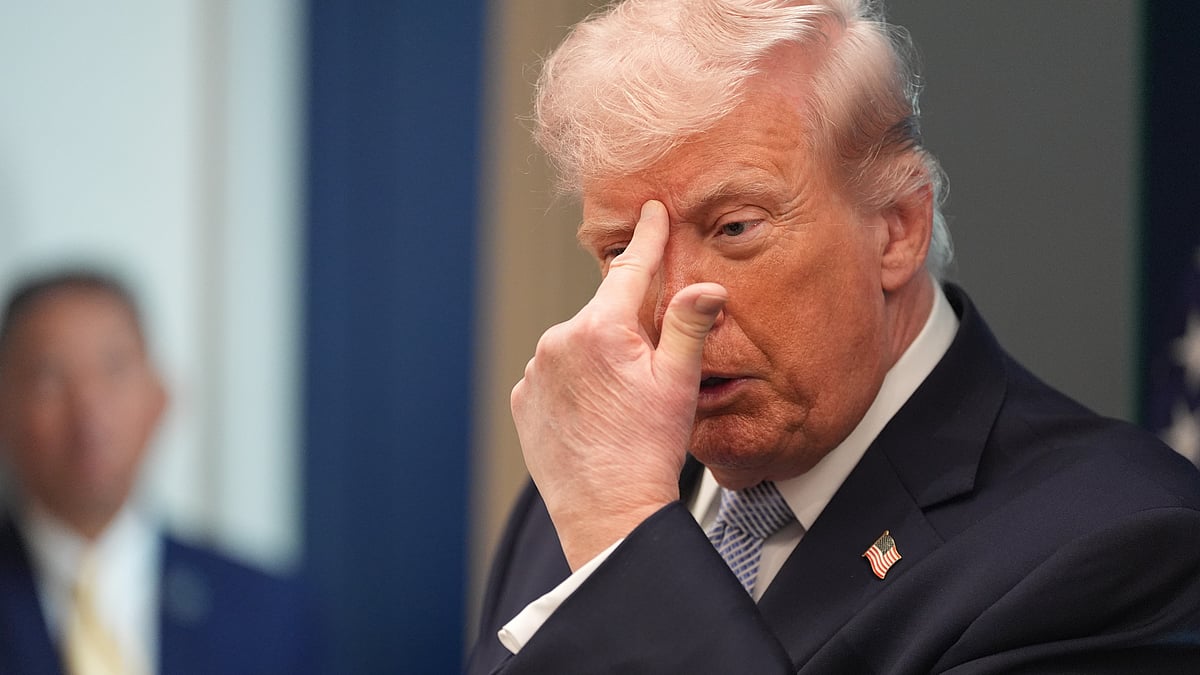
In a dramatic eleventh-hour turn that briefly pulled the world back from the edge of a widening West Asia conflict, Donald Trump announced a conditional two-week pause on planned military escalation against Iran, offering a narrow but vital window for diplomacy.
The announcement came just 90 minutes before a self-imposed 8 pm EST deadline, lending the moment an air of high-stakes brinkmanship. What had, hours earlier, seemed an inexorable march toward confrontation was suddenly recast as a fragile opening for peace — an outcome that sent a palpable sigh of relief across capitals and communities worldwide.
In a post on Truth Social, Trump declared he would “suspend” further escalation for two weeks, contingent upon Iran agreeing to reopen the strategically vital Strait of Hormuz — a chokepoint through which a significant share of the world’s oil flows. The pause, he suggested, was not merely tactical but reflective of quiet progress behind the scenes.
Indeed, the breakthrough bore the imprint of backchannel diplomacy, with Pakistan emerging as an unexpected intermediary. Trump described the outcome as a “double-sided ceasefire,” hinting at parallel commitments and a shared, if tentative, willingness to de-escalate.
Three statements in public — one from each key player — captured the fragile alignment:
From the United States: Trump said the US would “suspend” escalation for two weeks, noting that Washington had “met and exceeded all military objectives” and was “very far along” toward a long-term peace agreement based on Iran’s 10-point proposal.
From Iran: Foreign minister Seyed Abbas Araghchi stated that if attacks on Iran ceased, its forces would halt “defensive operations,” while allowing limited, coordinated passage through the Strait of Hormuz during the pause.
From Pakistan: Officials indicated that backchannel talks had helped secure what they described as a “mutual de-escalation understanding”, positioning Islamabad as a facilitator for the upcoming negotiations.
“The reason for doing so,” Trump wrote, “is that we have already met and exceeded all military objectives, and are very far along with a definitive agreement concerning long-term peace.” He revealed that Washington had received a “workable” 10-point proposal from Tehran — one that, in his telling, bridged “almost all” longstanding points of contention. The two-week reprieve, he said, would allow the contours of a broader settlement to be “finalised and consummated”.
From Tehran came a measured but cautiously receptive response. Araghchi signalled that Iran would reciprocate restraint if hostilities ceased. For a limited two-week period, he indicated, safe passage through the Strait of Hormuz could be ensured through coordination with Iranian forces — albeit with technical caveats.
Yet beneath the surface of this diplomatic thaw lay a complex web of unresolved tensions. The ceasefire remains explicitly conditional, hinging on Iran’s agreement to guarantee “complete, immediate, and safe” navigation through the strait. Reports of missile and drone activity in parts of the Gulf even after the announcement underscored the fragility of the moment and raised questions about enforcement.
The crisis itself has been shaped by weeks of escalating strikes by the United States and Israel on Iranian targets, stoking fears of a broader regional conflagration. Earlier in the day, Trump had issued a stark warning that “a whole civilisation will die tonight” if no deal was reached—a statement that amplified the sense of impending catastrophe before the sudden pivot to de-escalation.
At the United Nations, diplomatic efforts to secure the reopening of the strait faltered when a Bahrain-led resolution was vetoed by Russia and China, reflecting the deep geopolitical fault lines underpinning the crisis.
Tehran, meanwhile, has framed the pause in markedly different terms. Iran’s Supreme National Security Council portrayed the development as a “great victory,” asserting that Washington had effectively accepted its sweeping 10-point framework as the basis for negotiations. The proposal reportedly includes demands ranging from the lifting of all US and UN sanctions, recognition of Iran’s nuclear enrichment rights, and continued Iranian control over the Strait of Hormuz, to compensation for wartime damages and the withdrawal of US forces from the region.
Negotiations are set to unfold in Islamabad, under the shadow of what Iranian officials describe as “complete distrust” of the American side. The two-week timeline, they have made clear, is both an opportunity and a test — one that may yet be extended, or unravel entirely.
Crucially, Iranian authorities have stressed that the ceasefire does not mark the end of the war, but merely a pause in a still-unfinished struggle. Even so, scenes from Tehran told a different story: citizens spilling into the streets, waving national flags, and embracing a moment of respite after weeks of uncertainty.
For countries like India, heavily reliant on energy flows from the Gulf, the stakes remain acutely tangible. Any disruption to the Strait of Hormuz reverberates far beyond the region, rippling through global markets and strategic calculations alike.
As the clock resets for two weeks, the world watches a delicate balancing act unfold — between confrontation and compromise, distrust and dialogue — where the promise of peace hangs, as ever, by a slender thread.
With IANS inputs
Join our official telegram channel (@nationalherald) and stay updated with the latest headlines