World
Trump admin weighs Venezuela strategy amid military build-up fears
Others suspect Trump’s eye may drift toward Venezuela’s immense oil reserves — reviving fears of a resource-driven intervention
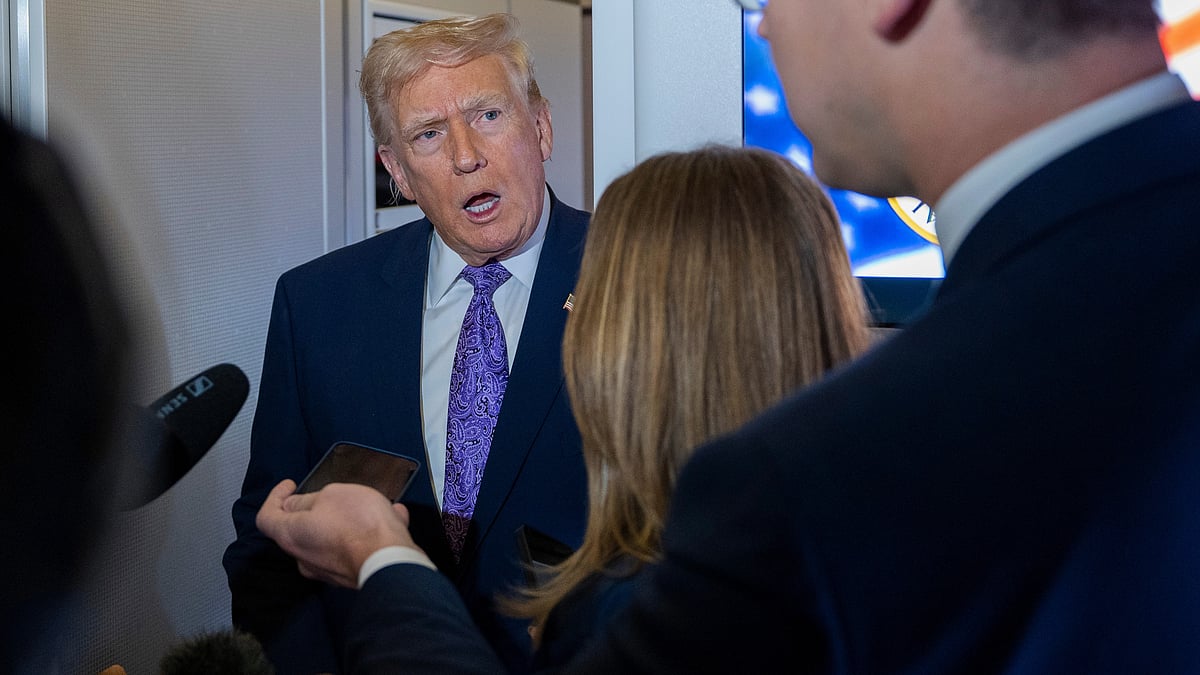
United States President Donald Trump has convened his national security brass to chart the “next steps” on Venezuela, even as Washington continues its full-throated defence of a controversial double strike on suspected drug-smuggling vessels in the Caribbean, the Al Jazeera reported.
Monday’s meeting unfolded against the backdrop of a steadily thickening US military presence across the Caribbean basin — a swelling tide of warships, aircraft and personnel that has stirred fevered speculation about whether a land invasion to unseat Venezuelan President Nicolás Maduro might be creeping from possibility to plan.
Trump himself has done little to quiet the storm: last week, he hinted that ground operations targeting criminal networks in Venezuela could begin “very soon”, sharpening anxieties already inflamed by months of maritime strikes on alleged smugglers in international waters, the Al Jazeera reported.
In recent days, Washington has escalated its confrontational tone, branding the so-called Cartel de los Soles — described by officials as a drug-running syndicate under Maduro’s grip — as a foreign terrorist organisation. But experts counter that the term has long referred to a diffuse constellation of corruption rather than a cohesive cartel with a unified command.
The signals from the White House have been no less bewildering. On Saturday, Trump declared Venezuelan airspace entirely closed, a pronouncement that many read as the clearing of the skies before a storm. But by Sunday, the president was urging reporters not to “read too much into it”, feeding a churn of theories without quelling any.
From Washington, Al Jazeera reported that even seasoned observers were struggling to interpret the White House’s intentions, with reports suggesting the airspace announcement blindsided the Pentagon.
“Normally, a no-fly zone is a prelude to something far more dramatic,” he remarked, adding that many analysts see the sabre-rattling as an attempt to push Maduro into fleeing before any force is unleashed.
Others suspect Trump’s eye may drift toward Venezuela’s immense oil reserves — reviving fears of a resource-driven intervention. Yet even here, the president must tread carefully, having fashioned his political identity around promising Americans he would not plunge them into, as he once put it, “stupid foreign wars”.
Meanwhile, Al Jazeera reported that around 15,000 military personnel now operate in the theatre, joined by the imposing silhouette of the USS Gerald R. Ford, the world’s largest aircraft carrier, flanked by warships such as the USS Winston S. Churchill and USS Bainbridge.
The show of force comes as the administration confronts growing backlash over its lethal strikes on boats allegedly carrying Venezuelan narcotics. Reports in The Washington Post and CNN that Defence Secretary Pete Hegseth verbally ordered troops to kill everyone aboard a suspected smuggling vessel — followed by a second strike after two survivors were seen — have triggered a storm of outrage. Legal experts warn the actions could violate international law and amount to war crimes, while a group of former US military lawyers said the orders, if confirmed, would constitute “war crimes, murder, or both.”
Hegseth has brushed off the criticism, insisting all operations align with the laws governing armed conflict. In a show of defiance, he even posted a cartoonish image of children’s character Franklin wielding an RPG against boats — a gesture critics saw as flippant amid serious allegations.
Trump has stood by his defence chief, telling reporters that Hegseth denied ever issuing such an order and that he believes him “100 per cent.”
Yet on Monday, the White House confirmed that a second strike did take place — ordered not by Hegseth but by Admiral Frank Bradley, who, spokesperson Karoline Leavitt said, acted well within his authority to “eliminate” a threat to the United States. She framed the attack as an act of US “self-defence”.
In Caracas, Venezuela’s National Assembly prepared to assemble for an extraordinary session to consider a commission investigating the strikes. The meeting, however, was abruptly postponed until Tuesday without explanation — another note of uncertainty in a region now thick with tension, speculation and the uneasy thrum of military engines just offshore.
Join our official telegram channel (@nationalherald) and stay updated with the latest headlines