World
Trump drops Greenland tariff threat and rules out use of force after Davos talks
US president signals shift after meeting Nato chief Mark Rutte, easing transatlantic tensions over Arctic territory
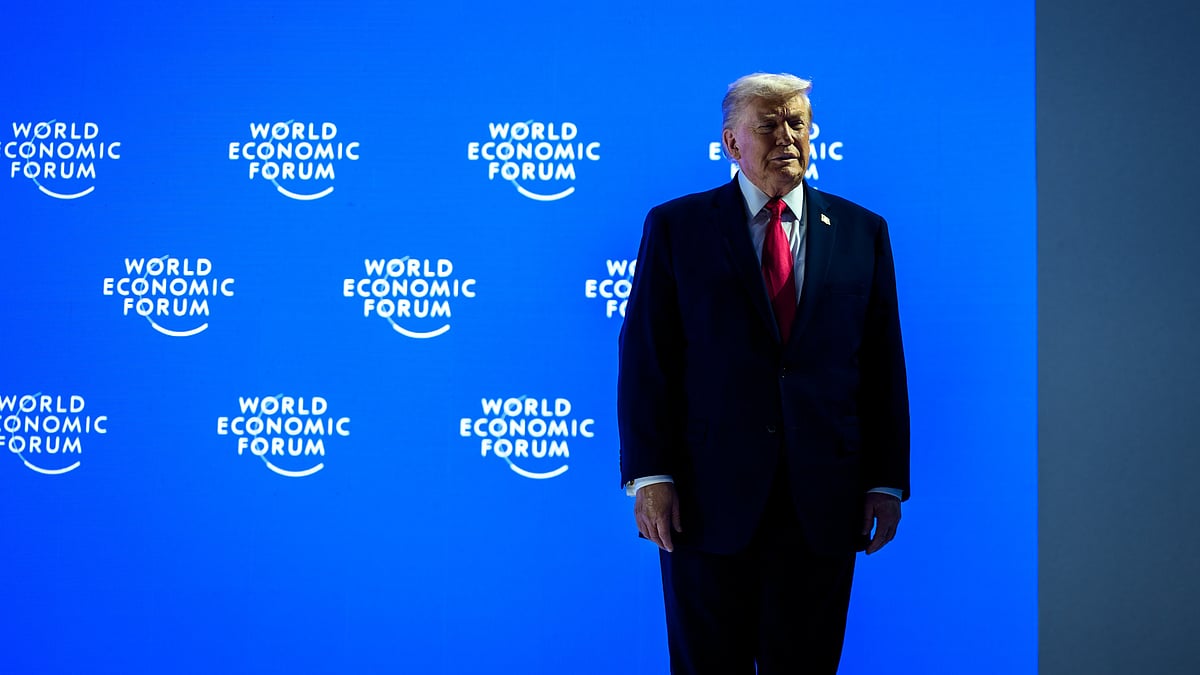
US President Donald Trump has withdrawn his threat to impose tariffs on European countries opposed to his push for control of Greenland and has ruled out using force to seize the territory, marking a dramatic reversal that has eased weeks of escalating tension between Washington and its European allies.
Speaking in Davos on Wednesday, Trump said the planned tariffs would not go ahead after he reached what he described as a “framework” agreement with Nato Secretary-General Mark Rutte covering Greenland and wider Arctic security. The announcement followed their meeting on the sidelines of the World Economic Forum.
“This solution, if consummated, will be a great one for the United States of America, and all Nato nations,” Trump wrote on his Truth Social platform. Al Jazeera reported that the president added that discussions had also touched on the proposed “Golden Dome” missile defence shield and security arrangements in the Arctic.
No details of the framework were made public. In brief comments to reporters, Trump said it addressed “security and minerals and everything else”, without elaborating.
Rutte, speaking later in an interview with Fox News, also offered few specifics and avoided questions about whether the agreement envisaged US ownership of Greenland, a semi-autonomous territory of Denmark. Instead, he framed the talks as part of a broader discussion about regional security.
“We basically discussed how can we implement the president’s vision on protecting, yes, Greenland but not only Greenland, the whole Arctic,” Rutte said. When asked whether Denmark would retain sovereignty over Greenland, he said the issue “did not come up”.
A Nato spokesperson, Allison Hart, described the meeting as “productive” and said the framework would focus on allies’ collective efforts to safeguard Arctic security. She added that talks between Denmark, Greenland and the United States would continue, with the aim of ensuring that Russia and China did not gain an economic or military foothold on the island.
Trump’s shift comes after weeks of heated rhetoric in which he had threatened to impose tariffs of 10 per cent on Denmark and seven other European countries from 1 February, rising to 25 per cent from June, unless they agreed to a deal allowing the US to acquire Greenland. The dispute had raised questions about the future of Nato and strained transatlantic relations underpinning roughly $1.7 trillion in trade.
Earlier on Wednesday, Trump had told leaders in Davos that he would not use military force to annex Greenland, despite repeating his belief that the island was strategically vital to the United States.
“People thought I would use force. I don’t have to use force. I don’t want to use force. I won’t use force,” he said, while adding that he was seeking “immediate negotiations” over what he again described as the “acquisition of Greenland”. He argued that the vast, mineral-rich island was essential for US and international security, claiming it was “actually part of North America”.
Denmark has consistently rejected the idea that Greenland is for sale and has warned that any attempt to take it by force would effectively end Nato, the 32-member alliance to which both countries belong.
Danish foreign minister Lars Løkke Rasmussen welcomed Trump’s decision to step back from tariffs and military threats, though he stressed that sovereignty over Greenland remained non-negotiable.
“The day is ending on a better note than it began,” Rasmussen said in a social media statement. “We welcome that the US president has ruled out taking Greenland by force and paused the trade war.” He later told Danish broadcaster DR that it was a “red line” that the United States would not cross. “It’s not going to happen that the United States will own Greenland,” he said.
Other European leaders also reacted positively to Trump’s U-turn. Sweden’s foreign minister, Maria Malmer Stenergard, said the president’s earlier rhetoric about changing borders had attracted “well-earned criticism”.
“That is also why we have repeated that we will not be blackmailed,” she said, adding that coordinated efforts with allies appeared to have influenced Washington’s change of course.
Join our official telegram channel (@nationalherald) and stay updated with the latest headlines