World
Donald Trump says India shouldn’t dump rice in US market, vows action
Comparing it to the decline of US car and chip industries, Trump says unfair imports are driving domestic producers out of business
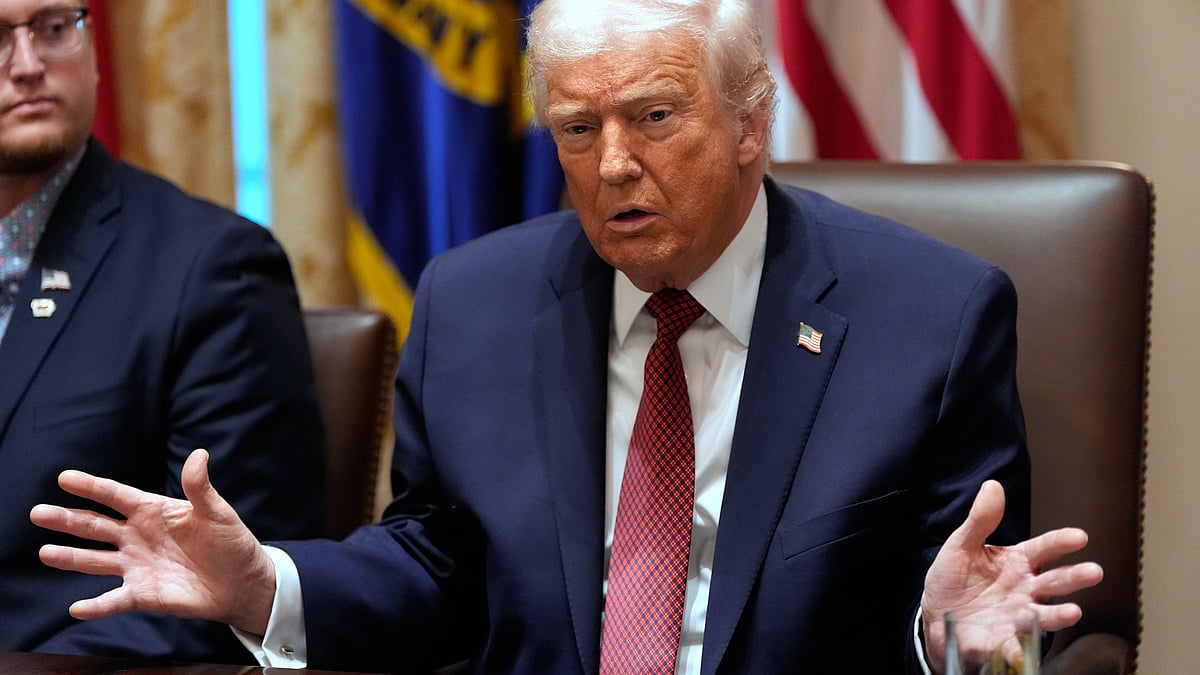
US President Donald Trump on Monday warned that India should not be “dumping” rice into the American market and vowed to “take care of it”, asserting that tariffs could resolve the issue “in one day”.
Trump made the comments during a White House roundtable with farmers, agribusiness representatives and senior officials, including treasury secretary Scott Bessent and agriculture secretary Brooke Rollins, where he also announced USD 12 billion in federal aid for US farmers.
Meryl Kennedy, head of Louisiana-based Kennedy Rice Mill, told Trump that rice producers in the southern US were “really struggling” because countries such as India, Thailand and China were “dumping” rice in the American market.
When Trump asked which nations were responsible, Kennedy replied that India and Thailand were exporting to the US, while China was supplying Puerto Rico — once a major buyer of American rice. She added that the trend had “been happening for years” but had intensified recently.
Trump pressed his aides on why India was “allowed to do that”, asking whether New Delhi had any tariff exemptions. “No sir, we’re still working on their trade deal,” Bessent said.
“There shouldn’t be dumping… They can’t do that,” Trump responded, directing Bessent to note down the countries named. Kennedy also pointed out that a WTO case against India was already underway.
Trump said the issue could be resolved swiftly through tariffs.
“It’s solved so quickly with tariffs… Your problem is solved in one day,” he said, referring to pending litigation over his use of emergency powers to impose tariffs. Lower courts have ruled against the administration, leaving the matter to be decided by the US Supreme Court.
Comparing the situation to the decline of America’s car and chip industries, Trump said unfair imports had driven domestic producers out of business.
“It’s the same thing with rice… Give us the names of the countries. Tariffs again. It solves the problem in two minutes.”
Kennedy claimed that “Indians” had also “bought the largest brands at retail”, giving them more leverage in the market. “We’ll take care of it. It’s so easy,” Trump assured.
India is the world’s largest rice producer, with 150 million tonnes of annual output and a 28 per cent share of global production. It is also the top exporter, holding 30.3 per cent of global exports in 2024–25, according to Indian Rice Exporters Federation (IREF) data.
However, India’s rice exports to the US remain limited. According to IBEF, India shipped 2.34 lakh tonnes of rice to the US in FY24 — less than 5 per cent of its global basmati exports of 52.4 lakh tonnes. West Asia remains India’s biggest rice market, while varieties like Sona Masoori are popular in the US and Australia.
The US has imposed a 50 per cent tariff on India, including a 25 per cent levy linked to Delhi’s purchases of Russian oil. IREF president Prem Garg earlier described the tariff as a temporary “hurdle,” arguing that India still enjoys a pricing advantage over competitors such as Vietnam and Pakistan.
“With strategic planning, diversification and flexibility, Indian rice exporters can protect and even expand their presence in the US market,” Garg said.
With PTI inputs
Join our official telegram channel (@nationalherald) and stay updated with the latest headlines