World
Gaza’s unequal toll: 10,000 Palestinians under rubble, one Israeli captive
While Israel used DNA labs and satellites for one man, Palestinian families lack even machines to dig through ruins
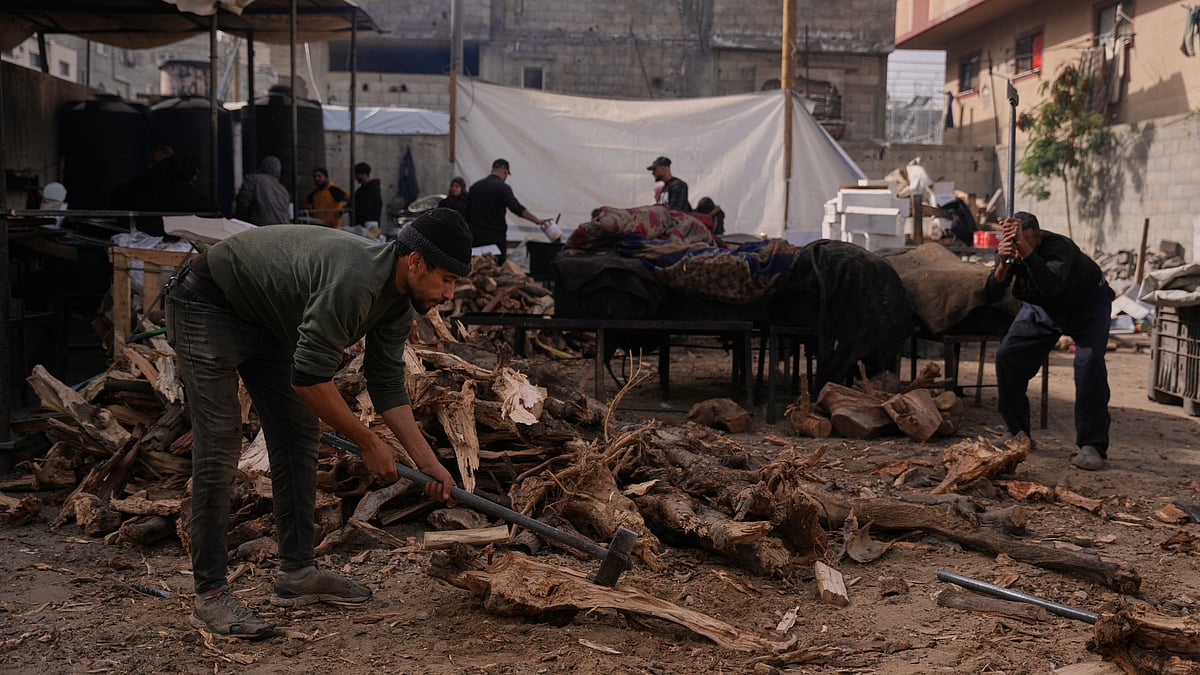
To reclaim a single body, Israel unleashed the full weight of modern warfare. Tanks rolled in formation, drones hovered overhead, and what residents described as “explosive robots” tore through the earth. A once-inhabited neighbourhood was transformed into a kill zone, its streets sealed, its silence enforced by fire.
In the process, nearly 200 Palestinian graves were torn open. Four civilians were killed. All of this force converged on one objective: the remains of Ran Gvili, an Israeli policeman killed more than two years ago and believed to be the last Israeli captive in Gaza after years of Israel’s devastating war on the besieged enclave, the Al Jazeera reported.
When his body was recovered on Monday, Israeli Prime Minister Benjamin Netanyahu hailed the operation as a testament to national resolve. Yet just metres away from where Gvili’s remains were carefully extracted, another reality lay exposed — raw, broken, and largely unseen.
More than 10,000 Palestinians, according to the National Committee for Missing Persons, remain buried beneath Gaza’s rubble. Their bodies decompose in darkness, unnamed and unrecovered. Families wait in a limbo of grief, denied closure, mourning loved ones they cannot bury, the Al Jazeera reported.
No machines are sent for them. No forensic teams arrive. No satellite imagery guides the search. There are no urgent headlines or international alerts marking their disappearance. Their absence does not command armies.
The excavation of al-Batsh cemetery in Gaza City’s Tuffah neighbourhood has become a stark emblem of this imbalance — a world where one Israeli body mobilises a military, while thousands of Palestinian dead are absorbed into the shattered landscape, uncounted and unclaimed.
What followed deepened the contrast. Gvili’s remains were airlifted to Israel for a dignified burial. The Palestinian bodies were left behind, returned haphazardly to the ground by bulldozers.
While Israel employed DNA labs and satellite technology to resolve the fate of one man, Palestinian families are denied even the machinery needed to dig through collapsed homes. Last November, Alaa al-Din al-Aklouk of the National Committee for Missing Persons described Gaza as “the world’s largest graveyard”.
“These martyrs are buried under the rubble of their homes, without dignity,” he said, condemning what he called the fatal injustice of an international system that mobilises for Israeli captives while blocking the entry of civil defence equipment needed to recover Palestinian victims.
Mustafa Barghouti, secretary-general of the Palestinian National Initiative, acknowledged the right of any family to bury its dead — but said the disparity is impossible to ignore, the Al Jazeera reported. “The lack of equal treatment, the lack of respect for Palestinians as equal human beings, is astonishing,” he said.
The mission’s cruel irony was sealed the following morning. As residents returned to the desecrated cemetery to inspect the damage, Israeli fire struck again. Four more Palestinians were killed, among them Youssef al-Rifi, who had come only to look at what was left.
In its effort to close a chapter that has haunted its national conscience since October 2023, Israel opened new graves in 2026. The operation stands as a grim distillation of the war itself: a conflict where the sanctity of one life — and one death — is upheld at the absolute expense of another’s.
Join our official telegram channel (@nationalherald) and stay updated with the latest headlines