World
Hormuz noose: Global economy gasps as Iran seals world’s energy jugular
For energy-dependent nations like India, South Korea, and Japan, closure of Strait of Hormuz is an existential threat
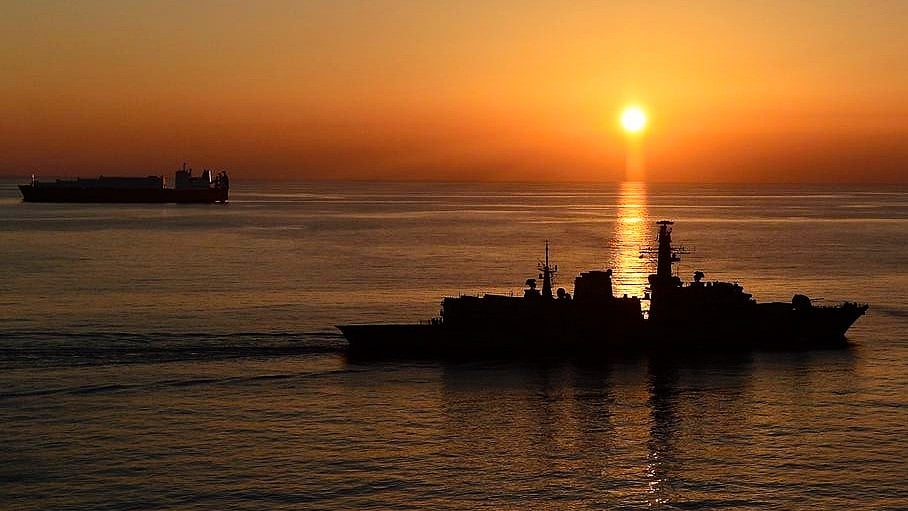
The 'unthinkable' has become the reality of the morning. Following the catastrophic escalation of the US-Israeli military campaign against Iran — which has claimed the life of Supreme Leader Ayatollah Ali Khamenei — Tehran has played its ultimate strategic card.
As of today, 2 March, the Strait of Hormuz is under a de facto blockade, a move that has effectively paralysed the world’s most vital energy artery and sent global markets into a tailspin.
What began as a regional conflict has now morphed into a global economic siege. With the Islamic Revolutionary Guard Corps (IRGC) patrolling the narrow channel and major shipping giants abandoning the route, the world is witnessing the first total disruption of the Persian Gulf’s energy flow in modern history.
Since the early hours of 28 February, the UK Maritime Trade Operations (UKMTO) and the European Union’s naval mission, Aspides, have reported a chilling shift in the maritime environment. Vessels entering the Gulf of Oman have been met with persistent VHF radio transmissions from the IRGC, explicitly stating: "No ship is allowed to pass."
This is no longer a verbal threat. Reliable maritime security reports confirm that the blockade is being enforced through kinetic action:
Targeted strikes: A Palau-flagged tanker was recently set ablaze by projectiles off the coast of Oman.
Casualties at sea: Ship managers for the tanker MKD Vyom confirmed the death of a crew member following a projectile strike in the engine room, according to Seatrade Maritime.
Electronic warfare: The UKMTO has warned of "significant military activity" and elevated electronic interference, disrupting AIS (Automatic Identification System) and navigational arrays for hundreds of merchant ships
The reaction from the commercial sector has been immediate and absolute. Industry giants including Maersk and Hapag-Lloyd have officially suspended all transits through the Strait. Currently, an estimated 150 tankers — carrying millions of barrels of crude and liquefied natural gas (LNG) — are anchored outside the waterway, refusing to run the gauntlet of Iranian missiles and IRGC speedboats.
The economic data is staggering. The Strait of Hormuz facilitates 20 per cent of global oil consumption and 25 per cent of the world’s LNG trade. As of 2 March:
Brent crude prices have surged by over 10 per cent in early trading, with analysts from Reuters and Bloomberg warning of a vertical climb toward $100 or even $120 per barrel if the stalemate persists
Seven of the 12 International Group P&I Clubs have already withdrawn 'war risk' cover for the Gulf of Arabia, making commercial navigation nearly impossible even for the few willing to risk
While the Iranian Parliament and state-affiliated media like Tasnim project a defiant stance of national defence, the US remains at a strategic crossroads. The US joint chiefs of staff have maintained that the strait remains "technically open" under international law, but the reality on the water tells a different story.
The Pentagon is reportedly preparing for 'Operation Sentinel'-style escorts, yet military analysts warn that any attempt to forcibly break the blockade would likely ignite a full-scale naval confrontation. With the US Fifth Fleet in Bahrain and Iranian coastal batteries on high alert, the risk of a miscalculation has never been higher.
For energy-dependent nations like India, South Korea, and Japan, the closure is an existential threat. India, which relies on the Gulf for the lion’s share of its crude and LPG, faces a deepening fiscal crisis. While Saudi Arabia and the UAE possess pipelines that can bypass the strait, these workarounds can only handle a fraction of the 20 million barrels that flow through Hormuz daily.
The assassination of Iran’s leadership has unified the IRGC under a doctrine of 'total deterrence'. By closing the strait, Tehran has signalled that if its regime is to fall, it will take the global economic order with it. As the sun sets over the Gulf of Oman today, the silence of the world's busiest shipping lane is the loudest sound in the global economy.
Hasnain Naqvi is a former member of the history faculty at St Xavier’s College, Mumbai. More of his writing may be read here
Join our official telegram channel (@nationalherald) and stay updated with the latest headlines