World
India-bound oil tanker clears Hormuz amid Iran chokehold fears
Hyundai-built vessel is 333 metres long and can carry more than 318,000 tonnes of crude oil
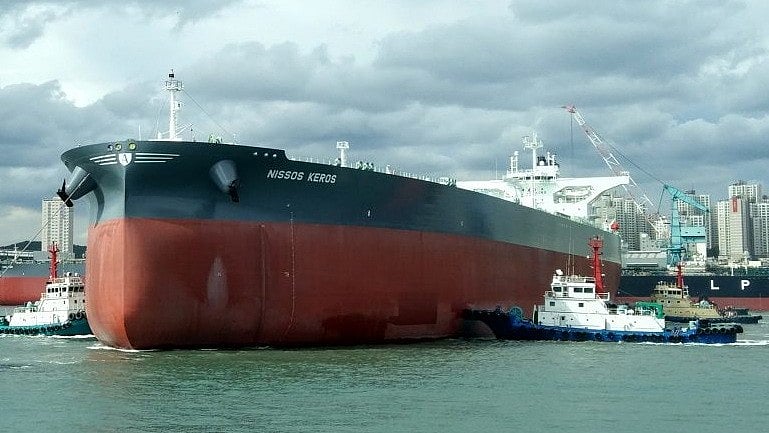
An oil tanker carrying much-needed petroleum supplies for India has successfully crossed the Strait of Hormuz amid escalating tensions over Iran’s control of the strategic waterway, according to maritime tracking data.
The Marshall Islands-flagged tanker Nissos Keros is currently sailing through the Northern Arabian Sea and is expected to arrive at Vishakapatnam on 3 June, multiple ship-tracking platforms showed on Friday.
The vessel departed Sharjah on 21 May and was last tracked off India’s western coast at around 6 am IST. Shipping records identify the tanker’s owner as Arethusa Shipping Corporation and its operator as Kyklades Maritime Corporation. The Hyundai-built vessel is 333 metres long and can carry more than 318,000 tonnes of crude oil.
Its transit comes at a time when Iran has effectively tightened its control over the Strait of Hormuz, the narrow maritime corridor through which nearly 20 per cent of the world’s oil and gas supplies pass.
Iran’s state-run IRNA news agency reported on Thursday that the Islamic Revolutionary Guards Corps (IRGC) Navy allowed 23 commercial vessels — including oil tankers and container ships — to pass through the Strait over the previous 24 hours.
According to IRNA, “all transits were conducted following formal coordination with IRGC naval authorities”.
Tehran has recently indicated that ships may be required to pay transit fees to cross the Strait, although it remains unclear whether any payments were collected from the vessels allowed through this week.
Earlier this month, Iran announced the creation of a new body — the Persian Gulf Strait Authority (PGSA) — to regulate maritime traffic through the chokepoint. The move has triggered alarm internationally, with the United Nations maintaining that no country can levy fees for passage through international waters.
The United States has strongly opposed Iran’s actions, demanding the immediate restoration of unrestricted navigation through the Strait.
“The Strait is going to be open to everybody,” US President Donald Trump said on Wednesday, amid continuing negotiations aimed at ending the Iran conflict.
The Strait of Hormuz has emerged as one of the biggest sticking points in ongoing US-Iran talks, with Washington insisting on free navigation as a key condition for any broader agreement.
Tensions escalated sharply after the US joined Israel in bombing Iran earlier this year, prompting Tehran to mine parts of the Strait and target commercial shipping routes.
In a dramatic escalation, Trump also warned Oman — located across the Strait from Iran — against striking any arrangement with Tehran involving transit fees.
According to the International Maritime Organisation (IMO), nearly 1,500 ships are currently stranded or delayed in the Persian Gulf because of the crisis, fuelling fears of a prolonged global energy and economic shock.
With IANS inputs
Join our official telegram channel (@nationalherald) and stay updated with the latest headlines