World
Indian medical students stay indoors amid rising anti-India sentiment in Bangla
Political unrest, attacks and election tensions leave thousands of Indian students fearing for their safety
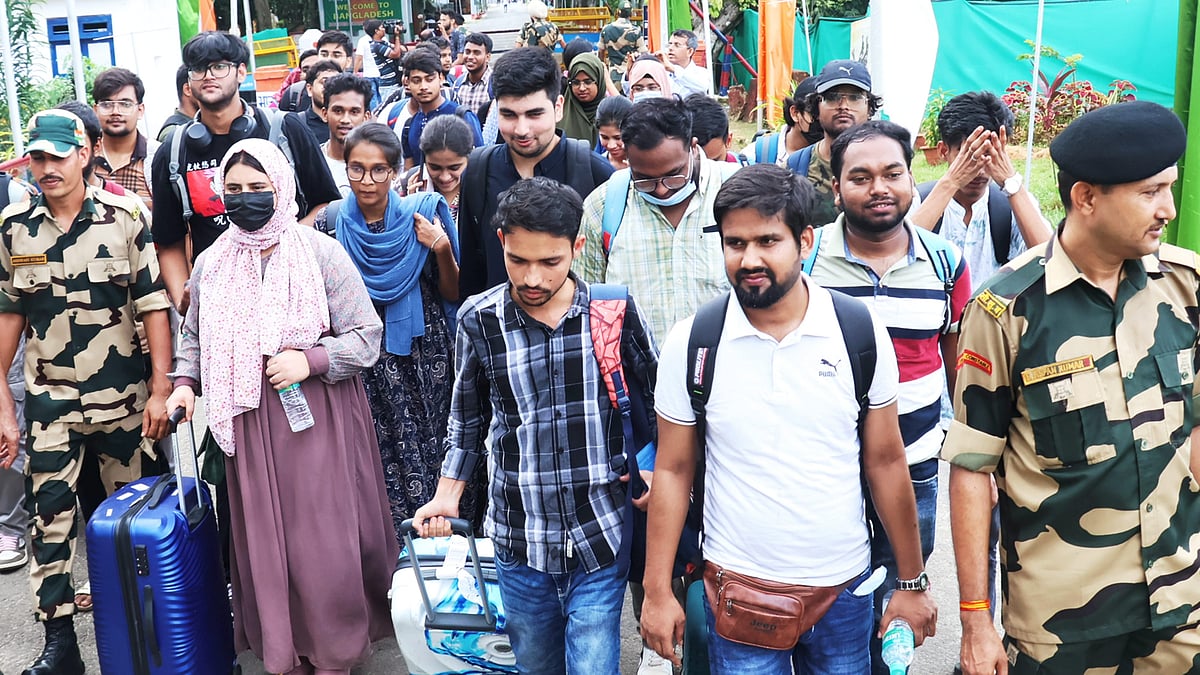
Every evening by around 8pm, Faisal Khan locks himself inside his hostel room at a private medical college on the outskirts of Dhaka. Once an ordinary routine, the act has become a nightly ritual driven by fear. If someone knocks, he listens carefully before opening the door, alert to unfamiliar voices that might betray danger, a report in Al Jazeera said.
Khan, who moved to Bangladesh from India’s Haryana state in April 2024 after failing to secure a government medical seat at home, says life initially felt welcoming. He travelled freely, ate out with classmates and explored the city on weekends. That sense of freedom vanished after mass protests erupted against then prime minister Sheikh Hasina in mid-2024, followed by a violent crackdown and her eventual ouster.
Since then, according to Al Jazeera, Indian students like Khan say they have been living under an invisible curfew, confining themselves to campus, avoiding public places and masking their identity in a country where anti-India sentiment has sharply intensified.
The report claimed that more than 9,000 Indian students are currently enrolled in Bangladeshi medical colleges, drawn by lower fees and limited opportunities at home. But 16 months after Hasina fled to India following a student-led uprising, many now say they feel trapped and unsafe, particularly as Bangladesh heads into a national election scheduled for February.
In November, a Dhaka tribunal sentenced Hasina to death in absentia for killings linked to the 2024 crackdown. India’s refusal to extradite her, despite repeated requests from the interim government led by Nobel laureate Muhammad Yunus, has fuelled public anger towards New Delhi, anger that students say has spilled over onto them.
The anxiety deepened after an Indian medical student was attacked near East West Medical College on 19 December. The student was robbed by local assailants, and footage of the incident quickly circulated among Indian students, triggering widespread panic.
“The entire community is shaken,” said Vaibhav, an intern at a Dhaka-based medical college who asked that his full name be withheld. “We fear for our safety every day.”
Where he once moved freely across the city, Vaibhav now avoids markets, speaks cautiously in public and hides his nationality. “One wrong word can make you a target,” he said, adding that he constantly monitors news updates, unsure what each new day might bring.
The pressure is particularly acute for Hindu students. Vaibhav recalled an examination after Hasina’s removal where he felt his treatment changed once his background became known. Minority rights groups have reported a rise in attacks on religious minorities since August 2024, though the interim government insists such incidents are politically, not religiously, motivated.
According to the news article, the financial stakes make leaving difficult. Each year, more than two million Indian students compete for fewer than 60,000 government medical seats at home. Private colleges in India are prohibitively expensive for many families, pushing students towards Bangladesh, where total course costs are often half as much.
Khan told Al Jazeera that his father spent nearly all his savings to fund his education. “We have put too much money and time into this to walk away,” echoed Vaibhav.
Disruptions have compounded the strain. Internet shutdowns, delayed exams and suspended classes during last year’s unrest derailed academic schedules. Some students returned to India temporarily, only to come back months later to continued uncertainty.
Mohammad, a student from Indian-administered Kashmir, was quoted as saying he expected to graduate in 2024 but is still waiting. “First COVID delayed us, then political unrest. Now there is nowhere to go except to wait,” he said, adding that the uncertainty has taken a toll on students’ mental health.
Authorities claimed security has been tightened ahead of the election. The Bangladesh High Commission in India was quoted as saying law enforcement and armed forces have been deployed in large numbers to maintain order and protect both citizens and foreigners. However, students argue that fear on the ground tells a different story.
Student bodies in India confirmed through the article that distress calls from Bangladesh have surged. The All India Medical Students’ Association urged New Delhi to intervene urgently and has even raised the possibility of evacuation if security deteriorates further.
Meanwhile, colleges are said to have imposed stricter rules. Hostel curfews have been brought forward, movement restricted and advisories issued warning students not to venture far from campus.
“Earlier, the hostel gates closed at 10pm. Now it’s 8 pm,” Khan was quoted as saying. “The campus used to feel like a second home. Now it feels like a jail.”
As political tensions simmer and elections approach, thousands of Indian students remain caught between fear and necessity — unable to leave, yet struggling to feel safe where they are.
“I wish I had never come here,” Khan told Al Jazeera.
Join our official telegram channel (@nationalherald) and stay updated with the latest headlines