


US lawmakers divided over Trump’s Iran strike and homeland security funding
Democrats push war powers vote as Republicans defend military action and accuse rivals of risking DHS shutdown
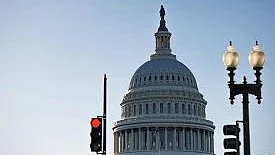


Sharp divisions have emerged in the US House of Representatives after US President Donald Trump authorised a military strike against Iran, with Democrats questioning the legality of the action and Republicans rallying behind the White House while accusing their opponents of jeopardising homeland security funding.
At separate weekly press briefings, leaders from both parties set out starkly contrasting positions on the operation and on a parallel dispute over funding for the United States Department of Homeland Security (DHS).
Senior Democrats called for immediate passage of a War Powers resolution to curb further military involvement in the Middle East. Representative Pete Aguilar accused the President of breaking promises to voters and described the conflict as “a reckless war with Iran”, claiming it had already resulted in the deaths of six American service personnel.
Aguilar said Congress must assert its constitutional authority, arguing that a War Powers resolution was essential to prevent additional military escalation that could endanger US forces.
Representative Ted Lieu echoed that view, insisting that only Congress has the power to declare war. He maintained that the current conflict lacked legal basis because lawmakers had not authorised it. Lieu also raised concerns about the safety of Americans in the region and the security of US military bases, noting that multiple installations had reportedly come under attack.
House Minority Leader Hakeem Jeffries criticised the administration for, in his words, plunging the country into a potentially open-ended conflict without sufficient justification or congressional approval. He also questioned shifting explanations from the White House, pointing to earlier claims that Iran’s nuclear capabilities had been entirely destroyed.
Several former service members now serving in Congress voiced alarm. Representative Jason Crow argued there had been no imminent threat warranting military action, while Representative Chrissy Houlahan warned of the grave human consequences of war, stressing that real lives — not political narratives — were at stake.
Republicans, however, defended the President’s decision and redirected attention to a standoff over DHS funding. Representative Lisa McClain accused Democrats of undermining national security by opposing funding measures for the department. She also criticised previous border policies, alleging they had heightened risks to the country.
Representative Brian Mast argued that Iran had posed a sustained threat to the United States and said the President was within his constitutional authority to carry out what he described as a limited operation under Article II and the War Powers framework.
House Majority Whip Tom Emmer characterised the operation, known as Operation Epic Fury, as decisive and necessary. House Majority Leader Steve Scalise said Republicans stood firmly behind the President’s action, citing what he called a longstanding danger posed by Iran.
Speaker Mike Johnson described the military campaign as targeted and constrained, while warning that blocking DHS funding during a period of international tension could weaken the country’s defences.
Under the US Constitution, the authority to declare war rests with Congress. However, successive presidents have initiated military operations without formal declarations. The War Powers Resolution of 1973 requires the President to notify Congress when American forces are introduced into hostilities and limits the duration of such deployments without legislative approval.
The Department of Homeland Security, established in the aftermath of the September 11, 2001 attacks, oversees border security, counterterrorism, disaster response and cyber defence. Funding battles involving the agency — alongside disputes over presidential war-making powers — have frequently resurfaced during times of overseas conflict.
With IANS inputs
Join our official telegram channel (@nationalherald) and stay updated with the latest headlines