World
Iran strikes US base in Jordan after US attacks Iranian oil tankers
Iran threatens further action against regional shipping, raising concerns over the Strait of Hormuz and global oil supplies
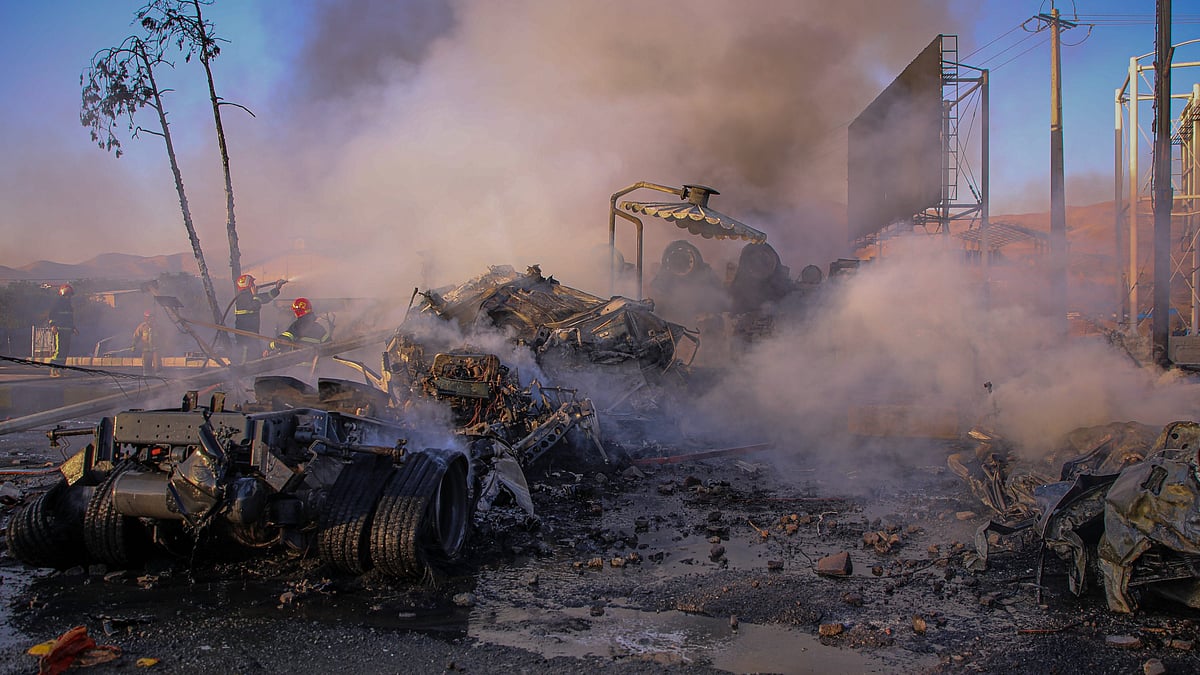
Iran struck back at the United States on Wednesday, firing a barrage of ballistic missiles at a US military base in Jordan after American forces destroyed five Iranian oil tankers in the Gulf of Oman and near Iran’s Kharg Island.
The Islamic Revolutionary Guard Corps (IRGC) said its aerospace forces targeted the Al-Azraq Air Base in Jordan in retaliation for what Tehran described as “aggressive” US attacks on Iranian oil tankers. The IRGC said the strike hit a hangar used for the maintenance, repair, preparation and deployment of US F-35, F-16 and F-15 fighter jets, as well as aircraft shelters, claiming to have inflicted “heavy damage” on the base.
Iran’s missile strike marked a direct and forceful response to Washington’s expanding military pressure on Tehran and its efforts to choke off Iranian oil exports. The latest escalation also demonstrated Iran’s willingness to carry the confrontation beyond its immediate borders and target US military infrastructure in the region.
Jordan said its air-defence systems intercepted 18 of the 20 Iranian ballistic missiles fired towards the kingdom. The other two missiles fell in unpopulated areas, with no casualties reported.
The Iranian retaliation followed a major US operation against Iran’s oil trade. US Central Command (CENTCOM) said American forces had destroyed five Iranian crude-oil tankers after the IRGC allegedly attempted twice to strike a US warship with ballistic missiles over the preceding two days.
The vessels — M/T Kaviz, M/T Charminar, M/T Horizon 1, M/T Riesco and M/T Derya — were attacked in the Gulf of Oman and near Kharg Island, a crucial hub for Iran’s oil exports. US forces said tanker crews were ordered to abandon the vessels before the ships were struck and rendered inoperable.
Washington has described the tankers as part of a multibillion-dollar network allegedly operated by the IRGC to generate revenue for Iran’s military and regional allies. Tehran, however, has framed the US attacks as part of a broader campaign against its economy and sovereignty.
The latest confrontation places Iran’s oil industry and maritime routes at the heart of the escalating conflict. Kharg Island is particularly significant to Tehran because it serves as a major outlet for Iranian crude exports, making attacks in and around the area potentially consequential for the country’s ability to sustain its oil revenues.
Iran has also threatened further action against shipping in the region, raising fresh concerns over the security of vital maritime routes and the Strait of Hormuz, through which a substantial share of the world's oil supply passes.
The confrontation has already rippled through global energy markets, with Brent crude moving towards $100 a barrel as traders weighed the prospect of further disruption to Iranian oil exports and shipping through the Gulf.
For Tehran, Wednesday’s missile barrage was more than a military reprisal: it was a signal that attacks on Iran’s oil lifeline could invite direct retaliation against US forces across the region. As Washington intensifies pressure on Iran’s energy network, the danger of a wider confrontation is mounting, with the Gulf’s oil routes and US military bases increasingly becoming flashpoints in the escalating standoff.
With agency inputs
Join our official telegram channel (@nationalherald) and stay updated with the latest headlines