World
Iran’s FM says Ukraine’s attack on Iranian ship ‘cannot go unanswered’
According to Iran, the strike killed one sailor, injured three others, and crippled the vessel by destroying its bridge
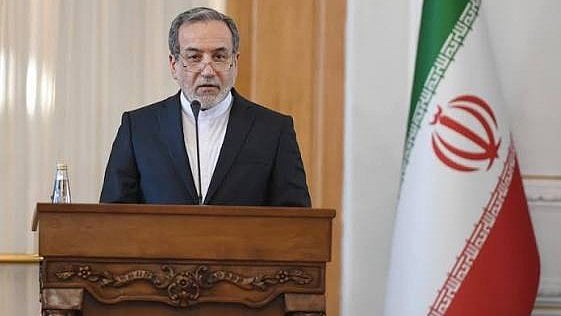
A fresh flashpoint has emerged in the already volatile geopolitical landscape, with Iran vowing that an alleged Ukrainian strike on one of its commercial vessels in the Caspian Sea "cannot go unanswered".
The incident has triggered a diplomatic storm, intensified exchanges between Tehran and Moscow, and added another layer of complexity to the widening confrontation involving Ukraine, Russia, the United States and the West.
Iranian foreign minister Seyed Abbas Araghchi issued a stern warning following what Tehran described as a pre-dawn attack on an Iranian cargo ship carrying steel from Russia's Astrakhan Port to Anzali Port in Iran's northern Gilan province. According to the Iranian foreign ministry, the strike caused a massive explosion aboard the vessel, killing one sailor and injuring three others while destroying the ship's bridge and leaving it stranded.
In a strongly worded post on X, Araghchi directly blamed Ukrainian President Volodymyr Zelenskyy for authorising what he described as "a blatant violation of the UN Charter" allegedly carried out "at Israel's behest to drag Europe into its war". The Iranian minister declared that the attack "cannot go unanswered", saying he had conveyed Tehran's position during separate conversations with European Union foreign policy chief Kaja Kallas and Russian foreign minister Sergei Lavrov over the weekend.
Reinforcing Iran's diplomatic offensive, the foreign ministry summoned Ukraine's charge d'affaires in Tehran and lodged a formal protest, condemning the alleged strike as a "hostile and criminal" act. Araghchi also urged the European Union, the United Nations Security Council and the broader international community to hold those responsible accountable, while pressing for decisive international action.
The reported attack has also drawn Russia firmly into Tehran's corner. During a telephone conversation, Araghchi and Lavrov jointly condemned what Iran described as Ukraine's "illegal" action. According to the Iranian foreign ministry, Araghchi characterised the strike as "dangerous adventurism" and a clear breach of the fundamental principles of the UN Charter, while Lavrov reportedly described it as a violation of international law that threatened vital trade routes linking Russia and Iran.
The two ministers also discussed mounting regional tensions, including developments surrounding the Strait of Hormuz, where Tehran has accused the United States of undermining regional security. Both sides underscored the importance of diplomatic initiatives to prevent further escalation in one of the world's most strategically significant maritime corridors.
Ukraine, meanwhile, has publicly acknowledged carrying out military operations in the Caspian Sea. President Volodymyr Zelenskyy announced that Ukrainian forces had struck a Russian warship as well as vessels allegedly transporting Iran-linked military cargo. However, the available statements do not independently confirm whether the vessel identified by Iran was among those targeted.
Beyond the maritime confrontation, the diplomatic landscape remains equally turbulent. Iranian foreign ministry spokesman Esmaeil Baghaei revealed that indirect communication between Tehran and Washington continues through mediators, including Pakistan and Qatar. Speaking to Austria's ORF broadcaster, Baghaei argued that while channels of communication remain open, meaningful negotiations require an atmosphere of trust — something he accused Washington of destroying through repeated violations of previous understandings.
Baghaei maintained that Iran's immediate priority remains safeguarding its sovereignty, territorial integrity and national security amid what he described as continued aggression. The remarks come as uncertainty clouds the future of a memorandum of understanding signed on June 18, under which Iran and the United States had planned to pursue negotiations toward a broader agreement within 60 days. Renewed hostilities, however, have cast serious doubt over those diplomatic efforts.
From Washington, President Donald Trump struck a simultaneously conciliatory and uncompromising tone. He claimed Iran remained interested in negotiating with the United States but insisted that Tehran would never be allowed to acquire a nuclear weapon.
"They are talking to us right now. They'd love to make a deal," Trump said, adding that while he was willing to listen, he did not believe Iran was yet prepared to reach an agreement.
Reaffirming what he described as the cornerstone of US policy, Trump declared that preventing Iran from obtaining nuclear weapons remained non-negotiable. He also asserted that recent US military operations had severely weakened Iran's military capabilities, claiming extensive losses to its naval, aerial and drone assets, though he did not provide evidence to support those assertions.
As accusations, counter-accusations and diplomatic manoeuvres continue to unfold, the alleged Caspian Sea attack has become more than a maritime incident. It now stands as another potent symbol of the expanding geopolitical fault lines stretching from Eastern Europe to the West Asia, where military conflict, strategic rivalries and fragile diplomacy remain deeply intertwined.
With IANS inputs
Join our official telegram channel (@nationalherald) and stay updated with the latest headlines