World
Israel election exit polls point to deadlock as rival blocs fall short of majority
Netanyahu’s Likud remains the largest party in projections, but strong gains for Arab-led lists complicate the race to form a government
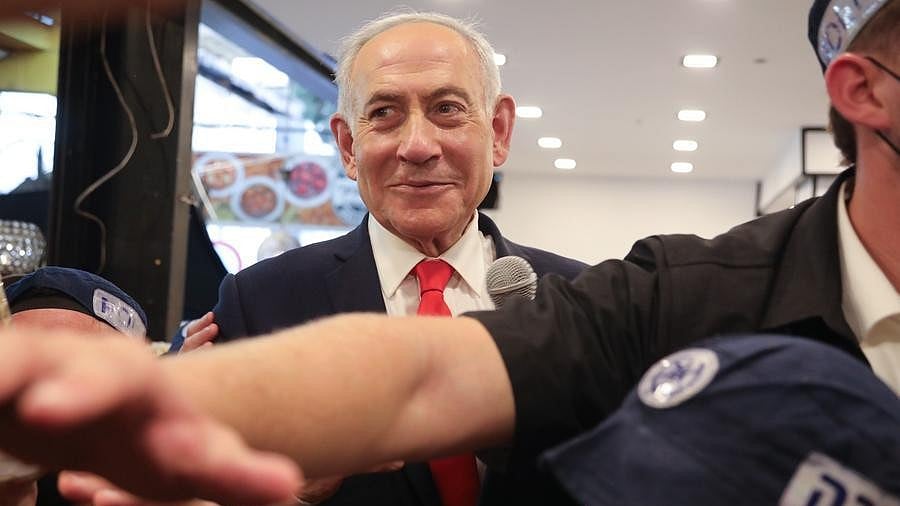
Exit polls put both Netanyahu’s bloc and the opposition below the 61 seats needed for a parliamentary majority
Likud is projected to remain the largest party, while Arab-led parties could influence government formation
Turnout reached 77.7 per cent, the highest since 1999, with potentially lengthy coalition talks ahead
Israel faces an uncertain path to a new government after exit polls from Tuesday’s parliamentary election placed Prime Minister Benjamin Netanyahu’s bloc and the opposition led by former military chief Gadi Eisenkot short of a majority.
Although Netanyahu’s Likud was projected to emerge as the largest individual party, estimates from major broadcasters suggested that neither camp had secured the 61 seats needed to command a majority in the 120-member Knesset.
The projections changed during the night. Initial exit polls from Channel 13 and public broadcaster Kan gave Eisenkot’s opposition bloc 53 seats against 50 for Netanyahu’s camp, with Arab-led parties taking the remaining 17. Channel 12 initially projected 52 seats for the opposition, 50 for Netanyahu’s bloc and 18 for Arab-led lists.
Later estimates narrowed the contest. Channels 11 and 13 put the two main blocs level at 51 seats each, while Channel 12 projected 52 seats for Netanyahu’s camp and 49 for the opposition, leaving 19 seats with Arab-led parties.
A separate i24NEWS exit poll had offered a more favourable initial forecast for Netanyahu, giving his bloc 55 seats against 49 for Eisenkot’s camp and 16 for Arab-led parties. Even that projection left the prime minister without a majority.
Exit polls are unofficial estimates and could change as ballots are counted.
Likud’s projected position as the largest party does not automatically give Netanyahu the right to form the next government. Under Israel’s electoral system, the decisive question is whether a candidate can assemble sufficient parliamentary support.
Later projections put Likud at around 27 seats, ahead of Eisenkot’s centrist Yashar party on roughly 21-22. The opposition camp also includes Naftali Bennett’s B’Yachad alliance, Yisrael Beytenu and the Democrats, led by Yair Golan.
Arab-led parties could play a significant role in the negotiations. The Joint List and Mansour Abbas’s Ra’am were projected to increase their combined representation substantially, potentially giving them influence over efforts to establish a governing majority.
However, their seats cannot simply be added to the opposition tally. They are outside the main Jewish-led opposition bloc, and resistance to a formal partnership presents a major obstacle to any agreement. Their position on supporting a government from outside a coalition could nevertheless become important.
Eisenkot told supporters that the election reflected a public demand for change and pledged to work with political partners towards forming a government.
Netanyahu, meanwhile, highlighted Likud’s projected lead over other parties and called for a national right-wing government. His ally Gideon Sa’ar also cautioned against interpreting the opposition’s early projections as a decisive victory.
The election drew 77.7 per cent of eligible voters, according to the Central Elections Committee, the highest turnout since 1999. Participation rose by 7.1 percentage points from the 2022 election.
Tuesday’s vote was Israel’s first parliamentary election since the Hamas-led attacks of 7 October 2023, and the subsequent war in Gaza. Netanyahu’s leadership and security record formed a central backdrop to the contest.
Ballot counting is under way, with the final tally expected by 30 October and formal publication of the results scheduled for 4 November.
President Isaac Herzog will then consult parliamentary factions before selecting the lawmaker he considers best placed to form a government. The nominee can have up to 42 days, including an extension, to negotiate a coalition.
If that effort fails, another candidate could be given an opportunity. Continued deadlock could eventually lead to another election, while Netanyahu and his cabinet remain in office in a caretaker capacity.
With agency inputs
Join our official telegram channel (@nationalherald) and stay updated with the latest headlines