World
Israel withholds revenues, impacting Palestinians’ access to proper education
School runs three days a week, with photocopied texts and striking or departing teachers
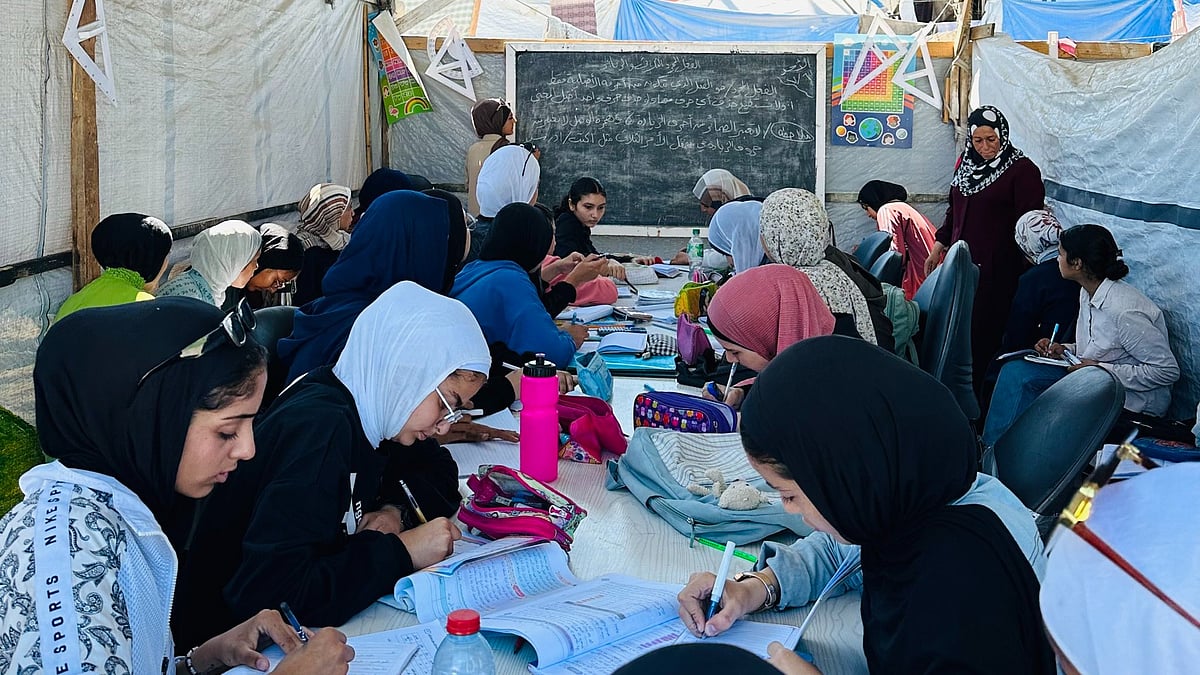
For decades, the Zenabia Elementary School in the northern West Bank city of Nablus has offered children a modest but nurturing space to learn. Its classrooms, once filled five days a week with the hum of recitation and debate, now stand largely silent, the Al Jazeera reported.
Years of Israeli withholding of tax revenues collected on behalf of the Palestinian Authority have pushed the PA to the brink of financial collapse, leaving the public education system starved of funds. At Zenabia, as in government-run schools across the West Bank, the crisis has translated into shuttered gates, unpaid teachers and truncated lessons.
Most weeks, the school opens for no more than three days. Textbooks have been reduced to thin bundles of photocopied pages. Teachers, paid roughly 60 per cent of their previous salaries and often months late, have staged strikes or left for other work. Science and enrichment subjects have all but disappeared; mathematics, Arabic and English dominate the shortened timetable.
“We do everything we can,” principal Aisha al-Khatib told Al Jazeera. “But without time, materials or consistency, how do we properly teach our children — and keep them off the streets?”
The budget squeeze follows a decision by Israel’s far-right finance leadership to withhold billions of dollars in revenues, partly in response to the PA’s longstanding payments to families of imprisoned Palestinians — a policy the PA says it has reformed. The cuts have rippled through public services, but nowhere more painfully than in schools.
The consequences are visible. Ten-year-old Zaid Hasseneh, a top student who dreams of studying medicine in the United States, spends long stretches at home teaching himself English through Google Translate. His mother, Eman — now the family’s sole breadwinner after her husband lost his Israeli work permit — struggles to help him after exhausting shifts at a halawa factory. “The most important thing is studying,” she tells him, even as she admits the new patchwork books and erratic schedules make learning harder.
Other children are drifting away. Twin brothers Muhammad and Ahmed, once rescued from bullying by Zenabia’s intimate setting, now pass idle days on their phones. Fifteen-year-old Talal Adabiq has dropped out entirely, selling sweets on Nablus’s streets to help support his family. He earns a few dozen shekels a day — and shrugs when asked about the future.
Education officials estimate that 5 to 10 per cent of West Bank students have left school in the past two years. Teacher attrition is compounding the problem; some have taken factory jobs to survive. Even school leaders feel the strain — al-Khatib says she can now afford to send only one of her two daughters to university.
Beyond the fiscal crisis lies a harsher reality. Military raids frequently shut schools mid-day. Settler attacks and demolitions have damaged infrastructure and deepened fear among students. Palestinian officials say tens of thousands of children have seen their education disrupted by violence, closures or the threat of demolition orders.
Educators warn of a widening generational gap between those who once enjoyed full academic weeks and today’s students navigating fractured schedules and psychological strain. “Temporary solutions are becoming permanent,” education advocate Refaat Sabbah told Al Jazeera. “If this continues, the system may not recover its former quality or equity.”
For parents like Eman, the crisis is not about policy but possibility. “Our children deserve a chance at life,” she says — a simple hope that classrooms might once again be places of continuity, curiosity and promise rather than uncertainty and loss.
Join our official telegram channel (@nationalherald) and stay updated with the latest headlines