World
Vance heads to Iran talks as US scrambles to contain fallout from its own war
US pushes negotiations amid fragile ceasefire, after six weeks of conflict it helped ignite threaten wider crisis
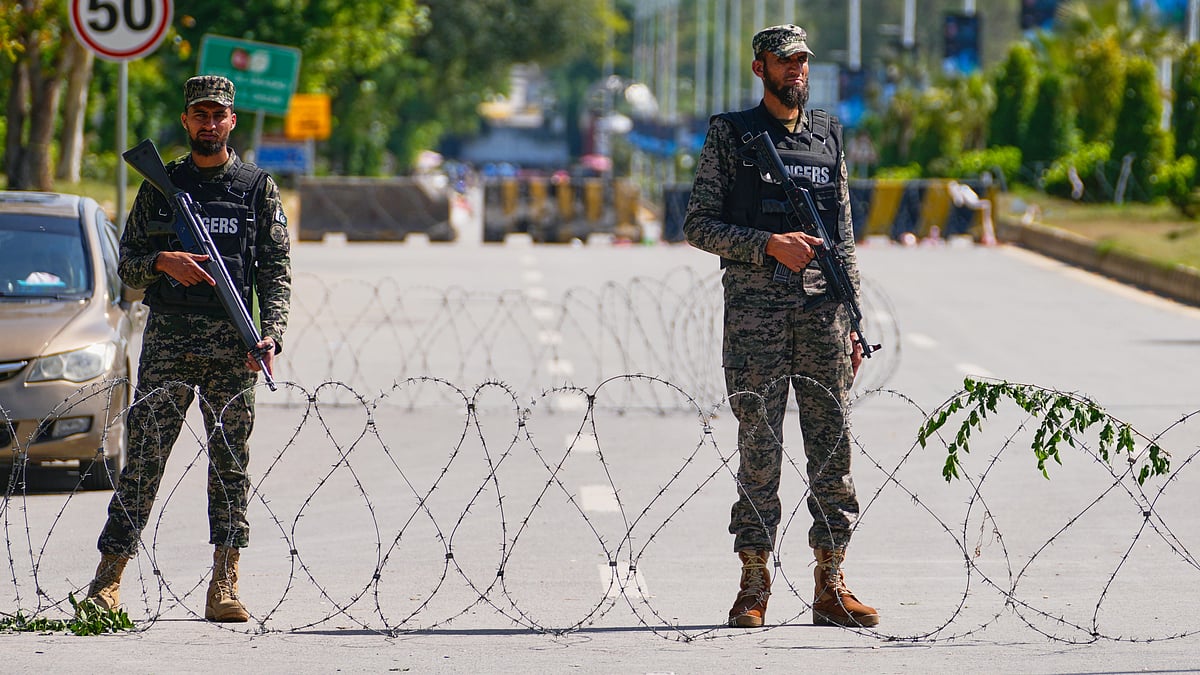
US vice-president J.D. Vance on Friday warned Tehran not to “play” the US as he departed for Pakistani capital Islamabad for talks aimed at ending the war with Iran — a conflict triggered by Washington and its ally Israel that now risks spiralling further out of control.
US President Donald Trump has tasked one of the more reluctant voices within his inner circle to negotiate a resolution to a war that began six weeks ago, even as the US president himself drew global alarm by threatening to wipe out Iran’s “whole civilisation”.
Vance, who has previously expressed scepticism about open-ended foreign military entanglements, is now leading mediated talks in the Pakistani capital, highlighting the extent to which Washington is seeking a diplomatic exit after helping escalate the confrontation.
Boarding Air Force Two, Vance struck an outwardly conciliatory tone while warning Tehran against testing US intentions. “We're looking forward to the negotiation. I think it's gonna be positive. We'll, of course, see,” he said.
“If the Iranians are willing to negotiate in good faith, we're certainly willing to extend the open hand,” he added, before cautioning that “if they're gonna try and play us, then they're gonna find that the negotiating team is not that receptive”.
The visit comes as a tenuous ceasefire appears close to collapse, underscoring the risks of a confrontation that has already rattled global energy markets and heightened fears of wider regional instability.
Vance is accompanied by Trump’s special envoy Steve Witkoff and son-in-law Jared Kushner, who had earlier participated in indirect talks with Iranian negotiators over Tehran’s nuclear and ballistic weapons programmes and its support for armed proxy groups in the Middle East — negotiations that failed to prevent the 28 February outbreak of hostilities.
The White House has provided little clarity on the format or expectations of the talks, raising questions about whether Washington has a coherent diplomatic roadmap or is seeking to stabilise a crisis largely of its own making.
The current engagement nevertheless represents a rare instance of direct high-level contact between the US and Iran. Since the 1979 Islamic Revolution, the most notable exchange came in September 2013, when President Barack Obama spoke by phone with Iranian President Hassan Rouhani regarding Tehran’s nuclear programme.
Ceasefire already under strain
Differences over the terms of the temporary ceasefire became apparent almost immediately after it was announced.
Iran maintained that any truce should include an end to Israeli military operations in Lebanon, but Israeli Prime Minister Benjamin Netanyahu and Trump rejected that interpretation, with Israeli strikes continuing.
Washington also demanded that Iran reopen the Strait of Hormuz, a vital global oil shipping route that Tehran had closed in response to intensifying Israeli attacks on Hezbollah positions in Lebanon.
Trump complained on social media that Iran was “doing a very poor job” of allowing oil tankers to pass, writing: “That is not the agreement we have!” White House spokeswoman Anna Kelly sought to project confidence, saying Trump remained optimistic that a lasting deal could be reached within the two-week ceasefire window.
“President Trump has a proven track record of achieving good deals on behalf of the United States and the American people, and he will only accept one that puts America first,” she said.
High political stakes for Washington
The negotiations represent one of the highest-profile assignments yet for Vance, who has spent much of the past year overshadowed by more prominent figures within the Trump administration, including Elon Musk and Secretary of State Marco Rubio.
Vance, a Marine veteran of the Iraq War who served two years in the Senate before becoming vice-president, has limited diplomatic experience — a factor that has drawn scrutiny from policy observers.
Jonathan Schanzer, a former Treasury Department official now heading the Foundation for Defence of Democracies, described Vance as an unusual choice to lead talks of such gravity.
“I think they probably prefer him knowing that his perspective on foreign intervention is one of scepticism,” Schanzer said of the Iranian side. “I do think that he's going to need some help. I don't think he's ever been engaged in negotiations with this kind of weight, this kind of seriousness. This is as serious as it gets.”
The White House has rejected suggestions that Tehran specifically requested Vance’s participation, describing such claims as attempts to undermine the negotiations.
Officials from the National Security Council, State Department and Pentagon are also expected to play supporting roles in the talks, though questions remain about whether the US delegation includes sufficient technical expertise on nuclear issues.
A diplomatic gamble with domestic consequences
Legal scholar Joel Goldstein noted that while vice presidents often undertake significant diplomatic assignments, it is unusual for one to lead negotiations aimed at ending a war involving the United States itself.
“The fact that he's involved in the negotiations in a very visible way means that, if things go south, people will be pointing fingers at him,” Goldstein said.
At the same time, he added, a successful agreement could become a defining political credential should Vance pursue higher office in future.
For Washington, however, the talks underscore the broader challenge of balancing geopolitical ambitions with the risks of prolonged conflict — particularly when the same administration now seeking peace played a central role in escalating tensions in the first place.
With AP/PTI inputs
Join our official telegram channel (@nationalherald) and stay updated with the latest headlines