World
Kim Jong Un visits China to open border bridge, seeks closer cooperation
The North Korean leader met senior Chinese official Wang Huning in Dandong as the neighbours moved to strengthen trade and political ties
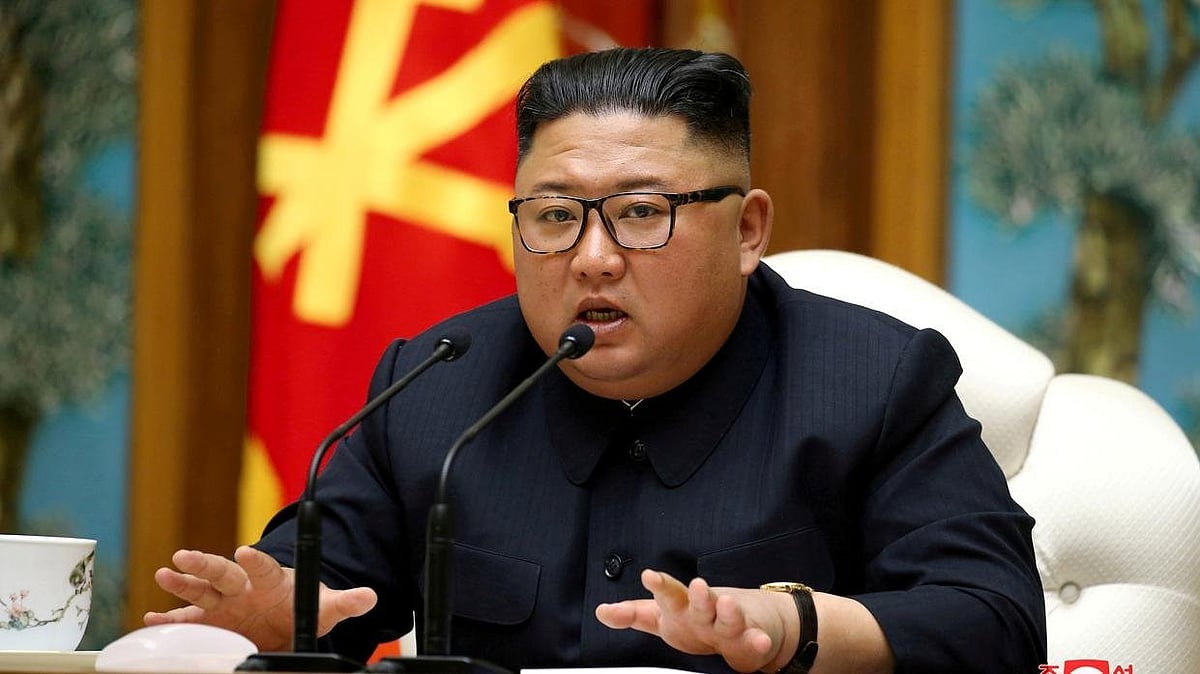
Kim Jong Un visited China’s border city of Dandong on Saturday to inaugurate a bridge linking the two countries.
The North Korean leader met senior Chinese official Wang Huning and called for closer ties and expanded practical cooperation.
The visit comes as Pyongyang strengthens relations with Beijing and Moscow amid continued tensions with Washington and Seoul.
North Korean leader Kim Jong Un travelled to China on Saturday to inaugurate a new cross-border bridge, signalling his intention to deepen cooperation with Beijing as Pyongyang draws closer to its principal international partners.
Kim entered the Chinese city of Dandong via the New Yalu River Bridge, according to China’s official Xinhua news agency and South Korea’s Unification Ministry. It was his first visit to China in more than a year.
During the trip, Kim met Wang Huning, a member of the Chinese Communist Party’s Politburo Standing Committee. They visited a car factory and pledged to strengthen relations between their countries.
Xinhua reported that Kim expressed a willingness to preserve their longstanding friendship and broaden practical cooperation to benefit both populations. Wang later accompanied him to the bridge for his departure.
The bridge’s opening this month is expected to increase capacity for cross-border commerce. Experts said its provision for round-the-clock, two-way traffic, including container shipments and heavy goods vehicles, demonstrated the neighbours’ interest in expanding trade.
China remains North Korea’s traditional main ally and a crucial source of economic support. Kim has recently renewed his emphasis on that relationship after a period in which military cooperation with Russia became a prominent focus of his foreign policy.
Pyongyang has supplied thousands of troops and conventional weapons to support Russia’s war in Ukraine, potentially in return for military and economic assistance. Kim has portrayed closer alignment with Beijing and Moscow as a response to a “new Cold War” involving the United States.
Ahead of Saturday’s visit, Japan’s Kyodo news agency cited unnamed diplomatic sources as saying that authorities had imposed tight traffic controls in parts of Dandong and that hotel rooms in the affected areas could not be booked. Japanese broadcaster TBS also showed footage of what it described as a likely Kim motorcade, including a black limousine displaying North Korean flags.
North Korean state media did not immediately carry an account of the trip. China’s Foreign Ministry press office had not responded to a request for confirmation.
The visit was Kim’s sixth to China since he assumed power in late 2011. Its timing, ahead of the 25 October anniversary marking China’s first major victory in the Korean War, appeared intended to emphasise the historical foundations of the relationship.
Chinese troops crossed the Yalu River into North Korea in October 1950, joining the conflict that had begun with the North’s invasion of South Korea that June. A United States-led UN coalition intervened on the South’s side, with China providing the main military support for the North and the Soviet Union contributing air support.
Fighting stopped under an armistice in 1953, but no peace treaty followed. According to Xinhua, Kim said Saturday’s visit was also intended to commemorate those killed in the war.
The trip followed Chinese President Xi Jinping’s visit to Pyongyang in June, when the two leaders discussed cooperation in trade, agriculture, construction and technology. Kim described relations with China as a leading strategic priority.
Kim’s previous visit to Beijing was in September 2025, when he met Xi and attended a military parade alongside Russian President Vladimir Putin and other foreign leaders.
Despite strengthening those partnerships, Kim has maintained a confrontational position towards Seoul and has so far declined US President Donald Trump’s proposal to restart diplomacy. Their earlier negotiations collapsed in 2019.
Pyongyang has demanded that Washington abandon what it calls a hostile policy and withdraw denuclearisation demands as a condition for renewed talks.
South Korea’s intelligence agency told lawmakers last month that it assessed a 50 per cent chance of Trump and Kim meeting around next month’s Asia-Pacific Economic Cooperation summit in Shenzhen, China.
With PTI inputs
Join our official telegram channel (@nationalherald) and stay updated with the latest headlines