World
Rubio admitted US entered ‘war of choice’ for Israel, says Iranian FM
Secretary of state said Washington believed decisive action against Iran was unavoidable, regardless of the sequence of events
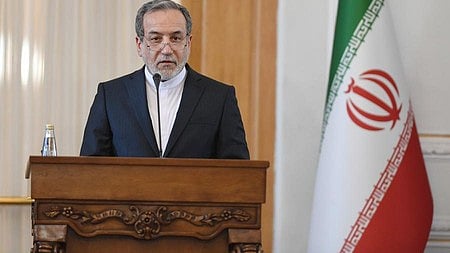
Iran’s foreign minister Abbas Araghchi on Tuesday delivered a blistering rebuttal to remarks by US secretary of state Marco Rubio, rejecting Washington’s justification for its military action and declaring that there was never any genuine “Iranian threat” to begin with.
Rubio had said a day earlier that the United States moved against Iran after learning that its ally Israel was poised to strike and amid fears that Tehran would retaliate against American forces stationed in the region. “We knew that there was going to be an Israeli action,” Rubio told reporters. “We knew that that would precipitate an attack against American forces… and if we didn’t preemptively go after them, we would suffer higher casualties.”
But Araghchi, writing in a sharply worded post on X, dismissed the rationale as pretext. “Mr. Rubio admitted what we all knew: US has entered a war of choice on behalf of Israel,” he said. “There was never any so-called Iranian ‘threat’.”
Published: undefined
In a pointed escalation of rhetoric, the Iranian diplomat placed the blame for the mounting toll squarely at Israel’s door. “Shedding of both American and Iranian blood is thus on Israel Firsters,” he wrote, adding that “the American people deserve better and should take back their country”.
The exchange comes in the wake of a dramatic escalation that saw Iran’s supreme leader, Ayatollah Ali Khamenei, killed in a strike in Tehran on Saturday. US defense secretary Pete Hegseth said Israel carried out the attack after intelligence indicated that Khamenei and other senior officials were gathered in a meeting at the time.
Rubio, however, maintained that regardless of the precise sequence of events, Washington believed decisive action against Iran’s capabilities was unavoidable. “No matter what, ultimately this operation needed to happen,” he said, underscoring the administration’s view that the confrontation was strategic rather than incidental.
At the same time, Rubio sought to draw a boundary around US intentions. While acknowledging that Washington would prefer to see an end to what he termed the Khamenei establishment, he stressed that regime change was not the declared aim of the current military operation.
As recriminations sharpen and rhetoric grows more incendiary, the clash of narratives between Tehran and Washington reflects not merely a dispute over facts, but a widening chasm over responsibility, legitimacy and the cost of a conflict that now threatens to draw in far more than its principal actors.
With IANS inputs
Published: undefined
Follow us on: Facebook, Twitter, Google News, Instagram, WhatsApp
Join our official telegram channel (@nationalherald) and stay updated with the latest headlines
Published: undefined