World
Minnesota: Massive outrage continues against federal raids, fatal ICE shooting
Thousands march, officials clash over law enforcement tactics as DHS doubles down on largest-ever immigration operation
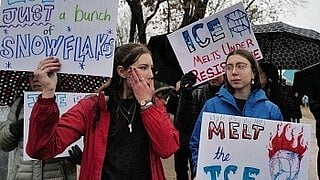
The US state of Minnesota’s twin cities have erupted into sustained unrest as federal immigration enforcement sweeps through neighbourhoods in what the Department of Homeland Security (DHS) describes as its largest immigration operation ever, deepening tensions sparked by the fatal shooting of 37-year-old Renee Nicole Good by an Immigration and Customs Enforcement (ICE) officer last week.
Video shared by news agencies captured federal agents ramming open a residential door in Minneapolis and dragging a handcuffed man out minutes after they had reportedly pepper-sprayed protesters trying to block the raid. The entry was made under an arrest document signed only by an immigration officer — not a judge — a distinction critics note does not legally authorise forced entry in private homes.
Since early December, over 2,000 immigration arrests have been made in the state as part of the enforcement campaign, which federal officials say targets significant immigration violations and fraud.
Riots and demonstrations escalated after Good was shot by ICE agent Jonathan Ross, an experienced law enforcement veteran whose career spans nearly two decades in the Border Patrol and ICE. Federal authorities have defended the shooting as an act of self-defence, claiming Good attempted to “weaponise” her vehicle against agents — a description contested by local leaders and eyewitness footage.
Good, a US citizen and mother of three, was reportedly in her vehicle in south Minneapolis following an ICE operation when she was struck. Family members and local political leaders say the federal narrative mischaracterises the incident and are calling for accountability.
In response to protests that drew tens of thousands across Minneapolis and more than 1,000 rallies nationwide, DHS secretary Kristi Noem announced the deployment of hundreds more federal officers to Minnesota to bolster existing forces and protect agents conducting the operation.
Minnesota’s top Democrats — including mayor Jacob Frey and US Senator Tina Smith — have sharply criticised federal handling of both the shooting and enforcement operations, arguing that state authorities must be included in the investigation rather than leaving it solely in federal hands. They point to video footage that appears to contradict federal claims about Good’s behaviour and question the rushed and unilateral federal account.
“How can we trust an objective investigation when the federal government announces what it believes happened before facts are assembled?” Smith said in a televised interview.
Mayor Frey described the operations sweeping neighbourhoods as disorienting for residents and urged federal agents to leave Minneapolis.
Across the city, community groups have mobilised thousands of volunteers to act as “observers” documenting federal actions on the ground — a role born of fear and frustration at the heavy presence of armed officers and the perceived lack of transparency.
Protesters have taken to streets in freezing temperatures with whistles, drums and car horns, seeking to disrupt immigration raids and draw attention to what they see as intimidation tactics.
Concerns over safety have led Minneapolis public schools to shift to remote learning for at least a month, while some local businesses and community centres brace for further demonstrations.
The Minneapolis shooting and subsequent federal actions have sparked protests far beyond Minnesota, with rallies in cities such as New York and Los Angeles, where thousands marched under banners like 'ICE Out', drawing attention to broader grievances over immigration enforcement tactics.
At the federal level, lawmakers are debating potential consequences for ICE and DHS oversight mechanisms, with some pushing for legislative reforms and more robust civilian scrutiny.
Civil liberties groups have also used the moment to highlight concerns over the use of force and the characterisation by federal officials of protesters and community members — including controversial labels such as “domestic terrorism”, which critics argue stretch legal definitions and risk chilling dissent.
With federal and state investigations underway — and intense media scrutiny — the clash in Minneapolis is fast becoming a flashpoint in the national debate over immigration policy, law enforcement authority and civil rights.
With AP/PTI inputs
Join our official telegram channel (@nationalherald) and stay updated with the latest headlines