World
Myanmar holds second round of voting since military takeover
Election held in three phases due to conflict; first on 28 December, final on 25 January, with 65 townships excluded for security
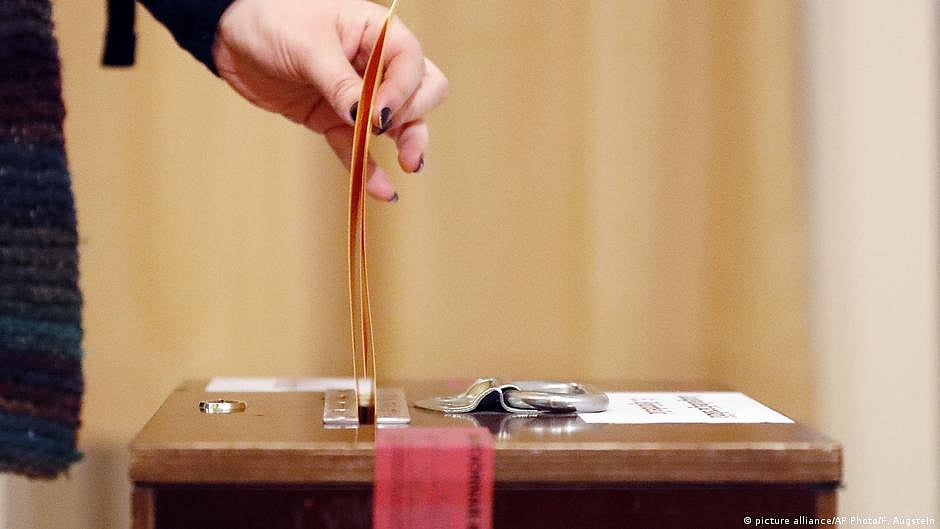
Myanmar on Sunday began a second round of voting in its first general election since the military seized power five years ago, expanding polling to additional townships despite ongoing civil conflict and tight security.
Polling stations opened at 6 am in about 100 townships across regions including Sagaing, Magway, Mandalay, Bago and Tanintharyi, and in Mon, Shan, Kachin, Kayah and Kayin states. Several of these areas have seen recent clashes between the military government and armed resistance groups, highlighting the risks surrounding the vote.
The election is being conducted in three phases because of fighting. The first round was held on 28 December in 102 of Myanmar’s 330 townships, while a final round is scheduled for 25 January. Polls will not be held in 65 townships due to security concerns.
Myanmar’s bicameral parliament has 664 seats, with the military constitutionally guaranteed 25 per cent of seats in each house. The party or alliance with a parliamentary majority can choose the president and form the government.
Critics argue the election, organised by the military authorities, is neither free nor fair and is intended to legitimise the army’s rule following its February 2021 coup that ousted the elected government of Aung San Suu Kyi.
Mixed turnout reported
Voting was under way in major cities including Yangon and Mandalay, with ballots cast at schools, government offices and religious buildings. Journalists observed uneven turnout, ranging from around 150 voters at some stations to only a handful at others, noticeably lower than in the 2020 election when long queues were common.
The military government says more than 24 million people are eligible to vote, about 35 per cent fewer than in 2020. It claimed more than 6 million voters participated in the first phase, calling the turnout a success. Mandalay region chief minister Myo Aung said turnout on Sunday was higher than in December and that earlier shortcomings had been addressed.
Some voters and candidates expressed hope for stability and improved livelihoods, while acknowledging the country’s deep divisions.
Military-backed party dominates
More than 4,800 candidates from 57 parties are contesting national and regional seats, though only six parties are competing nationwide. Results from the first phase left the military-backed Union Solidarity and Development Party (USDP) in a dominant position, winning nearly 90 per cent of contested lower-house seats and a majority in several regional legislatures.
Suu Kyi, now 80, is serving a 27-year prison sentence on charges widely viewed as politically motivated. Her National League for Democracy party was dissolved in 2023 after refusing to register under new military rules. Other parties boycotted or declined to run, citing unfair conditions, while opposition groups called for voters to shun the polls.
International criticism
The United Nations and rights groups have dismissed the vote as a “sham.” UN special rapporteur Tom Andrews urged the international community to reject the process, citing political prisoners, dissolved opposition parties, restrictions on media and curbs on basic freedoms.
According to the Assistance Association for Political Prisoners, more than 22,000 people remain detained for political reasons and over 7,600 civilians have been killed by security forces since the coup. A new election law has criminalised criticism of the polls, with hundreds charged in recent months.
While authorities reported no major disruptions on Sunday, attacks were recorded in several townships during the first phase, and resistance groups have vowed to oppose the electoral process.
With AP inputs
Join our official telegram channel (@nationalherald) and stay updated with the latest headlines