World
People no longer see UN as guarantor of peace, security: India
India’s Permanent Representative to the UN says multilateralism under strain as global discourse shifts to plurilateral alternatives
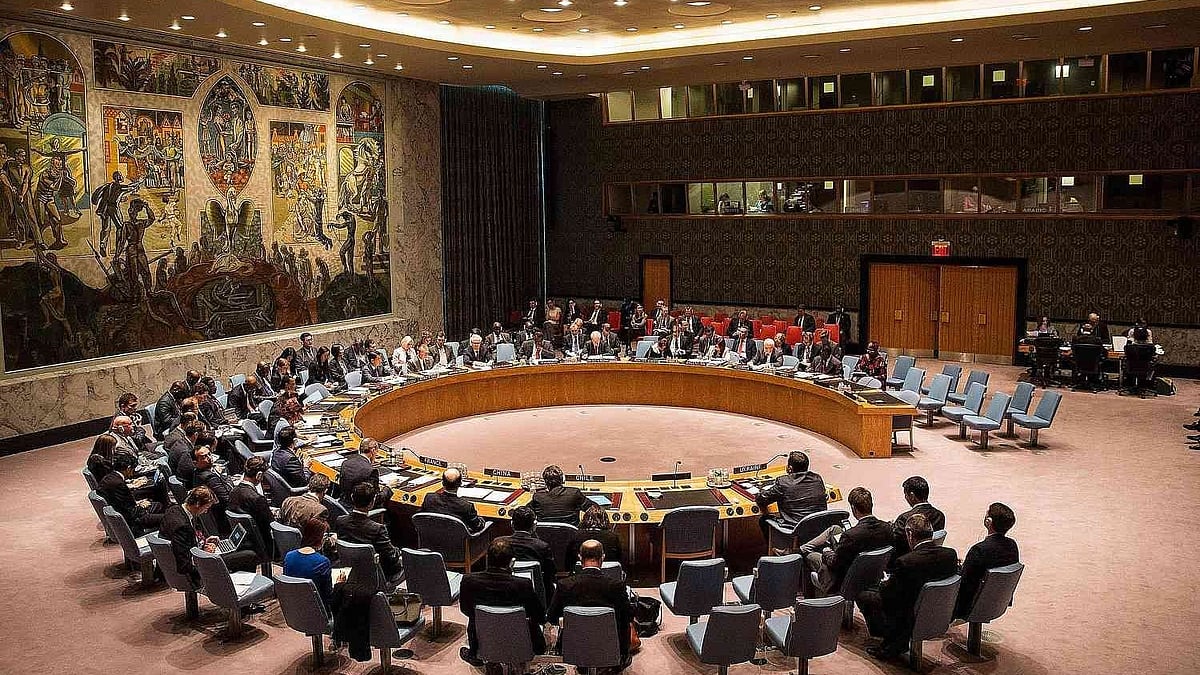
India on Monday said the United Nations is no longer perceived by people around the world as an organisation that effectively delivers on international peace and security, warning that global discussions are increasingly shifting towards “parallel plurilateral frameworks” outside the UN system.
Speaking at the UN Security Council’s open debate on ‘Reaffirming International Rule of Law: Pathways to Reinvigorating Peace, Justice, and Multilateralism’, India’s Permanent Representative to the UN, Ambassador Parvathaneni Harish, said the multilateral system centred on the United Nations is facing a credibility crisis.
“The multilateralism of universal membership, with the United Nations at its core, is under strain. Paralysis and lack of effectiveness in tackling conflicts remain a significant shortcoming,” Harish said.
He added that people across the world “do not perceive the United Nations as an organisation that delivers on international peace and security”, with conversations moving to alternative plurilateral arrangements, sometimes even involving private sector actors, to address peace and security challenges.
India’s remarks come amid continuing failures of the UN Security Council to prevent or resolve major geopolitical conflicts. Against this backdrop, US President Donald Trump has launched a ‘Board of Peace’ on Gaza, viewed by some as a parallel initiative to the UN. Trump formally ratified the Board’s charter on the sidelines of the World Economic Forum in Davos last week, inviting several world leaders, including Prime Minister Narendra Modi, to join the initiative.
Harish cautioned against the selective application of international law, stressing that the rule of law requires consistency, objectivity and predictability without double standards.
“International law should not be weaponised to question state sovereignty or interfere in the internal affairs of states,” he said, adding that principles rooted in the colonial era should not be misused to undermine the unity and territorial integrity of sovereign nations.
At the same time, India asserted that multilateral institutions must evolve with changing global realities. “If outcomes and solutions are treated as immutable and unable to pragmatically adapt to change, alternate formats of engagement will inevitably emerge,” Harish said.
Emphasising India’s domestic commitment to the rule of law, Harish said it is deeply embedded in the country’s constitutional framework and independent judiciary, shaping its approach to international law.
Calling enforceability central to credibility, India said the rule of law remains “barren” without tangible outcomes that improve the daily lives of citizens.
Harish also reiterated India’s long-standing demand for comprehensive reform of global governance institutions, particularly the UN Security Council, whose structure reflects “a geopolitical reality of a bygone era”.
“There is an urgent and compelling need for reform, including expansion in both permanent and non-permanent categories, to enhance the Council’s legitimacy and effectiveness,” he said.
India further called for greater coordination among UN organs, predictable resources, and context-specific capacity building to strengthen the international rule of law.
Join our official telegram channel (@nationalherald) and stay updated with the latest headlines