World
Iran protests, Israeli defiance prove that peace deal is far from secure
Despite claims of a breakthrough, opposition in Iran and defiant signals from Israel suggest the peace deal remains far from secure
The proposed Iran-US peace deal may be nearing the finish line, but protests in Iran and resistance from Israeli leaders suggest significant hurdles remain before the agreement can take effect.
Pakistan has said the deal will be signed in Switzerland on 20 June.Iranian protesters accused the two leaders of making too many concessions. Iranian commentators such as Mohammad Marandi framed the peace plan as a test of American credibility and appeared sceptical of its prospects. The Iranian Revolutionary Guard, however, hailed the peace plan as a victory for Iran.
The deal has come under a cloud because of reactions from Israel. Hours after the announcement of a Pakistan-brokered peace agreement between Iran and the United States, Israel effectively signalled that it was not a party to the arrangement.
Israeli Defence Minister Israel Katz affirmed that Israel's military, the Israel Defense Forces (IDF), would remain in Lebanon, Syria and Gaza to safeguard Israeli border communities from what he described as "jihadist elements".
“Prime Minister Benjamin Netanyahu and I are leading a clear policy that determines that the IDF will remain in the security zones in Lebanon, Syria and Gaza, without any time limit, to protect, from there, the border and Israeli communities against jihadist elements,” Katz said in a statement, according to multiple media reports.
Israeli National Security Minister Itamar Ben-Gvir was also quoted as saying: "We are not partners to this agreement that does not ensure our security, and it does not bind us in any way."
Israel, he added, should settle for nothing less than “the dismantling of Hezbollah”, while urging continued action against the armed Lebanese political group.
“Every launch of a drone, UAV, or missile toward Israel from Lebanon will lead to an Israeli strike,” he added.
If Israel launches fresh military operations in Lebanon, Iran could decide to close the Strait of Hormuz again, once more jeopardising the global economy.
US President Donald Trump, while announcing the deal on Sunday, 14 June, acknowledged that the extension of the ceasefire proposed under the interim agreement covered Lebanon as well. Both Iran and Pakistan had earlier maintained that the ceasefire declared on 8 April included all war zones, including Lebanon.
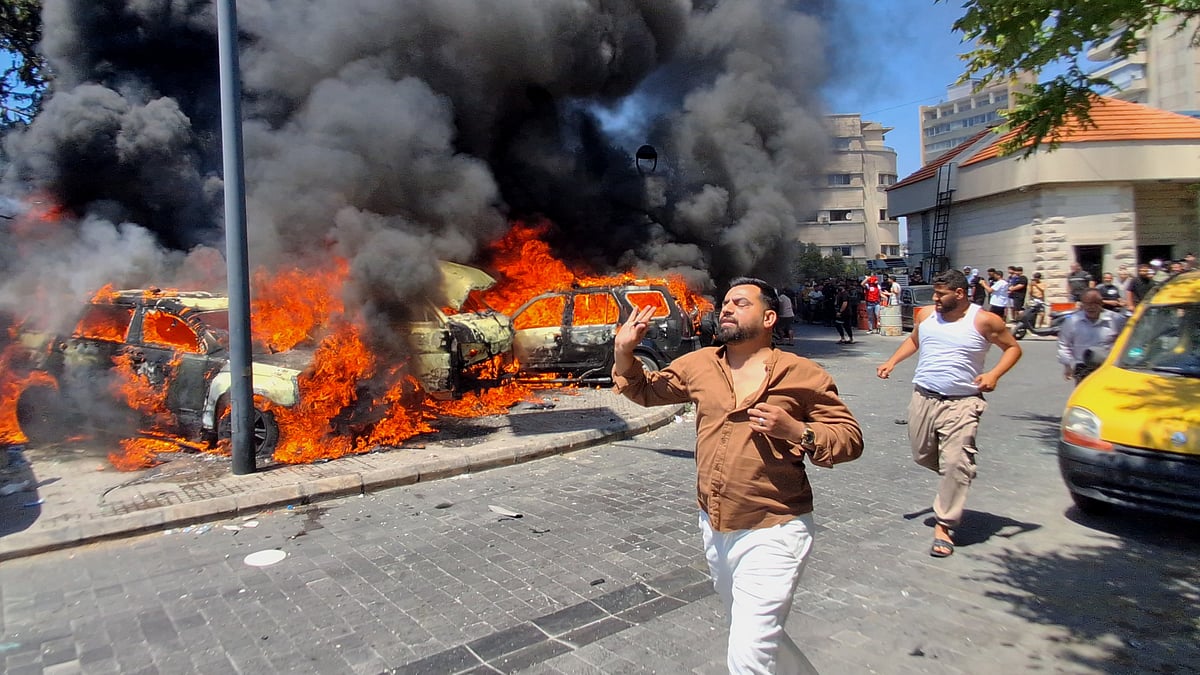
That, however, did not stop Israel from bombing Beirut and sending troops into Lebanon. Hours before the announcement of the peace deal on Sunday, Israel again carried out strikes in Beirut, and Trump told reporters that he was upset with Israeli Prime Minister Benjamin Netanyahu for attempting to derail the peace plan.
Trump is facing an increasingly restive public at home. Surveys indicate that his popularity is declining, while a recent YouGov poll found that 63 per cent of Americans disapproved of his handling of the economy.
With midterm elections due in November 2026, Trump is under pressure to deliver a more stable economy and end the “forever wars” he had vowed to stop. The urgency on the US side to secure a peace deal is evident, but it remains unclear whether Israel is willing to fully support the process.
In Lebanon, more than 3,700 people have been killed so far, according to Western media reports, and around five per cent of the country's territory remains under Israeli occupation since the current war began in February.
About one million people have been displaced, most of them Shia Muslims living in southern Lebanon. The Shia community forms the core of Hezbollah's support base.
The ceasefire in 2024 failed to bring lasting peace, with Israel continuing to strike Hezbollah targets almost daily. The ceasefire declared on 8 April 2026 was also not fully honoured by Israel, and it is becoming increasingly clear that Israel may have little intention of adhering to any ceasefire announced on 20 June in Switzerland.
A statement issued by Iran's Supreme National Security Council on Sunday has further added to the uncertainty. The statement said that “final negotiations will be postponed until after the implementation of the other party's commitments under the memorandum”.
The wording suggests that Iran remains deeply distrustful of both Trump and Israel and is sceptical about how long either country would honour the commitments outlined in the peace agreement.
Meanwhile, energy experts have warned that restoring oil flows through the Strait of Hormuz, clearing the large backlog of tankers, removing mines and normalising shipping and production could take several weeks.
ADNOC, the UAE's state-owned oil company, has indicated that normal and full oil flows through the Strait of Hormuz may not resume until the first or second quarter of next year, even if the peace agreement holds.
Join our official telegram channel (@nationalherald) and stay updated with the latest headlines