World
Rafah reopens, but only five wounded Palestinians allowed to leave Gaza
Partial reopening of Rafah has been touted as a sign of progress in the second phase of the United States-backed Gaza “ceasefire” agreement
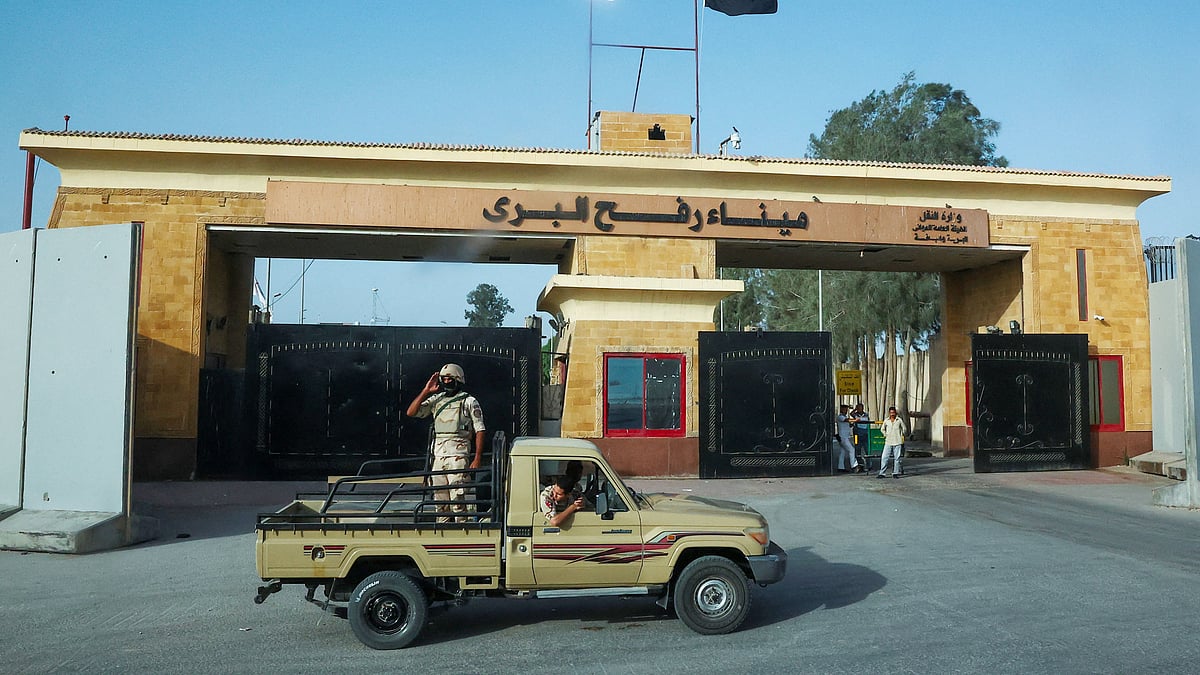
Beneath bold headlines proclaiming the reopening of the Rafah crossing — Gaza’s only land gateway to the outside world not controlled by Israel — the first day of movement told a far grimmer story.
On Monday, as anticipation swelled among thousands of desperate families, just five wounded Palestinians were permitted to leave the besieged enclave for medical treatment, leaving hundreds, if not thousands, stranded in limbo, the Al Jazeera reported.
For Mohammed Abu Mostafa, a 17-year-old from Khan Younis, the day marked a fragile lifeline. One of the five “approved” patients, Mohammed travelled with his mother, Randa, after receiving a sudden early-morning phone call informing them that his name had appeared on the inaugural list of evacuees. They were instructed to rush to the Red Crescent Hospital in Khan Younis before proceeding to Rafah — a crossing that has remained sealed for nearly two years as Israel prosecuted a devastating war on Gaza that has claimed more than 70,000 Palestinian lives, the Al Jazeera reported.
Speaking to the Al Jazeera, Randa recounted the moment, torn between relief and heartbreak. “My son has been suffering immensely,” she said, recounting how Mohammed’s eye was severely injured in an Israeli air attack near al-Mawasi, where the family had been displaced. His optic nerve was damaged, and his vision steadily deteriorated as Gaza’s shattered healthcare system proved unable to treat him. “There is no treatment for him here,” she said quietly, waiting in the hospital courtyard among other anxious families.
The partial reopening of Rafah has been touted as a sign of progress in the second phase of the United States-backed Gaza “ceasefire” agreement. Yet the reality on the ground exposed a process riddled with rigid security controls, opaque procedures and tightly rationed permissions that fell dramatically short of Gaza’s vast humanitarian needs.
Each of the five patients was allowed to travel with only two companions, in accordance with Israeli directives, bringing the total number of travellers to 15, Gaza health authorities said. Mohammad Abu Salmiya, director of Gaza’s al-Shifa Medical Complex, told Al Jazeera that no other patients were allowed to leave, despite earlier plans with the World Health Organization (WHO) for the departure of up to 50 patients a day.
Egyptian officials said 50 Palestinians were also authorised to return to Gaza through Rafah, though it remained unclear whether they had reached the Palestinian side. For Gaza’s Government Media Office, the numbers were painfully inadequate. Its director, Ismail al-Thawabta, said around 22,000 people in Gaza urgently require medical treatment abroad, while nearly 80,000 Palestinians who fled during the war are waiting to return.
In the hospital courtyard, joy for a few was overshadowed by despair for the many. Dozens of patients — including amputees and those with life-altering injuries — gathered with hope in their eyes, only to be turned away as Israeli authorities refused to approve more departures. The disappointment was palpable.
Randa, though grateful, spoke of her anguish at leaving four of her six children behind, permitted to take only one child as an additional companion. “What matters to me now is that my son regains his sight,” she said. “That is my only concern.” She added softly, “I hope to return to Gaza soon, that the blockade will be lifted, and that all patients will be able to travel — just like my son.”
Another of the five evacuees, Ibrahim Abu Thuraya, carries the physical scars of the war. Injured in its early months, he lost his left hand and still has shrapnel lodged behind his left eye. “My condition is getting worse every day,” he said before travelling to Rafah. “There are no medical capabilities in Gaza to deal with this. Doctors told me I must travel abroad.” He will be accompanied by his wife, Samar, and their son.
The process of passage through Rafah remains tightly controlled. Daily lists of prospective travellers are compiled and sent to Israel for security screening. No one may enter or cross without explicit Israeli approval. The European Union Border Assistance Mission is present only to monitor and verify identities, while additional inspections await arrivals at checkpoints under Israeli military control.
Raed al-Nims, head of media for the Gaza Red Crescent, said the organisation was still awaiting updates on further patient transfers. He confirmed that a separate group of patients was moved to Israel on Monday via the Kerem Abu Salem crossing, in coordination with the WHO.
For now, Rafah stands symbolically open but functionally constricted — a narrow gate through which hope passes only in drips and drops, even as Gaza’s wounded continue to wait, trapped between war and healing.
Join our official telegram channel (@nationalherald) and stay updated with the latest headlines