World
US Air Force considers expanding B-21 bomber fleet amid rising China threat
Pentagon officials tell lawmakers evolving security challenges may require more stealth bombers, upgraded tankers and stronger drone defences
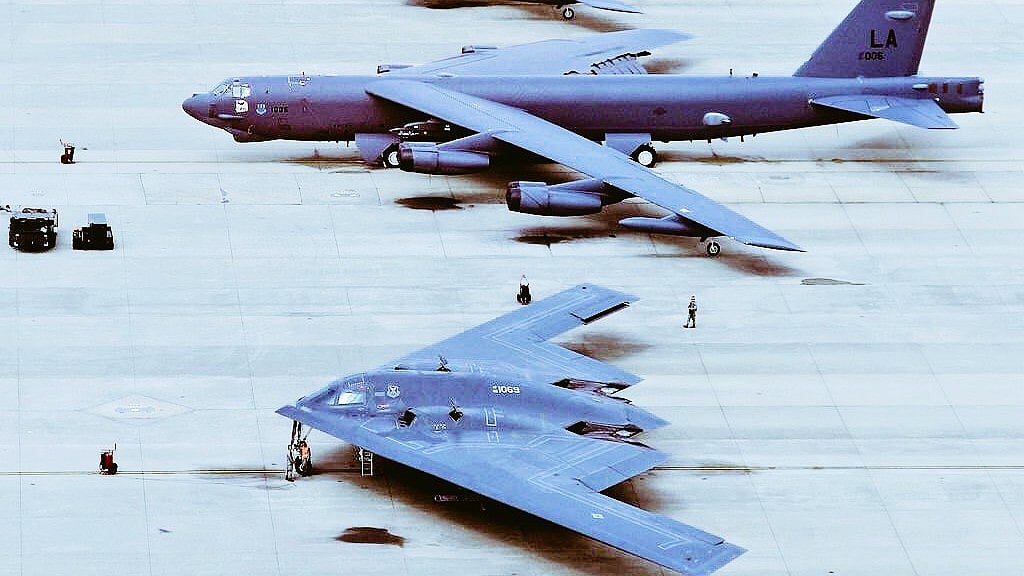
Senior US Air Force officials have indicated that the Pentagon may need to expand its planned fleet of B-21 stealth bombers beyond the current target of 100 aircraft, citing the rapidly growing military challenge posed by China.
Testifying before the House Armed Services subcommittee on projection forces, Lieutenant General David Tabor said the changing strategic environment had prompted the Air Force to reconsider whether the existing B-21 procurement plan would be sufficient for future conflicts.
“My sense is that we do need more than 100,” Tabor told lawmakers, while clarifying that internal assessments were still underway to determine the exact requirement.
The B-21 Raider, designed as the next-generation long-range stealth bomber, is expected to play a central role in US military operations in highly contested regions, particularly in the Indo-Pacific.
Republican Congressman Rob Wittman argued that the security landscape had shifted dramatically since the programme was first conceived more than a decade ago.
“The capability that aircraft provides is pretty amazing,” Wittman said, adding that the bomber would be vital in confronting “a large-scale threat” in increasingly hostile operational environments.
The hearing focused on the Air Force’s proposed fiscal year 2027 budget and broader efforts to modernise ageing fleets of bombers, tankers and transport aircraft.
Subcommittee chairman Trent Kelly warned that rival powers were rapidly advancing their military capabilities.
“Our bomber fleet is the cornerstone of our strategic deterrent,” Kelly said. “Our mobility platforms are the backbone of our operational effectiveness.”
Air Force acquisition chief William Bailey defended ongoing efforts to strengthen aerial refuelling fleets and improve aircraft survivability in future conflicts.
Bailey said the Air Force was investing in enhanced tanker protection systems, improved satellite communications and advanced countermeasures to address concerns over operating large support aircraft near contested airspace.
“We have hundreds of tankers,” Bailey told lawmakers. “We have hundreds and hundreds of airlifters that also face those same style of threats.”
Tabor added that the Air Force intended to modernise the ageing KC-135 tanker fleet over the next six years by equipping aircraft with upgraded communications systems, tactical data links and hybrid satellite connectivity.
Lawmakers also pressed officials over the growing threat posed by drones, particularly following lessons learned from conflicts in Ukraine and the Middle East.
Congressman Eugene Vindman questioned whether the Air Force was investing sufficiently in offensive and defensive unmanned systems.
Bailey acknowledged the rapidly evolving threat environment and cautioned against relying on costly missile systems to counter inexpensive drones.
“Shooting a $1 million weapon at a $4,000 drone does not make sense,” he said.
The Air Force said it was working alongside Joint Task Force 401 and the wider “Golden Dome” missile defence initiative to improve counter-drone capabilities at military installations and overseas operations.
Concerns were also raised over the ageing US airlift fleet, with Congressman Joe Courtney noting that some tanker aircraft currently in service average nearly 64 years old.
Officials confirmed that early planning had begun for a future transport aircraft programme intended to eventually replace ageing C-17 and C-5 fleets.
With IANS inputs
Join our official telegram channel (@nationalherald) and stay updated with the latest headlines