World
US military says it shot down Iran missiles, drones aimed at Gulf allies, Hormuz
Washington targets Iranian radar sites and sanctions network as tensions rise in Gulf and Lebanon
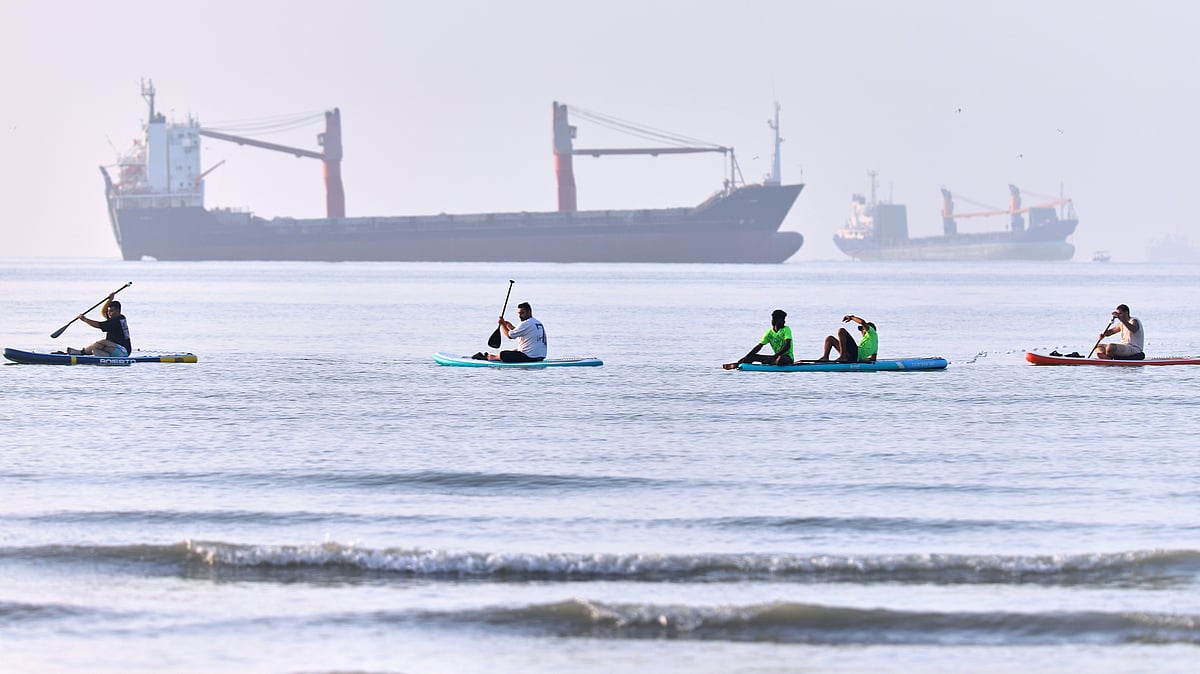
The United States military said it intercepted a barrage of Iranian ballistic missiles and drones aimed at Gulf allies and the Strait of Hormuz on Friday, 5 June, while also striking Iranian coastal radar installations in what it described as a defensive response, further testing a fragile, so-called 'ceasefire' between Washington and Tehran.
The latest exchange came as the administration of President Donald Trump intensified pressure on Iran to agree to a broader deal aimed at ending the conflict.
According to US Central Command (CENTCOM), Iran launched seven ballistic missiles towards Kuwait and Bahrain on Friday night. US forces intercepted six of the missiles, while the seventh failed to reach its target. The military said there were no reports of casualties or injuries among US personnel.
The missile launches followed an earlier incident in which US forces shot down four Iranian drones headed towards the Strait of Hormuz. "The attack drones posed an immediate threat to regional maritime traffic," CENTCOM said in a statement.
Kuwait's military said it had intercepted incoming missiles and drones, while authorities in Bahrain activated air raid sirens and instructed residents to move to designated safe locations and follow official guidance.
Iran's Revolutionary Guard claimed responsibility for targeting the Ali Al Salem Air Base in Kuwait, which hosts US troops, as well as the headquarters of the US Navy's Fifth Fleet in Bahrain, according to Iran's state-run IRNA news agency.
The confrontation comes amid a broader US effort to enforce a blockade on Iranian ports following Tehran's actions in the Strait of Hormuz, a critical shipping route for global oil and natural gas supplies. The disruption has driven up energy prices and created political challenges for Trump and his Republican Party ahead of the US midterm elections.
CENTCOM said it struck several Iranian radar facilities, including one located on an island in the Strait of Hormuz, to prevent further attacks and protect regional security.
Trump pushes for deal, warns of tougher action
The latest flare-up marks another round of hostilities that have complicated efforts to preserve the ceasefire and negotiate a longer-term settlement.
Earlier this week, Iranian drone strikes severely damaged a passenger terminal at Kuwait's main airport, killing one person, injuring dozens and forcing a temporary suspension of operations.
Despite growing concerns that the truce could unravel, Trump struck an optimistic note on Friday. "The situation with Iran seems to be going quite well," he told reporters during an event in Wisconsin.
"We're going to come out of Iran very quickly and it's going to be very strong one way or the other, whether it's a piece of paper or the very tough way," Trump said. "The very tough way is maybe the easier way, but we're going to come out, and your fertiliser prices are going to go way down, just like they were four months ago."
The conflict has increasingly left the White House facing difficult choices. US and Iranian negotiators reached a tentative understanding last week to extend the ceasefire by 60 days and begin a fresh round of discussions on Iran's nuclear programme. However, Trump has reportedly sought additional concessions, while Iranian leaders have yet to publicly endorse the proposed arrangement.
Asked why negotiations were moving slowly, Trump told NBC's "Meet the Press" that Iranian leaders were grappling with difficult decisions. "It's a very hard thing for them," he said, describing Iran as "strong" and "proud".
"There are things they never thought they'd be doing that they're going to have to do. They've got no choice, and it takes a little while."
Trump also claimed that Iran still retained roughly 21 per cent to 22 per cent of its missile stockpile.
Fighting in Lebanon adds to regional tensions
The Trump administration has also pointed to a new ceasefire agreement between Israel and Lebanon, brokered through US-mediated talks in Washington, as a diplomatic success.
However, the deal faces significant challenges after the Iran-backed Hezbollah movement rejected the agreement and fresh violence erupted in southern Lebanon.
The Israeli military carried out strikes at multiple locations in southern Lebanon on Friday and issued evacuation warnings for nine villages, including one sheltering thousands of people displaced by the conflict.
Lebanon's state news agency reported that at least nine people were killed in six separate strikes across the south. Israel's military said two of its soldiers were wounded during clashes with militants in southern Lebanon, one of them seriously.
The continuing violence in Lebanon threatens wider diplomatic efforts to stabilise the region. Iran has insisted that any durable ceasefire must also address the situation in Lebanon, linking the issue to negotiations over the Strait of Hormuz and the broader conflict.
Separately, the US military said its forces boarded a sanctioned oil tanker linked to Iran in the Indian Ocean on Friday as part of efforts to disrupt Tehran's revenue streams. Washington also announced a fresh round of sanctions targeting individuals, companies and vessels accused of supporting Iran's energy exports.
With AP/PTI inputs
Join our official telegram channel (@nationalherald) and stay updated with the latest headlines