World
US representative Rohit ‘Ro’ Khanna describes ‘apartheid’ in West Bank
Around 1,100 Palestinians have been killed by Israeli settlers and IDF forces since 7 October 2023, amid rising settlement expansion and land seizures, activists say
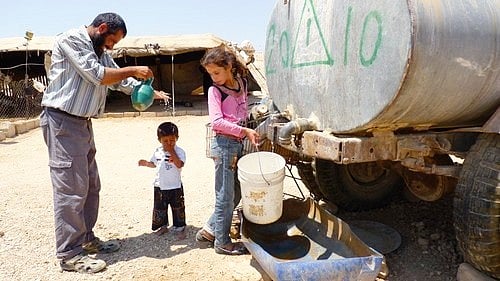
In a short video statement released late on Saturday, 11 July, after returning from the occupied West Bank in Palestine, US Congressman Ro Khanna recalled meeting Palestinians who told him they did not have enough water even to flush their toilets, while Israeli settlers had access to unlimited water. Shopkeepers in Hebron, he said, told him that Israeli settlers living on higher ground would urinate on them and throw acid and rotten vegetables. He also noted that two separate licence plate systems were in use — one for Israeli settlers and another for Palestinians.
He met a school principal who said one of his students had been shot dead at school, but Israeli police had never spoken to him or recorded his statement. No investigation had followed, and the alleged perpetrators were reportedly still moving freely. He also recalled meeting a Palestinian man who said he was beaten by soldiers for not being able to speak Hebrew. The man had pleaded that he had been away from Palestine for several decades before returning and was still learning the language. Khanna also met the father of a 14-year-old boy who was killed by the IDF earlier this year.
“I will be sharing a video of the Mayor of Beit Sahour, a Christian-majority town, in which he talks about being unable to stage the Passion of Christ play because of an illegal settlement being built nearby,” he posted on X.
The testimony has drawn widespread attention because Khanna is a member of the US Congress representing California, one of the most populous and wealthiest states in the country, and is considered a potential Democratic presidential contender for 2028. US Democratic Representative Rohit “Ro” Khanna, who was born to Indian parents and whose father is a chemical engineer from IIT, has also said he became the first American congressman in history to be detained by Israeli settlers during a visit to the West Bank this week.
Khanna, who was in Israel from Tuesday, 7 July 2026, was reportedly questioned by Israeli authorities upon arrival. He said he was shown printouts of his social media posts at the airport and was questioned about his sponsorship of the ‘Block the Bombs’ Bill in Congress, which calls for an end to US arms supplies to Israel. Ironically, when he and his small team of staff members were detained by Israeli settlers on Wednesday, the settlers were carrying US-made M4 assault rifles, he said.
In interviews after his return, Congressman Khanna said the experience was frightening, adding that he had never felt so powerless and humiliated. At checkpoints, he recalled, he was repeatedly questioned about his race and religion. The settlers blocked the van he was travelling in as he was leaving the ruins of a school in Zanuta in the West Bank. He contacted the US Embassy and was advised not to escalate the situation. The armed settlers surrounded the vehicle, banged on it, peered inside and verbally abused him and his team. The group had blocked the van on a dirt track leading to Highway 60 with their own vehicle.
More vehicles arrived with armed settlers, who, Khanna recalled, laughed and jeered at the Americans in the van while displaying their weapons. About an hour later, several IDF troops arrived at the scene but made no effort to speak with them, he said. According to Khanna, they instead talked, laughed and smoked with the settlers, appearing reluctant to end the blockade. After around 75 to 90 minutes, the group left abruptly. Israeli police then arrived and ordered the settlers to leave, warning them not to return.
The US Congressman, who won a seat in the House of Representatives from Silicon Valley in 2016, was not always critical of Israel. He had previously praised Israel as a technological powerhouse. However, Khanna, who supported Bernie Sanders in his 2016 and 2020 bids for the Democratic presidential nomination, has since criticised US arms supplies to Israel and become a vocal advocate for Palestinian rights.
The IDF has officially denied that Khanna and his team were harassed. While acknowledging that the Congressman was delayed by a group of settlers, it said troops were dispatched to clear the blockade. The military maintained that the incident was under investigation and that the identities of the settlers were being reviewed.
Khanna, however, remains unconvinced. While acknowledging that critics may view his decision to highlight the incident as a political stunt, he insists that more Americans, including members of Congress, should visit the occupied Palestinian territories to gain a firsthand understanding of the situation on the ground.
Join our official telegram channel (@nationalherald) and stay updated with the latest headlines