World
Water must never be weaponised, says Pakistan PM at SCO summit
Shehbaz Sharif stresses the sanctity of water treaties, counters terrorism threats, and outlines his vision for inclusive regional development
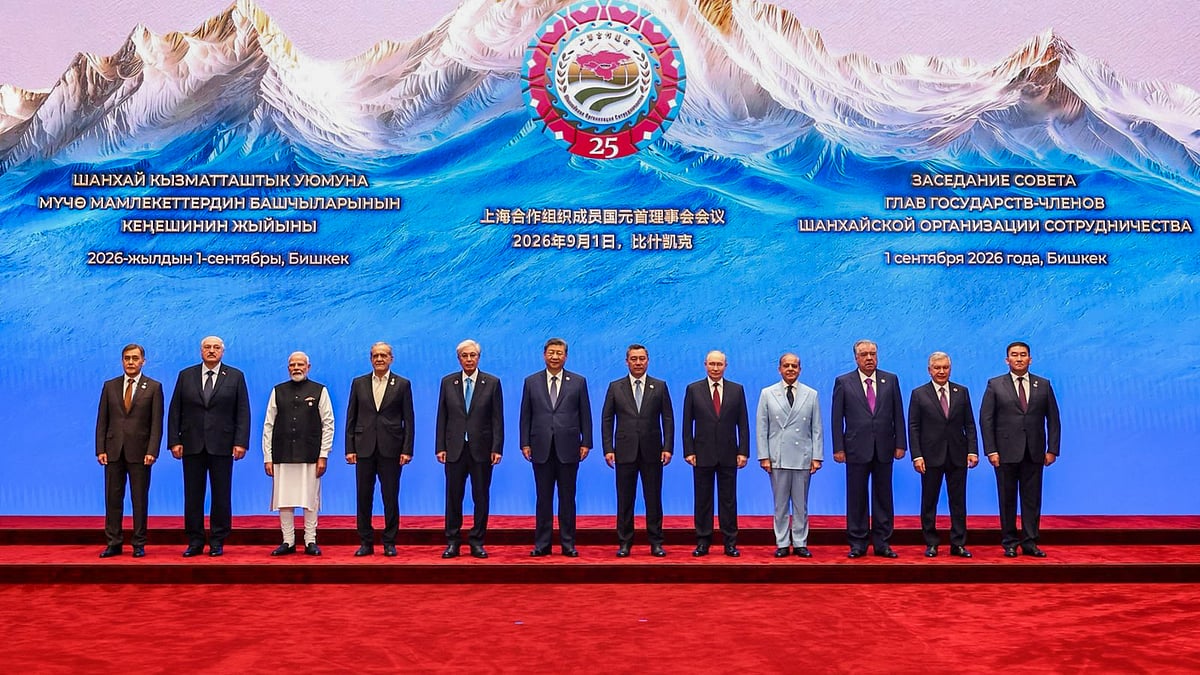
Water is the lifeblood of the region and must never be weaponised, said Pakistan Prime Minister Shehbaz Sharif on Tuesday, 1 September, at the Shanghai Cooperation Organisation (SCO) summit in Bishkek.
Sharif said that the region cannot realise its full potential without lasting peace. “Water is the lifeblood of our region. It sustains millions of lives, nourishes our land and secures the very future of our coming generations,” he said in a reference to the Indus Waters Treaty (IWT) which India put in abeyance after the Pahalgam terror attack in April 2025.
“The treaties governing our shared waters are binding international commitments. They are not things of political convenience to be tossed aside at your will. They must be honoured unconditionally, in letter and spirit,” he said.
His remarks come a day after India rejected the Permanent Court of Arbitration's order setting aside its decision to suspend the IWT with Pakistan, saying the "illegally-constituted" body has no jurisdiction to comment on New Delhi's sovereign decisions.
Pakistan had approached the Permanent Court of Arbitration in The Hague in March this year to determine the status of the Treaty virtually challenging India's action.
Sharif also addressed the ongoing threat of terrorism in the region, describing it as “one of the gravest threats” that has cost Pakistan over 90,000 lives and caused economic losses exceeding $150 billion over the past two-and-a-half decades. Pakistan, as chair of the SCO Regional Anti-Terrorist Structure, has actively worked to bolster regional counter-terrorism efforts. He stressed that “lasting peace will remain beyond our reach” as long as terrorists continue to operate from Afghan soil.
Highlighting Pakistan’s diplomatic role, Sharif spoke of Islamabad’s successful mediation between the US and Iran, culminating in the signing of the Islamabad Memorandum of Understanding in June 2024. He positioned Pakistan as a sincere and trusted mediator amid regional crises, including disruptions caused by the closure of critical energy supply routes like the Strait of Hormuz.
Sharif also detailed Pakistan’s priorities as it prepares to assume the SCO Council of Heads of State chairmanship for 2026-27, with the CHS summit to be hosted in Islamabad. He presented a forward-looking agenda centred on technology, energy development, poverty alleviation, disaster management, health, culture, and sports.
A significant focus is the establishment of an SCO framework for sovereign Artificial Intelligence (AI) infrastructure and governance. This initiative aims to promote responsible and inclusive AI development so that “no member state is left behind.”
Sharif also reaffirmed the ongoing importance of the China-Pakistan Economic Corridor (CPEC) as a gateway linking regional economies to the Arabian Sea. He described Pakistan’s trilateral Makkah Defence Alliance with Saudi Arabia and Turkiye as fundamentally defensive, aimed at cooperation without targeting any other state.
The SCO member states include China, Russia, India, Iran, Kazakhstan, Kyrgyzstan, Pakistan, Tajikistan, Uzbekistan, and Belarus. The summit saw informal meetings between Sharif and multiple leaders, including China’s Xi Jinping, Russia’s Vladimir Putin, and Turkey’s Recep Tayyip Erdogan.
Join our official telegram channel (@nationalherald) and stay updated with the latest headlines