World
Donald credits Melania with local truce in Ukraine, 'forgets' to mention Pope
Pope Leo XIV had publicly urged Putin to allow aid into occupied Oleshky a week before the US first lady’s claim of a ceasefire
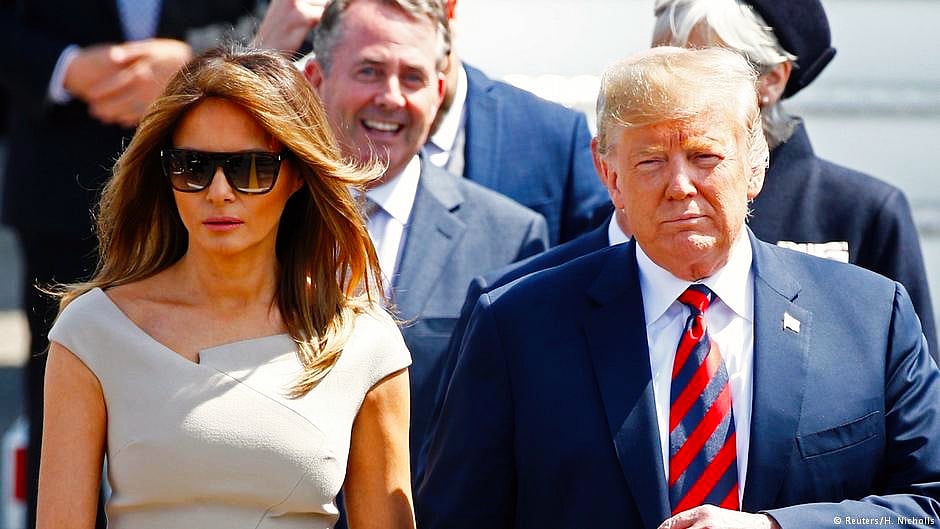
White House credits Melania Trump with securing a local ceasefire but does not mention Pope Leo XIV’s earlier intervention.
The Pope appealed to Putin on 16 October and discussed the humanitarian crisis with Zelenskyy three days later.
The truce is intended to facilitate aid deliveries and civilian evacuations from Russian-occupied Oleshky.
The White House has credited US first lady Melania Trump with securing a ceasefire between Russia and Ukraine to allow humanitarian aid into the occupied Ukrainian city of Oleshky, without mentioning that Pope Leo XIV had publicly appealed for the same humanitarian outcome a week earlier.
In an announcement on Friday, 23 October, the White House said Melania Trump had successfully secured a localised ceasefire, under which Russia and Ukraine would temporarily halt military operations in Oleshky to facilitate aid deliveries and prepare for civilian evacuations. The truce is scheduled to begin on 29 October.
The announcement described the first lady’s role in emphatic terms, saying she had worked directly with Russian and Ukrainian leaders to establish the agreement’s objectives, technical procedures and terms. It also quoted her as saying that without her intervention, delivering humanitarian aid and evacuating elderly residents would have been impossible.
However, the statement made no reference to Pope Leo XIV’s diplomatic intervention, which had already been made public by the Vatican.
On 16 October, the Pope spoke by telephone with Russian President Vladimir Putin, expressing deep concern over the humanitarian crisis in Oleshky, in Ukraine’s southern Kherson region. He called for a ceasefire to allow food and medical assistance to reach the city and enable civilians to leave voluntarily and safely, according to the Holy See Press Office.
The Kremlin confirmed the conversation, while the Vatican published details of the Pope’s appeal.
Three days later, on 19 October, the Pope discussed the crisis with Ukrainian President Volodymyr Zelenskyy. A Vatican statement explicitly referred to the humanitarian ceasefire request he had already presented to Putin and expressed hope that cooperation between Russia and Ukraine would allow aid deliveries and safe civilian evacuations.
That appeal, too, was publicly documented before the White House announced Melania Trump’s role.
The sequence raises questions about the White House’s decision to present the ceasefire primarily as the first lady’s achievement without acknowledging the Pope’s earlier diplomatic initiative. The public record establishes that the Pope had called for a humanitarian truce before the announcement; it does not, by itself, establish how his intervention contributed to the final agreement or whether the first lady’s negotiations depended on it.
Melania says she initiated negotiations
According to the White House, the crisis came to Melania Trump’s attention during a private discussion at her 'Fostering the Future Together' event in New York during the United Nations General Assembly session in September.
The first lady said she and her representative used a communication channel established with Russia and Ukraine during previous efforts to reunite children displaced by the war. She said both countries assigned teams to work on the arrangements, including the complex process of clearing mines.
The White House described Melania Trump as the intermediary who aligned the parties on the agreement’s objectives, timing and implementation.
The Pope’s appeal and the first lady’s subsequent negotiations need not be mutually exclusive. The distinction, however, is important: the Vatican had publicly documented the Pope’s request for a humanitarian ceasefire before the White House announcement, which did not acknowledge that earlier initiative.
Oleshky’s humanitarian crisis
Oleshky, in the Russian-occupied part of Ukraine’s Kherson region, has faced severe shortages of food and medical supplies. Electricity, heating and running water are unavailable, while mined roads and continuing military activity have made movement dangerous.
The city, which had around 24,000 residents before Russia’s full-scale invasion in February 2022, was captured by Russian forces in the opening days of the war. Its infrastructure was further devastated by flooding after the Kakhovka dam collapsed in June 2023.
The planned ceasefire is intended to allow mine clearance, the delivery of food, medicines and other essentials, and the evacuation of civilians who wish to leave. Russian and Ukrainian officials have acknowledged the arrangements, although the operation’s success will depend on the truce holding and safe passage being maintained.
UN secretary-general António Guterres has welcomed the initiative and expressed hope that a local humanitarian pause could contribute to a wider ceasefire and a just and lasting peace in Ukraine.
With AP/PTI inputs
Join our official telegram channel (@nationalherald) and stay updated with the latest headlines