Nation
Difficult to define friends, enemies today, India must act on its own: CDS
Remarks on autonomy come amid debate over foreign policy direction and claims of global isolation
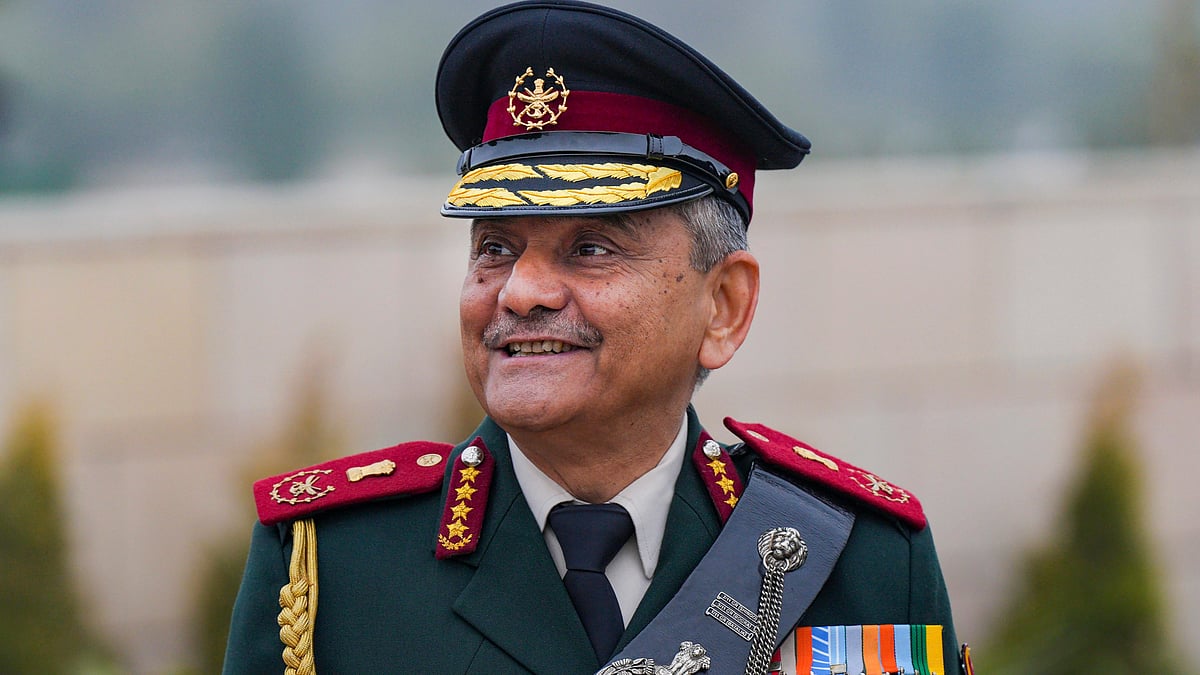
Chief of Defence Staff General Anil Chauhan on Friday said assumptions about fixed friendships or adversarial blocs are increasingly unreliable in the evolving global order, stressing that India must remain prepared — mentally, structurally and materially — to act independently when circumstances demand.
Speaking at the ‘JAI’ (Jointness, Aatmanirbhar Innovation) seminar organised by the Southern Command, Chauhan underscored the continuing relevance of strategic autonomy, arguing that partnerships are useful when aligned with national interests but cannot replace domestic capability or the ability to make sovereign choices.
“In today's world, it is difficult to define who are your friends, who are your allies, who are your enemies and who are your adversaries. Strategic alignments have become fluid and transactional,” he observed.
“India must, therefore, be prepared to act independently when required. That preparedness has to be mental, structural and material,” he added.
The CDS said the international security landscape is undergoing rapid transformation, marked by volatility and shifting power equations. He pointed to the rise of coercive nationalism and the use of economic tools — including trade routes, supply chains, technology access and control over critical resources — as instruments of strategic pressure.
He also warned of weakening norms in state conduct, including challenges to sovereignty and territorial integrity, alongside advances in long-range and precision weapons that lower the threshold for the use of force.
“Declared wars are becoming obsolete. Competition is increasingly manifesting through proxies, sub-threshold operations and cyber activities,” Chauhan said, adding that cognitive and information warfare now target entire societies rather than conventional military forces.
His remarks come at a time when India’s foreign policy trajectory has become the subject of domestic political debate. Opposition leaders and some commentators have criticised the government’s diplomatic approach in recent years, arguing that a perceived tilt towards select strategic partners and strained ties with certain neighbours have contributed to what they describe as India’s growing global isolation.
The government has strongly rejected such claims, maintaining that its outreach — from participation in multilateral groupings to bilateral engagements across regions — reflects a policy of multi-alignment designed to enhance national influence and autonomy.
Against this backdrop, Chauhan’s emphasis on independence and flexibility echoed the long-standing doctrine of strategic autonomy that has underpinned India’s external engagement since the Cold War era, even as the geopolitical environment becomes more fragmented and transactional.
Referring to the seminar’s theme, ‘Jai Se Vijay’ (success from victory), Chauhan said it represented more than a slogan, describing it as a strategic principle linking intent with outcomes. He explained that “JAI”, as articulated in recent defence deliberations, encapsulates Jointness, Aatmanirbharata and Innovation — priorities he said are critical for future military readiness.
He argued that preparedness will depend on addressing vulnerabilities, revising outdated doctrines and overcoming organisational silos within the armed forces. Emphasising measurable capability over rhetoric, he said victory must be defined by verifiable results rather than aspirational messaging.
India’s armed forces, he concluded, must adapt to an era marked by technological disruption and intensified strategic competition, shaping themselves to operate effectively in a decade likely to be more contested and complex than the last.
With PTI inputs
Join our official telegram channel (@nationalherald) and stay updated with the latest headlines