


Vilification of farmers must stop: Cong on Chouhan remarks on stubble burning
Jairam Ramesh says farmers unfairly blamed as studies point to vehicles, dust and regional inflows
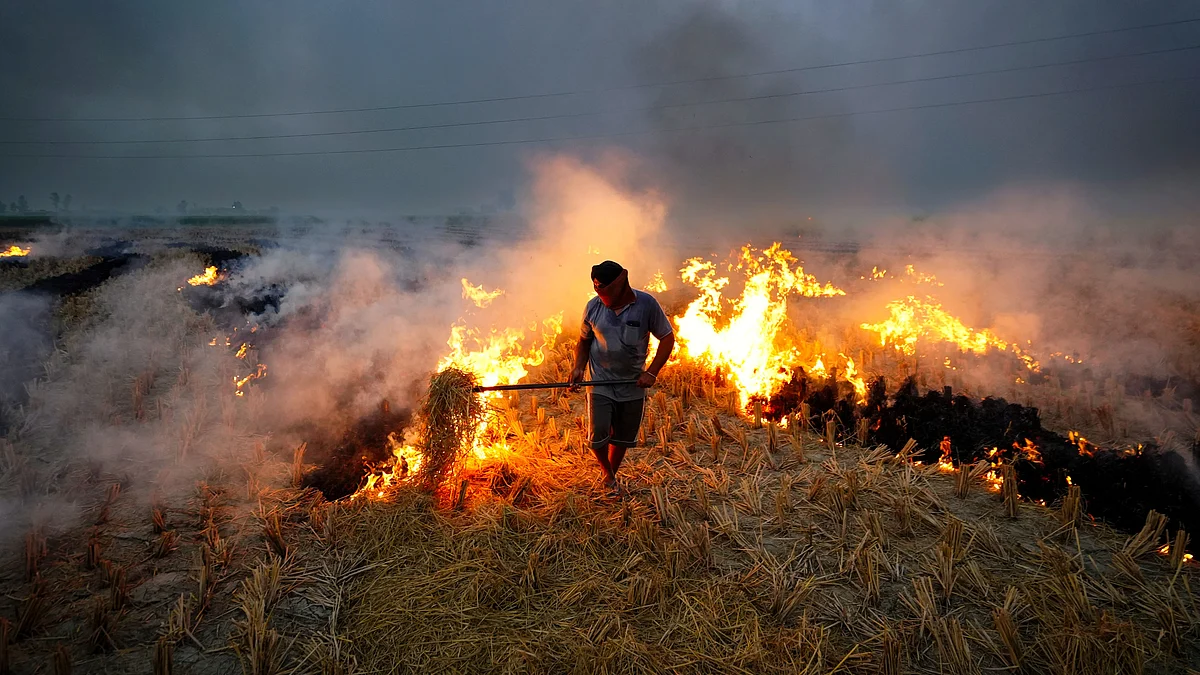


Congress MP and general-secretary (communications) Jairam Ramesh on Friday cited remarks by Union agriculture minister Shivraj Singh Chouhan in the Rajya Sabha to argue that paddy stubble burning accounts for only a small share of pollution in Delhi–NCR, and called for an end to what he termed the “vilification of farmers”.
Responding to a question in the Upper House, Chouhan said stubble burning is not the sole cause of air pollution in the region and that scientific studies indicate it contributes no more than about 5 per cent of the pollution load even during winter months.
Ramesh seized on the statement to criticise the Union environment ministry’s narrative in recent years, which has often highlighted crop-residue burning by farmers in Punjab, Haryana and Uttar Pradesh as a key driver of seasonal pollution spikes in north India.
“Today, in the Rajya Sabha, the Minister of Agriculture and Farmers Welfare stated categorically that paddy stubble burning is responsible for just around 5 per cent of the pollution load. The vilification of farmers for causing pollution must stop,” the former Union environment minister said in a post on X.
The exchange has revived debate over the relative contribution of different pollution sources in the capital — a question addressed in multiple recent studies and policy discussions. Analyses have consistently pointed to a far more complex mix of factors, including vehicular emissions, construction dust, industrial activity and the transport of pollutants from surrounding regions.
Research cited in recent reporting shows that vehicular emissions alone account for nearly half of locally generated PM2.5 pollution in Delhi, making them the single largest contributor among internal sources. Another assessment found vehicles responsible for about 51.1 per cent of pollution from all local emission sources, underscoring the scale of the city’s transport-related emissions problem.
Broader source-attribution work also suggests that local emissions tell only part of the story. A study by the Centre for Research on Energy and Clean Air found that roughly 65 per cent of Delhi’s pollution in 2025 originated outside the city — largely from neighbouring NCR districts — highlighting the role of regional airflows and geography.
Meteorological conditions and seasonal inversion layers further trap pollutants, while road dust, construction and waste burning also add to winter pollution levels, alongside vehicle emissions estimated at around 30–40 per cent of PM2.5 concentrations.
Dust itself has emerged as a major contributor in recent expert discussions. Specialists told municipal officials that road dust, soil and construction activities account for as much as 42 per cent of PM10 pollution in Delhi–NCR, indicating the scale of non-agricultural sources.
The prominence of vehicular emissions has long shaped policy responses in the capital. Delhi's previous Aam Aadmi Party government repeatedly deployed the 'odd–even' road rationing scheme — restricting private vehicles based on licence plate numbers — during high-pollution episodes as an emergency measure to curb traffic-related emissions. While its effectiveness has been debated, the policy itself reflected official recognition that transport emissions form a central part of Delhi’s air-quality challenge.
Environmental planning efforts continue to prioritise mobility reforms, including expansion of public transport, electrification of buses and stricter traffic enforcement, as part of multi-sector strategies aimed at reducing particulate levels.
Against this backdrop, Chouhan’s remarks and Ramesh’s response have fed into a longstanding political and policy dispute over accountability for the capital’s pollution crisis. Experts broadly agree that stubble burning contributes episodically and seasonally, but stress that the city’s air quality is shaped by multiple interacting factors — from transport emissions and dust to regional inflows and weather conditions — rather than any single source.
Join our official telegram channel (@nationalherald) and stay updated with the latest headlines