Nation
SIR row: Election Commission makes rare admission of technical glitch in West Bengal
'Glitch' adds to the messy process of SIR in West Bengal, where ECI's system has flagged 1.36 crore ‘logical inconsistencies’
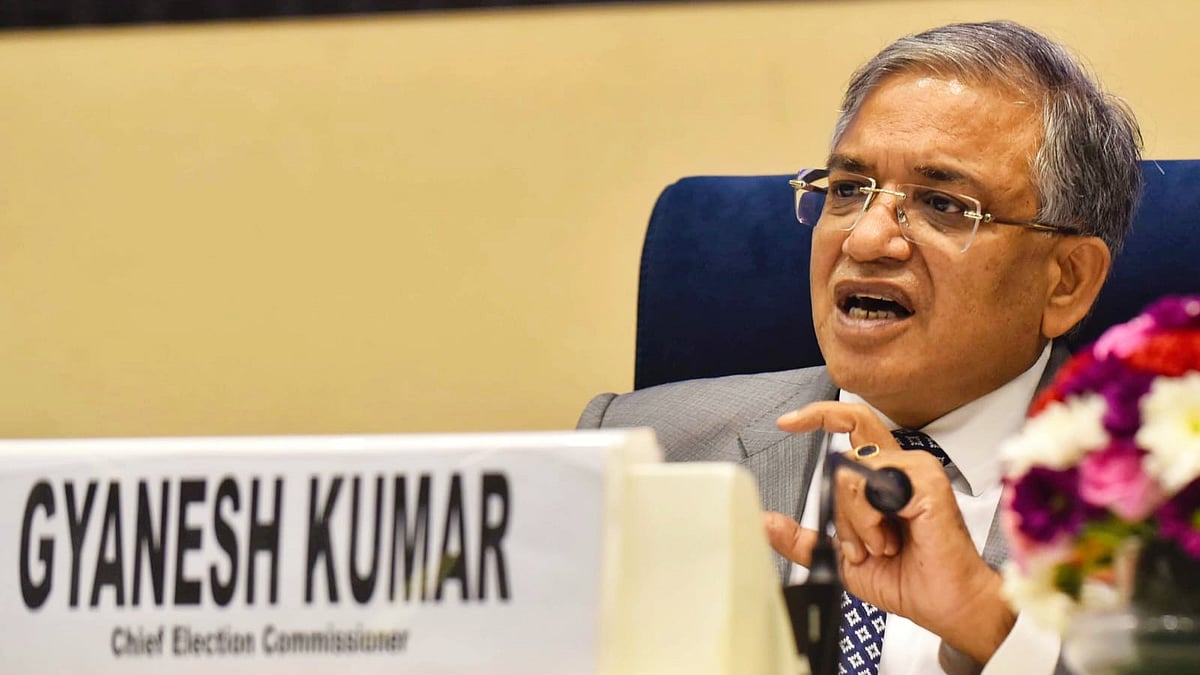
The ECI (Election Commission of India), in a rare admission on Sunday, accepted that a technical glitch made its system wrongly flag voters as ‘unmapped’ despite successful mapping on the ground.
Coincidentally, The Reporters’ Collective, in a fresh investigation today, has flagged the use of a new algorithm by ECI and resumption of de-duplication software without any protocol or guideline.
The 'glitch' adds to the messy process of SIR (Special Intensive Revision) in West Bengal, where the election commission’s system had flagged 1.36 crore ‘logical inconsistencies’.
Acknowledging a ‘system error’, a rare admission by the ECI, the Commission has practically asked ground level DROs, EROs and BLOs to stop summoning voters for hearing if technical issues led to them being flagged as unmapped.
‘Incomplete’ (defective?) conversion of the PDF format of the 2002 rolls into CSV format leading to linkage failures led to the glitch, explains a communication from the CEO (Chief Electoral Officer), West Bengal.
Hearing notices, however, were auto-generated by the system and sent out to voters and BLOs. The fresh directive now wants the field staff to hold back notices which remain to be served.
An investigation by The Reporters’ Collective published on Sunday, 28 December, meanwhile, flagged that the ECI, which told the Supreme Court barely weeks ago that de-duplication software was not being used since 2022 due to defective results, has resumed use of the software earlier in December, 2025 midway through the revision of rolls in eight states and three UTs.
The re-activation was done after scrapping the “ground verification process outlined in its manual for de-duplication”, the investigation found.
“The ECI has also activated a second algorithm-based software midway into the revision of voter lists in 12 states, The Reporters’ Collective found. This too has been done without any written instructions, manual, standard operating procedures on record, or with information to citizens,” The Reporters’ Collective stated based on conversations with officials in Uttar Pradesh and West Bengal.
The Reporters' Collective has claimed that its reporters “discreetly attended training sessions held by top officials for district-level ECI officers…we video recorded the workings of the de-duplication software, which has been switched on. We also witnessed the working of the second software that the ECI has turned on”.
A district election official is quoted as saying, “Each day (of the SIR), our BLO app was populated with new tech protocols and lists. It showed ECI had no clear plan while running these algorithmic checks.”
The SIR, has already led to 86.46 lakh people being marked ‘unmapped’ and 3.7 crore people removed from the draft voter list in the eight states and three UTs. The draft voter list for Uttar Pradesh is due to be published on 31 December, 2025.
“The use of uncodified algorithms without protocols in place to use has led to yet another layer of opaqueness and chaos,” the investigation revealed.
The de-duplication software, in use since 2018, matched demographic details and photographs to throw up a list of voters potentially holding two or more voter IDs. The ECI manual required officials to carry out an elaborate exercise on the ground to verify if one or more people carried multiple voter cards, provide a quasi-judicial hearing to the voter and then delete any duplicate IDs.
By quietly dropping the use of the software and allowing system-generated notices and deletions, the ECI acted in violation of the law which requires voters to be heard and given reasonable opportunity at representation. It also encroached upon the jurisdiction of the field-level ERO who is authorised under the law to delete and add voters.
This has already been flagged by the West Bengal civil services officers’ association, which may also explain why the ECI is having second thoughts about the exercise, especially in West Bengal.
The second software deployed by the ECI mid-way into the second phase of SIR was designed to map the voters and catch ‘logical discrepancies’.
In Uttar Pradesh, officials began receiving lists of voters with ‘logical discrepancies’ around 18–20 December, just days before the initial 26 December deadline for publishing the draft voter lists, the investigation by TRC reveals. While the lists appeared abruptly on the BLO App, field staff and supervisors had received no prior notification regarding this additional step.
“I found out about this (logical discrepancies) yesterday (21st December). We’d completed the whole process, now we have to start over. We haven’t gotten any proper training but we were told in a meeting how this shall be dealt with,” a booth-level officer working in Ghaziabad told The Reporters' Collective.
Join our official telegram channel (@nationalherald) and stay updated with the latest headlines