Nation
India walks Chabahar tightrope under threat of US sanctions
Strategic port project becomes flashpoint over Iran policy, tariffs and domestic political calculations
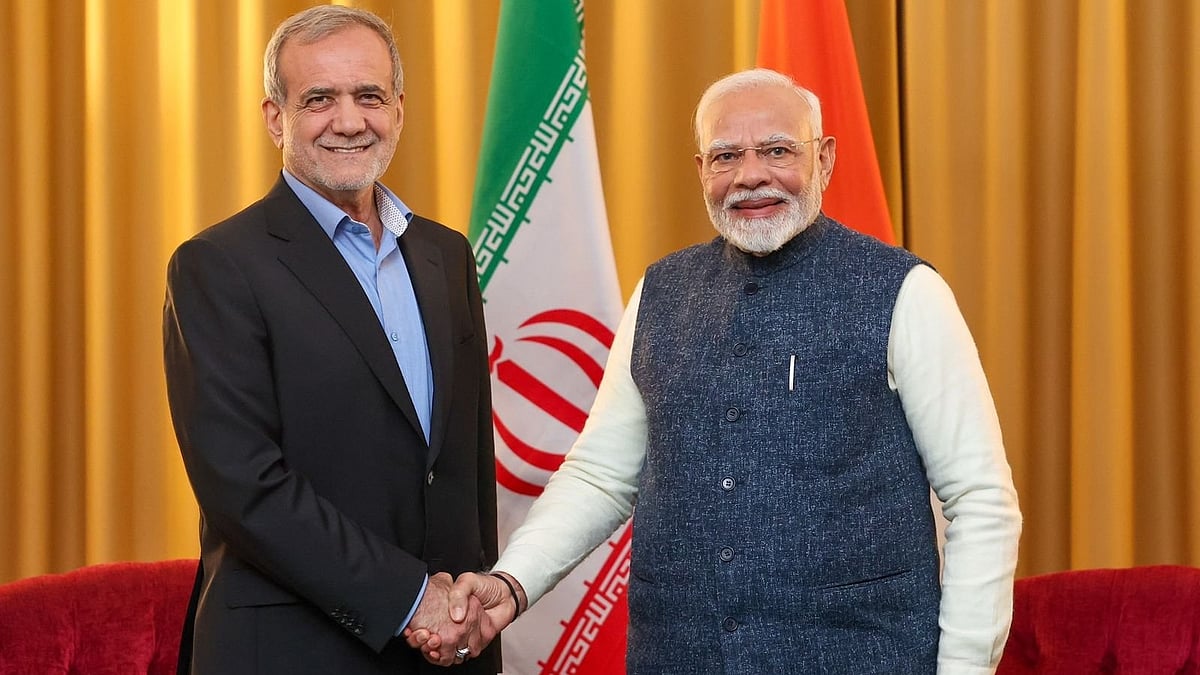
India is in active talks with the United States to extend and clarify the conditional sanctions waiver for the Chabahar Port project in Iran, the Ministry of External Affairs (MEA) said this week, stressing that New Delhi remains “engaged” with Washington on the matter. The waiver — issued in October 2025 and valid through 26 April 2026 — is central to India’s ability to operate at the Iranian port without falling foul of broader US sanctions targeting Tehran.
The controversy has triggered a sharp political backlash in New Delhi, with the Congress accusing the Modi government of ceding strategic space to the United States and compromising India’s long-term geopolitical interests. Party leaders have claimed that the government has effectively relinquished operational control over Chabahar under US pressure, pointing to the timing of the sanctions waiver revocation and subsequent negotiations with Washington.
Congress figures have also highlighted that India has invested more than $120 million of public funds in developing the Shahid Beheshti terminal through India Ports Global Ltd, arguing that the project was once showcased by Prime Minister Narendra Modi as a major strategic and economic breakthrough for India, providing a direct maritime route to Afghanistan and Central Asia while bypassing Pakistan and counterbalancing China’s Belt and Road Initiative through the Gwadar port.
They note that the same project is now subject to foreign sanctions and tariff threats, and question why official communication around its status has become muted.
The party has used the episode to mount a broader critique of foreign policy under the Modi government, alleging that India’s strategic autonomy is being eroded and that policy choices concerning Iran are now effectively being shaped in Washington. Congress leaders have posed pointed questions about whether New Delhi’s Iran policy is being “dictated from the White House”, and have demanded that the government publicly clarify the port’s ownership, operational status and future roadmap.
The government, for its part, has rejected the charge that it has “surrendered” Chabahar or compromised national interest. Officials argue that India must manage a complex diplomatic environment involving both the US and Iran, and that quiet diplomacy — rather than public confrontation — is the only viable method for securing continued exemptions that allow Indian entities to operate at the port without punitive sanctions.
The India–US talks are unfolding against fresh US warnings over Iran-related commerce. On 12 January, US President Donald Trump announced on his Truth Social account that any country doing business with Iran would face a 25 per cent tariff on all trade with the United States “effective immediately”.
The message has injected fresh uncertainty into how sanctions and tariffs might be sequenced and enforced, particularly for countries like India that straddle multiple geopolitical relationships.
The MEA, responding to queries, said it is also monitoring this tariff announcement and other linked measures, while noting that India and Iran continue to maintain substantial economic ties. Bilateral trade currently stands at around $1.6 billion, with Indian exports worth roughly $1.2 billion and imports amounting to about $0.4 billion.
Chabahar has been central to India’s regional strategy since the early 2000s, allowing access to landlocked Afghanistan and onward to Central Asia without passing through Pakistan. Operated by India Ports Global Limited (IPGL) at the Shahid Beheshti terminal, the port has supported both humanitarian shipments — including wheat consignments to Kabul — and India’s participation in the International North–South Transport Corridor (INSTC).
However, progress at Chabahar has been repeatedly entangled in Washington’s Iran sanctions regime. The US granted India a targeted exemption in 2018, recognising the port’s role in supporting Afghanistan at a time when the US itself sought to stabilise the region.
But in September 2025, the Biden administration revoked that long-standing waiver, aligning Chabahar with Iran’s broader sanctions framework. The cancellation exposed Indian operators and contractors to possible penalties under US law and threw the future of the port into uncertainty.
India later secured a six-month interim exemption to keep operations functioning through April 2026, and is now attempting to negotiate a more durable arrangement. Indian officials frame the current phase as a test of strategic balancing, requiring cooperation with Washington without sacrificing India’s long-term interests in West and Central Asia.
What makes the present moment unusually fraught is the convergence of three pressures: renewed US sanctions energy, emerging tariff threats, and a vocal domestic political debate over whether India is losing room to manoeuvre between great powers. Iranian officials, including the foreign minister, have visited New Delhi seeking clarity on the port’s future, just as Indian diplomats work Washington for extended relief.
The MEA, for its part, has chosen caution over confrontation, reiterating that India’s ties with the United States and Iran are both longstanding and significant — and that the priority now is a structured, lawful arrangement that protects national interests.
Join our official telegram channel (@nationalherald) and stay updated with the latest headlines