Nation
Keep children’s names out of news and off internet, says CJI Surya Kant
Chief Justice calls for rehabilitation without stigma and dedicated legal support as Supreme Court consultation reviews a decade of the Juvenile Justice Act
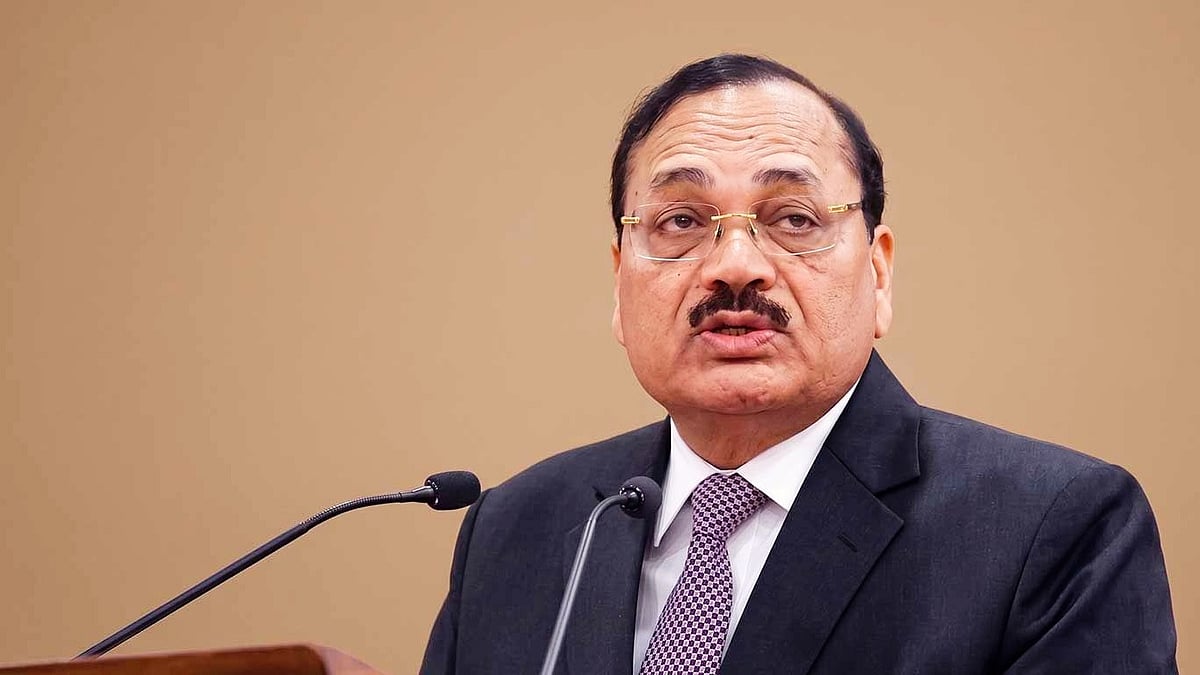
CJI Surya Kant urged that children in conflict with the law remain unidentified in news reports and online, allowing rehabilitation without lasting stigma.
He called for dedicated lawyers from the outset, stronger legal services at Juvenile Justice Boards and joint training for professionals working with children.
Justice B.V. Nagarathna highlighted pending cases and incomplete Boards, stressing that juvenile justice must protect children’s capacity to grow and change.
Chief Justice of India Surya Kant on Saturday called for the identities of children in conflict with the law to be kept out of news reports and off the internet, warning that a lasting digital record could undermine their opportunity to rebuild their lives.
Speaking at a national consultation on ten years of the Juvenile Justice (Care and Protection of Children) Act, 2015, the CJI said the expression “child in conflict with law” described a circumstance rather than a permanent identity.
“The journey truly ends only when the past no longer casts a shadow over the future,” he said, urging timely destruction of old records and protection of children’s names from publicity that could follow them for years.
The consultation was organised by the Supreme Court’s Juvenile Justice Committee in association with UNICEF to assess progress, challenges and priorities for the next decade.
Justice Kant said a decade might be a short period in the life of a statute but represented more than half of a childhood. A 15-year-old brought before a Juvenile Justice Board when the Act came into force in January 2016 would now be about 25, he noted.
The law, he said, rested on the belief that a child offered a second chance was more likely to become a productive member of society than one permanently branded a criminal.
He stressed that rehabilitation must extend beyond release from an institution and restore a young person’s place in the family, school and community without stigma.
Many children entering the justice system had experienced interrupted schooling, strained family circumstances and poverty, the CJI said. Often, a child in conflict with the law had previously been a child in need of care and protection that was not provided in time.
“Our answer to such a predicament is restoration, not retribution,” he said.
Justice Kant also highlighted gaps in access to legal representation. He said the National Legal Services Authority’s child-friendly legal services scheme of 2024 provided for a lawyer at the police station and a legal services clinic at every Juvenile Justice Board, but many Boards still lacked such clinics.
Without adequate representation, he warned, early decisions affecting a child’s care and well-being could be taken without their interests being properly presented.
He urged legal services institutions to consider a separate wing of trained defence lawyers for children. Each child should have a dedicated lawyer from the outset, with continuity of assistance through police procedures, Board proceedings and rehabilitation.
The CJI also advocated joint training for police officers, probation officers, Board members, lawyers and observation-home staff, involving psychologists and addressing adolescence, trauma and poverty.
“Those who work together should not be trained in separate rooms,” he said.
He called for regular, independent assessments of rehabilitation outcomes, including whether young people returned to education, found employment and avoided further contact with Juvenile Justice Boards, while safeguarding their privacy.
Addressing the inaugural session, Supreme Court judge Justice B.V. Nagarathna said adults had a responsibility to understand children’s anxieties rather than dismiss concerns that could leave them feeling alienated.
“All children are ours and their distress is ours too,” she said.
She emphasised that a Juvenile Justice Board was not intended to function as a “miniature criminal court”. Its approach must recognise children’s capacity for development and change.
Citing an India Justice Report study published in November 2025, Justice Nagarathna said 55 per cent of cases before Boards across 18 states and two Union Territories remained pending in the year ending October 2023.
Of 1,00,904 cases before 362 Boards during that period, 45,097 were disposed of, leaving more than 55,000 children awaiting decisions, she said.
The study also found that 111 of 470 responding Boards — about 24 per cent — were operating without the full complement of a principal magistrate and two social worker members. She clarified that the figures related to 2023.
Describing the Act as a law concerned with the future, Justice Nagarathna said: “When a child breaks the law, the law must not break the child.”
With PTI inputs
Join our official telegram channel (@nationalherald) and stay updated with the latest headlines