Nation
Maharashtra government softens its stand on mandatory Marathi for taxi, auto drivers
Strike threat, North Indian vote bank and Shiv Sena factional politics behind policy pause
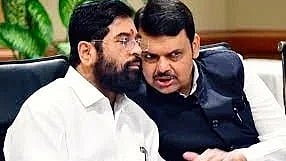
The Maharashtra government’s decision to temporarily defer strict enforcement of mandatory Marathi proficiency for taxi and auto-rickshaw drivers has exposed the political balancing act behind the language debate in the state.
The Devendra Fadnavis-led government had initially insisted that from 1 May, drivers who could not speak Marathi could face cancellation of licences. However, after days of confrontation with taxi and auto unions — and threats of a statewide strike from 4 May — the government stepped back and postponed strict enforcement until 15 August 2026.
What the government announced
After meeting union representatives and Regional Transport Office (RTO) officials, Maharashtra Transport Minister Pratap Sarnaik announced that drivers would be given time to learn Marathi before punitive action begins.
The government said Marathi training would continue until 15 August, after which the language requirement would be implemented.
Officials insisted the government had not withdrawn the policy, but merely delayed enforcement.
Strike threat forced rethink
Taxi and auto unions had warned of a statewide strike beginning 4 May, raising fears of major disruption to public transport in Mumbai, Thane and other urban centres.
A large number of taxi and auto drivers in the Mumbai Metropolitan Region are migrants from North India, particularly Uttar Pradesh and Bihar.
Industry representatives argued that lakhs of drivers could not suddenly comply with language rules and said strict enforcement would threaten livelihoods.
The possibility of transport paralysis in Mumbai placed the government under significant pressure.
Political calculations behind Marathi push
Political observers say the Marathi language issue is deeply tied to electoral calculations.
On one hand, parties seek to consolidate Marathi identity politics and appeal to regional sentiment. On the other, they cannot afford to alienate the sizeable North Indian voter base linked to the transport sector.
Analysts estimate that more than 10 lakh drivers across Maharashtra could be directly affected by strict Marathi enforcement.
The government’s softer stand is being viewed as an attempt to balance both constituencies.
Shiv Sena faction battle
The controversy has also intensified the rivalry between the two Shiv Sena factions led by Uddhav Thackeray and Eknath Shinde.
The transport unions have traditionally been seen as a stronghold of the Thackeray-led Shiv Sena faction. However, the Shinde faction is now trying to build influence within the sector.
Shinde Sena leader Sanjay Nirupam had openly taken a softer line in support of North Indian drivers during the controversy.
Political experts believe the Marathi enforcement debate is also linked to attempts to weaken the influence of unions aligned with the ठाकरे faction.
Sanjay Raut attacks government
Following the rollback, Sanjay Raut criticised Transport Minister Pratap Sarnaik and demanded his resignation.
Raut said that if the minister truly believed in Marathi pride, he should quit rather than allow the government to retreat on the issue.
His remarks are being interpreted not only as a defence of Marathi identity politics but also as a direct attack on the Shinde faction.
MNS and Congress reactions
Maharashtra Navnirman Sena, led by Raj Thackeray, had adopted an aggressive Marathi-first position during the debate.
However, the government’s softer stance appears to have diluted the political momentum the party hoped to gain from the issue.
Meanwhile, Indian National Congress criticised the entire episode as socially divisive.
Earlier language controversies
This is not the first time Maharashtra’s language politics has triggered controversy.
In 2020, the government had prepared Marathi learning booklets for non-Marathi drivers but enforcement remained weak.
More recently, the state also faced protests over the three-language formula and the proposed introduction of Hindi in schools, forcing the government to retreat.
Political analysts say the latest controversy shows how language politics in Maharashtra is increasingly shaped by competing electoral compulsions.
While invoking Marathi identity remains politically important, parties in power are equally conscious of the economic and electoral influence of migrant communities, especially in Mumbai and surrounding regions.
For now, the government has avoided a direct confrontation with transport unions, but the issue is likely to resurface once the new deadline approaches in August.
Join our official telegram channel (@nationalherald) and stay updated with the latest headlines