Nation
Modi government living in denial on air pollution crisis: Cong cites World Bank report
Jairam Ramesh flags one million premature deaths annually in Indo-Gangetic region; seeks tougher enforcement and law review
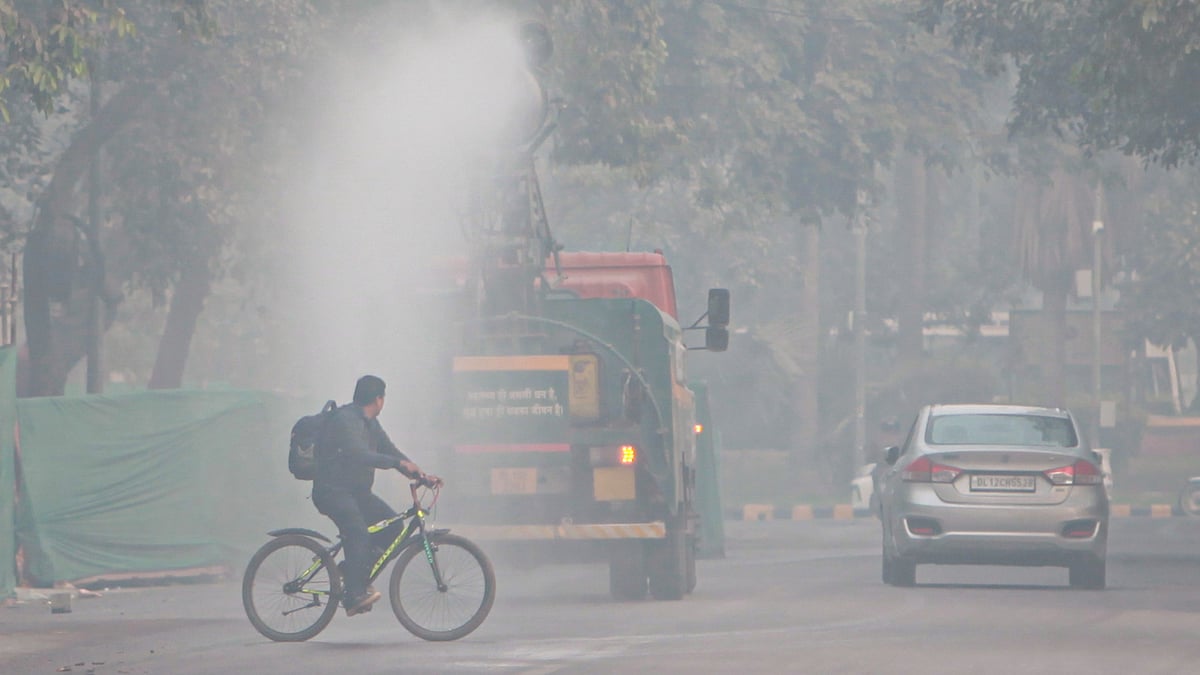
The Congress on Sunday cited a World Bank report on air pollution to question how long the Modi government would continue to remain in “denial” over what it described as a deepening public health and economic crisis linked to poor air quality.
Congress general secretary (communications) and former Union environment minister Jairam Ramesh referred to the World Bank report titled A Breath of Change, which estimates that around one million premature deaths occur annually across the Indo-Gangetic Plains and Himalayan foothills due to air pollution.
“The World Bank’s latest report on air pollution in the Indo-Gangetic Plains and Himalayan foothills, titled A Breath of Change, is comprehensive, evidence-based, and unambiguous. It is also, obviously, very timely,” Ramesh said in a post on X.
“It highlights the fact that there are now around one million premature deaths annually in this region, which also suffers economic losses of about 10 per cent of regional GDP every year,” he added.
Ramesh said the report clearly outlines what needs to be done, including strict enforcement of emission norms for coal-based power plants, accelerated retirement of the oldest units, a shift from city-centric action plans to legally empowered airshed-based governance cutting across states, and expansion and electrification of public transport along with tighter vehicle emission and fuel standards.
Referring to what he called the worsening AQI (Air Quality Index)-linked health crisis, Ramesh said the INC (Indian National Congress) has repeatedly called for a review of the Air Pollution (Control and Prevention) Act, 1981, and the NAAQS (National Ambient Air Quality Standards), 2009, with a sharper focus on PM 2.5 (Particulate Matter 2.5).
The former minister also said the party has advocated a significant expansion of the NCAP (National Clean Air Programme), both in terms of funding and geographic coverage, with PM 2.5 levels used as the primary performance benchmark.
“It has also suggested a tougher and uncompromising enforcement of air pollution norms and standards without any relaxations or dilutions,” Ramesh said, asking, “How long will the Modi government live in denial?”
The World Bank report said air pollution across the Indo-Gangetic Plains and Himalayan foothills is among the most serious health and development challenges in South Asia. It noted that nearly one billion people are exposed to hazardous air daily, reducing average life expectancy by more than three years and imposing heavy economic costs due to illness and lost productivity.
Ramesh’s remarks come amid persistently high pollution levels in the national capital, which have renewed concerns over the health impact of poor air quality.
Join our official telegram channel (@nationalherald) and stay updated with the latest headlines