Nation
The mystery of Sheikh Mohammed’s lightning visit
Accompanied by almost his entire cabinet, Sheikh Mohammed’s trip resembled an emergency consultation rather than a state visit
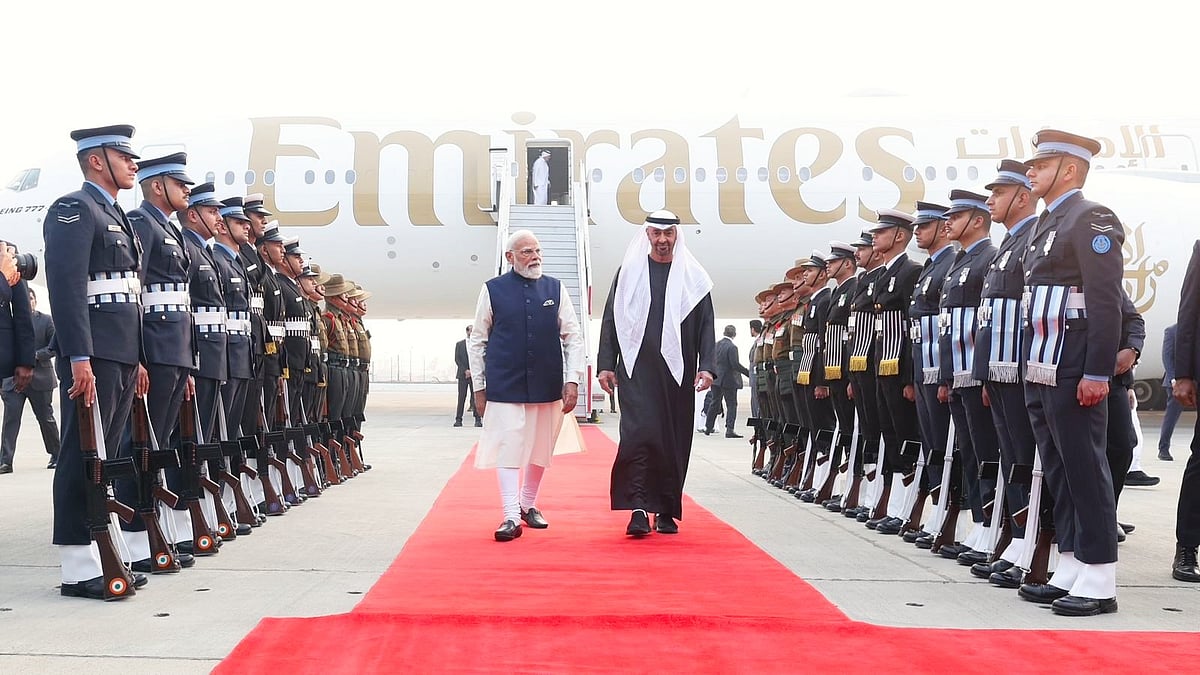
In a diplomatic episode marked by unusual haste and near-total secrecy, Sheikh Mohammed bin Zayed Al Nahyan, the president of the United Arab Emirates, paid a lightning visit to India on Monday, 19 January. Announced barely a day earlier, the trip lasted only a few hours — so brief that it immediately set off speculation about its true purpose. Accompanied by almost his entire cabinet, Sheikh Mohammed’s arrival resembled an emergency consultation rather than a conventional state visit.
Official Indian statements placed the duration of the visit at roughly three hours. However, sources familiar with the matter suggested it may have been closer to 90 minutes. Considering that a flight from Abu Dhabi to New Delhi takes approximately three-and-a-half hours, the delegation undertook a punishing seven-hour round trip for what amounted to a fleeting touchdown.
The urgency becomes even more striking given that the visit occurred on a Monday when Delhi’s air quality index stood at a hazardous 418, shrouding the capital in thick smog — conditions that would ordinarily deter all but the most essential travel.
Despite the brevity, India accorded the UAE leader an exceptional reception. Prime Minister Narendra Modi personally received Sheikh Mohammed at the airport, a protocol rarely extended to visiting heads of state. The imagery — warm handshakes under heavy security — signalled importance, yet the silence that followed was conspicuous.
Diplomatic circles have since been abuzz with conjecture. For months, there have been quiet murmurs about a possible India–UAE military cooperation framework. Many observers believe this visit may have accelerated deliberations, particularly as geopolitical tensions across West Asia intensify.
The UAE today finds itself navigating increasingly hostile terrain. Once closely aligned with Saudi Arabia, Abu Dhabi has drifted away amid deepening disagreements over Yemen, where both countries support rival factions. Intelligence chatter has even hinted at the possibility — however remote — of a direct confrontation between the two Gulf powers, a scenario that would severely destabilise the region.
These pressures have been compounded by a military pact signed in September between Pakistan and Saudi Arabia, under which an attack on one would be treated as an attack on the other. In its wake, speculation surged that Pakistan had extended a nuclear umbrella to Riyadh.
Some reports went further, suggesting the possible deployment of Pakistani nuclear weapons on Saudi soil — an idea publicly hinted at by Pakistan’s defence minister Muhammad Asif before official silence set in. Analysts warned at the time that the presence of Pakistani nuclear warheads in Saudi Arabia could spark a crisis rivalling, or even surpassing, the Cuban Missile Crisis of 1962.
The strategic picture grew more complex when Turkey joined the arrangement soon after, leading commentators to describe the grouping as a nascent 'Muslim NATO'.
The label carried added significance given Ankara’s recent conduct: during India’s Operation Sindoor against Pakistan — a brief but intense military action — Turkey provided direct logistical and advisory assistance to Islamabad.
Against this backdrop, the UAE’s strategic room for manoeuvre appears to be shrinking. Cut loose from traditional alignments, Abu Dhabi may be seeking a counterweight through closer military ties with a nuclear-armed power such as India.
There is also a consequential subtext involving Pakistan, which has long played a role in training the armed forces of both the UAE and Saudi Arabia. A formal India–UAE security partnership would disrupt this arrangement, potentially straining Islamabad’s relationship with Abu Dhabi and forcing a reconfiguration of military training structures across the Gulf.
Neither side has confirmed any agreement, but the optics of the visit speak of urgency. India’s growing engagement with West Asia — already deepened through economic instruments such as the Comprehensive Economic Partnership Agreement with the UAE — may now be extending into the strategic and security domain. In a region increasingly defined by flux and fragmentation, this fleeting encounter could mark the beginning of a significant realignment.
For now, the silence persists. Diplomatic sources suggest further engagements may follow, but until clarity emerges, the episode stands as a telling sign of an unsettled moment — one in which old alliances are fraying and new ones are being quietly, and hurriedly, explored.
Join our official telegram channel (@nationalherald) and stay updated with the latest headlines