Nation
PAC raps Indian Railways over train delays, ‘misleading’ metrics
Flags flawed timekeeping, notes steep fall in on-time performance and urges overhaul of monitoring and speed plans
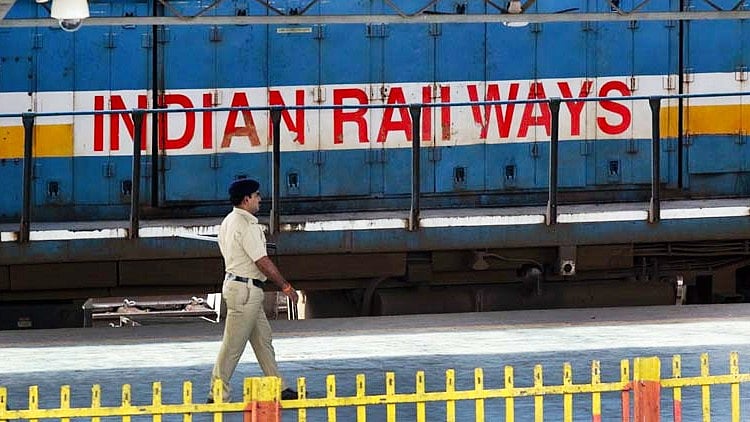
Train punctuality under Indian Railways has fallen sharply in recent years, dropping from 90 per cent in 2021–22 to 73.62 per cent in 2023–24, a parliamentary committee has observed, while sharply criticising what it described as a “misleading” system used by the Railways to record on-time performance.
In its report titled 'Punctuality and Travel Time in Train Operations in Indian Railways', tabled in the Lok Sabha on Wednesday, 4 February, the Public Accounts Committee (PAC) reviewed punctuality data across all categories of trains and put forward a series of recommendations aimed at improving performance.
The PAC traced fluctuations in punctuality over the past decade, noting that on-time performance stood at 77.51 per cent in 2015–16 before declining to 69.23 per cent in 2018–19. This was followed by a marked improvement to 90.48 per cent in 2021–22, after which punctuality again deteriorated to 73.62 per cent in 2023–24. The PAC noted a partial recovery to 78.67 per cent in 2024–25, based on data available up to August.
Raising concerns over how punctuality is calculated, the report said, “The Committee notes from audit observation that IR measures the punctuality of trains at the terminating stations. Whereas, in other countries, it is measured at the originating point, intermediate station, and at terminating stations.”
It added, “Besides, for measuring punctuality, IR provides an allowance of 15 minutes delay with reference to the scheduled time.”
According to the Committee, global best practices adopt far stricter standards. It pointed out that in countries such as Japan, punctuality is measured in seconds, and even trains arriving before the scheduled time are counted as a punctuality loss.
“The Committee are of the view that this narrow approach to punctuality monitoring fails to account for delays experienced enroute, leading to an incomplete and often misleading picture of actual train performance,” the report said.
It further noted that “the existing allowance of a 15-minute delay within Indian Railway's punctuality benchmark further dilutes the accuracy of performance assessment”.
While acknowledging the introduction of high-speed services such as Vande Bharat trains and technologically advanced coaches, the PAC stressed that the majority of the rail network continues to be served by conventional express, superfast and passenger trains.
The Committee recommended that Indian Railways review and revise its system for assessing punctuality by introducing integrated monitoring at originating and intermediate stations, in addition to the current practice of measurement at terminating stations.
Turning to 'Mission Raftaar' — an initiative launched in 2016–17 to double the average speed of freight trains from 25 kmph to 50 kmph and mail/ express trains from 50 kmph to 75 kmph by the end of 2021–22 — the Committee noted that the targets had not been met. It found that average speeds improved only to 50.6 kmph for mail/ express trains and 23.6 kmph for goods trains.
In reviewing steps taken by the ministry to enhance both average and maximum train speeds, the PAC said the absence of an integrated, network-wide approach involving all zonal railways was emerging as a key constraint.
“Therefore, the Committee recommend the Ministry to prepare a plan encompassing zonal Railways to achieve the desired increase in the average and maximum speed of Passenger and Freight trains in their network and strive to achieve it without compromising safety,” the report said.
The Committee also took note of the performance of EMU and MEMU services, describing them as effective, and recommended expediting the conversion of passenger trains into DEMU and MEMU formats. It said this should be extended across all railway zones to achieve optimal speeds.
“The Committee desire that Indian Railways should adopt new/modern technological tools/systems to improve speed, reduce delay and capture the data,” the report said, calling for a comprehensive real-time monitoring mechanism for train movements.
On freight operations, the PAC observed that despite multiple initiatives, Indian Railways has been unable to incorporate dedicated goods train paths into its working time tables, resulting in the absence of a structured and predictable schedule for freight services.
It urged the ministry to address this gap through a multi-pronged strategy aimed at streamlining freight operations in a coordinated and time-bound manner.
Referring to data from the Integrated Coaching Management System (ICMS), the Committee said that out of 33 factors responsible for loss of punctuality, 27 were within the Railways’ control, while only six were external.
“The Committee notes that, as per ICMS (The Integrated Coaching Management System) data, which captures all the incidents that caused the train operations’ delay, out of 33 factors responsible for punctuality loss, 27 factors are controllable by Railways, and the remaining six factors are external factors,” the report said.
It added, “The total contribution of external factors for the two years (2017–19) was 12.89 per cent. The internal factors, which contributed to 66 per cent, could have been controlled well by IR but were not addressed adequately.”
With PTI inputs
Join our official telegram channel (@nationalherald) and stay updated with the latest headlines