Nation
Peaceful protest no crime just because those in power don't like it: Calcutta HC
Court quashes criminal proceedings against six SSC job aspirants booked after 2021 protest against alleged recruitment irregularities
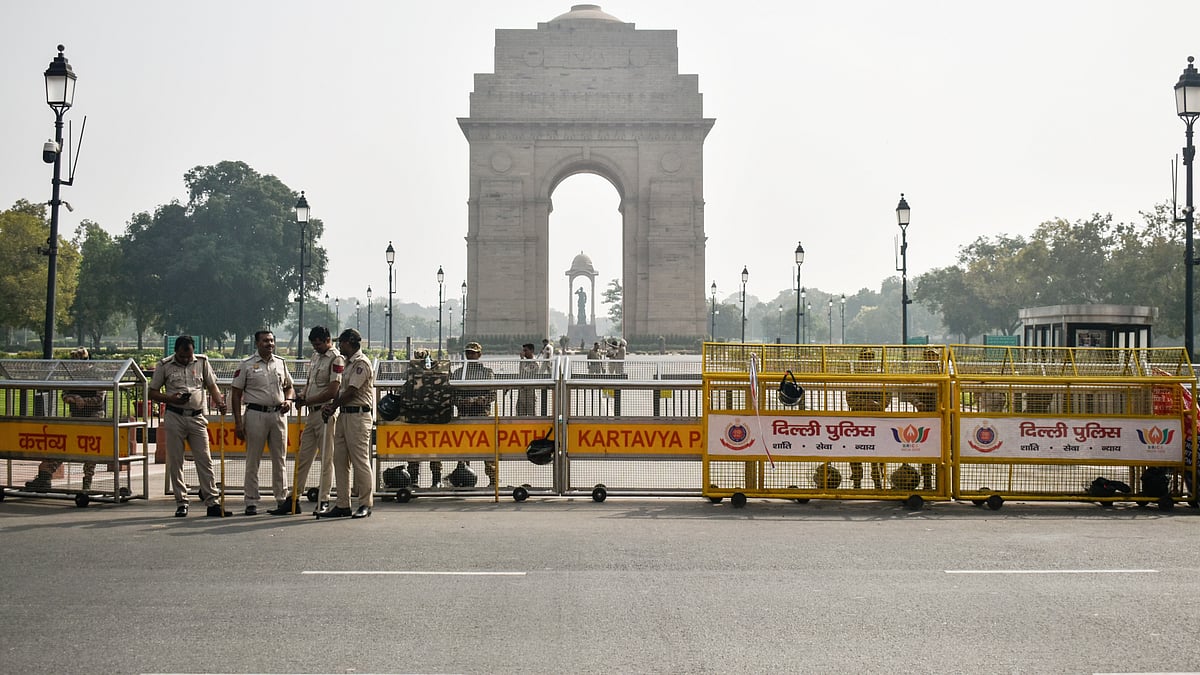
Calcutta High Court quashes FIR and consequential proceedings against six School Service Commission job aspirants.
Court says peaceful protest and dissent are integral to democracy and do not become offences merely because authorities disapprove.
FIR fails to establish essential ingredients of unlawful assembly and other alleged offences.
The Calcutta High Court has quashed criminal proceedings against six School Service Commission (SSC) job aspirants booked for protesting against alleged recruitment irregularities in 2021, observing that a peaceful demonstration does not become an offence merely because it is unwelcome to those in authority, as per a LiveLaw report.
The court made the observations while quashing an FIR registered at Bidhannagar North Police Station in connection with a demonstration held on 5 August 2021. The protest was organised by SSC job aspirants against alleged irregularities in recruitment.
Justice Anuj Singh held that the FIR failed to establish the essential ingredients of the offences invoked against the protesters, including unlawful assembly, wrongful restraint and alleged violations of COVID-19-related restrictions.
"It is an unavoidable inference that the Petitioners are being punished for the protest, making it a vexatious and frivolous proceeding," the court observed.
The court was hearing a writ petition filed by Trina Halder and others seeking the quashing of the FIR. According to the police complaint, the candidates had assembled near Mayukh Bhawan in Salt Lake and were proceeding towards Bikash Bhawan while raising slogans to press their demands.
The complaint alleged that the gathering violated COVID-19 protocols and a prohibitory order issued under Section 144 of the Code of Criminal Procedure. It further alleged that the protesters failed to disperse when asked, obstructed public movement and prevented officials from discharging their duties.
Thirteen people, including the six petitioners, were arrested in connection with the incident.
The petitioners argued that they were exercising their fundamental rights to freedom of speech and expression and to assemble peacefully under Articles 19(1)(a) and 19(1)(b) of the Constitution. They also contended that the FIR did not disclose a prima facie case and that continuing the proceedings could adversely affect their future employment prospects.
The state opposed the petition, arguing that it was not maintainable.
Examining the allegations, the court held that the FIR did not disclose the common object with which the protesters had assembled, an essential requirement for establishing an offence of unlawful assembly under Section 143 of the Indian Penal Code (IPC).
Under Section 141 of the IPC, an assembly of five or more people is considered unlawful only when its common object falls within specified categories, including the use of criminal force against the government or a public servant, resistance to the execution of law, or the commission of an offence.
"Thus, mere protest and raising slogans cannot be said to be an unlawful common object under section 141," the court said.
The court relied on an earlier Calcutta High Court judgment in Association for Protection of Democratic Rights v. State of West Bengal, which held that a large gathering of demonstrators was not inherently illegal or unconstitutional.
It also referred to the Supreme Court's ruling in Javed Ahmad Hajam v. State of Maharashtra, reiterating that the right to dissent, criticise the government and protest peacefully and lawfully was integral to democracy. "Thus, a demonstration does not become an offence merely because it was unwelcome to those in authority," the court held.
The court also found deficiencies in the allegations relating to disobedience of an order promulgated by a public servant under Section 188 of the IPC. Although the FIR referred to a prohibitory order under Section 144 of the CrPC, the order itself had not been placed on record.
The complaint also failed to explain how the protesters had obstructed public movement or prevented officials from performing their duties.
Referring to the Supreme Court's decision in Re: Ramlila Maidan Incident v. Home Secretary, Union of India, the court observed that an order under Section 144 must specify the material facts justifying its issuance and can be used only in circumstances requiring urgent intervention.
The court similarly found that the FIR did not identify any person who had been wrongfully restrained or specify how or for how long such restraint had occurred.
Relying on the principles laid down by the Supreme Court in State of Haryana v. Bhajan Lal, the court held that criminal proceedings could be quashed where the allegations, even if accepted in their entirety, failed to disclose an offence or where the proceedings were manifestly attended by mala fides.
Join our official telegram channel (@nationalherald) and stay updated with the latest headlines