Nation
Hailed for its role in Op Sindoor, India to receive 4th unit of Russia's S-400 Triumf
Russian-origin missile shield credited with protecting Indian military assets during conflict with Pakistan
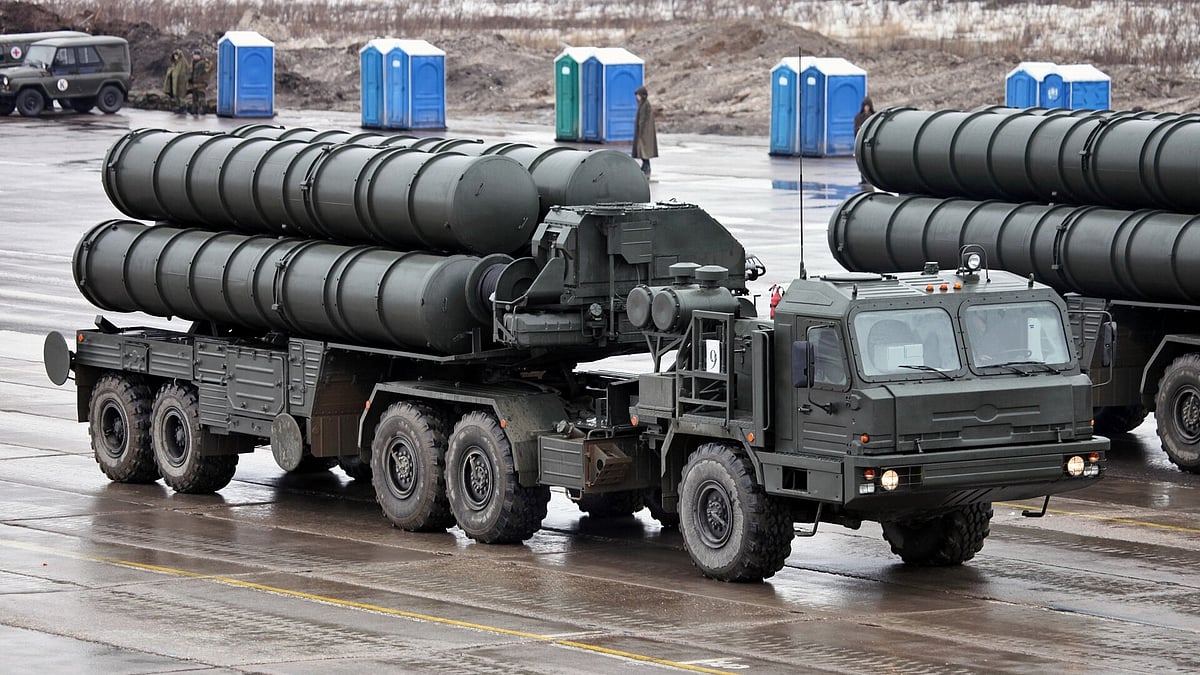
India is expected to receive the fourth unit of the Russian-made S-400 Triumf surface-to-air missile defence system in early May, a move seen as a major boost to the country’s air defence preparedness following the system’s extensive deployment during Operation Sindoor.
Sources in the security establishment said the fourth unit has already been shipped from Russia and is likely to arrive within days. The fifth and final unit under the original contract is expected by November.
India signed a $5 billion deal with Russia in October 2018 for five S-400 batteries despite concerns arising from the United States over possible sanctions under the Countering America’s Adversaries Through Sanctions Act (CAATSA). US, later, bypassed CAATSA to allow India to import the state of the art air defence system considering India's strategic importance in countering China.
Crucial role during Operation Sindoor
The S-400 systems assumed critical importance during Operation Sindoor, the four-day India-Pakistan military conflict from 7 to 10 May last year that saw one of the most intense aerial confrontations between the two countries in decades.
According to defence sources, the systems formed the backbone of India’s layered air defence network and were deployed to protect major cities, strategic military installations, air bases and sensitive infrastructure from possible aerial attacks by Pakistan.
Officials said the S-400’s long-range radar and interception capabilities enabled the Indian Air Force to detect and track incoming aerial threats deep inside hostile airspace, giving commanders valuable reaction time.
The system was reportedly used to monitor Pakistani fighter aircraft movements, airborne early warning systems, drones and missile trajectories during periods of heightened escalation.
Shield against missiles, drones and aircraft
The S-400 is capable of engaging multiple aerial targets simultaneously, including fighter aircraft, drones, cruise missiles and ballistic missiles.
Defence officials said its deployment significantly complicated Pakistan’s ability to carry out deep air operations or precision strikes against Indian targets during the conflict.
The missile shield created what military planners described as a “protective umbrella” over critical sectors, forcing adversary aircraft to operate cautiously and from greater stand-off distances.
Military analysts believe the presence of the S-400 reduced the risk of successful retaliatory strikes on Indian air bases and command infrastructure after India launched Operation Sindoor in response to the Pahalgam terror attack.
The system’s advanced surveillance radars were also integrated with India’s indigenous air defence network, helping create a real-time operational picture across sectors.
Strategic deterrence value
The S-400’s value lies not only in interception capability but also in deterrence.
Its deployment during the conflict is believed to have acted as a psychological and operational constraint on Pakistan’s air force by increasing the risks associated with offensive missions.
The system can reportedly detect targets at ranges of up to 600 km and engage hostile aircraft and missiles at distances of up to 400 km, depending on the interceptor missile used.
Additional procurement cleared
Following its performance during Operation Sindoor, India last month approved procurement of an additional five S-400 units from Russia, doubling the planned inventory from five to 10 systems.
Officials said the fresh acquisition is being treated as a follow-on order to the original agreement.
Sources indicated that India does not expect major complications linked to possible US sanctions because the new purchase falls under an existing operational framework.
Russia has already trained Indian personnel in operating the system, and several squadrons are now integrated into the IAF’s operational structure.
The S-400 is regarded as Russia’s most advanced long-range air defence platform and is considered among the world’s most sophisticated missile shield systems currently in service.
S-400 considered superior to global air defence systems
Apart from its superior sibling S-500 whose specifics are beyond analytical reach, the S-400 Triumf is widely considered as the most advanced and capable air defence system in the world, with military experts often ranking it ahead of rival systems such as the US-made Patriot PAC-3 and THAAD (Terminal High Altitude Area Defense) in overall versatility and engagement range.
Unlike the Patriot system, which is primarily optimised for missile interception, the S-400 is designed to counter a much wider spectrum of threats simultaneously — including stealth aircraft, drones, cruise missiles, ballistic missiles and airborne surveillance platforms.
The system can reportedly track targets up to 600 km away and engage multiple threats at ranges of up to 400 km, giving it one of the largest operational envelopes among deployed air defence platforms globally.
While THAAD specialises in high-altitude ballistic missile interception, the S-400 is regarded as a more comprehensive battlefield air defence shield because it combines long-range surveillance, aircraft interception and missile defence in a single integrated platform.
China’s HQ-9 and several European systems are generally viewed as less capable in terms of radar sophistication, target handling and layered engagement capability.
Military analysts say the S-400’s ability to create a vast anti-access and area denial zone makes it a major strategic deterrent, often forcing hostile aircraft to operate from longer distances and under constant threat of interception.
Its performance during recent conflicts and continued global demand despite geopolitical pressure have further reinforced its reputation as one of the most formidable operational surface-to-air missile systems currently in service.
Russia’s next-gen S-500 remains out of export reach
Even as India expands its S-400 inventory, Russia’s more advanced successor system — the S-500 Prometey — remains tightly controlled and unavailable for export.
The S-500 is designed not only for intercepting aircraft and missiles but also for engaging hypersonic weapons, low-orbit satellites and advanced ballistic missile threats at significantly greater ranges and altitudes than the S-400.
Russian officials have repeatedly indicated that the S-500 is primarily intended for domestic strategic defence and protection of critical national assets, including Moscow’s missile shield network.
Unlike the S-400, which has been exported to countries such as India, China and Türkiye, the S-500 has not been offered internationally, underlining its strategic sensitivity within Russia’s military doctrine.
Join our official telegram channel (@nationalherald) and stay updated with the latest headlines