Nation
Telangana: CM Reddy floats ‘people credits’ tax on AI firms for job losses
Telangana CM calls AI “double-edged sword”, proposes compensation model as automation reshapes work
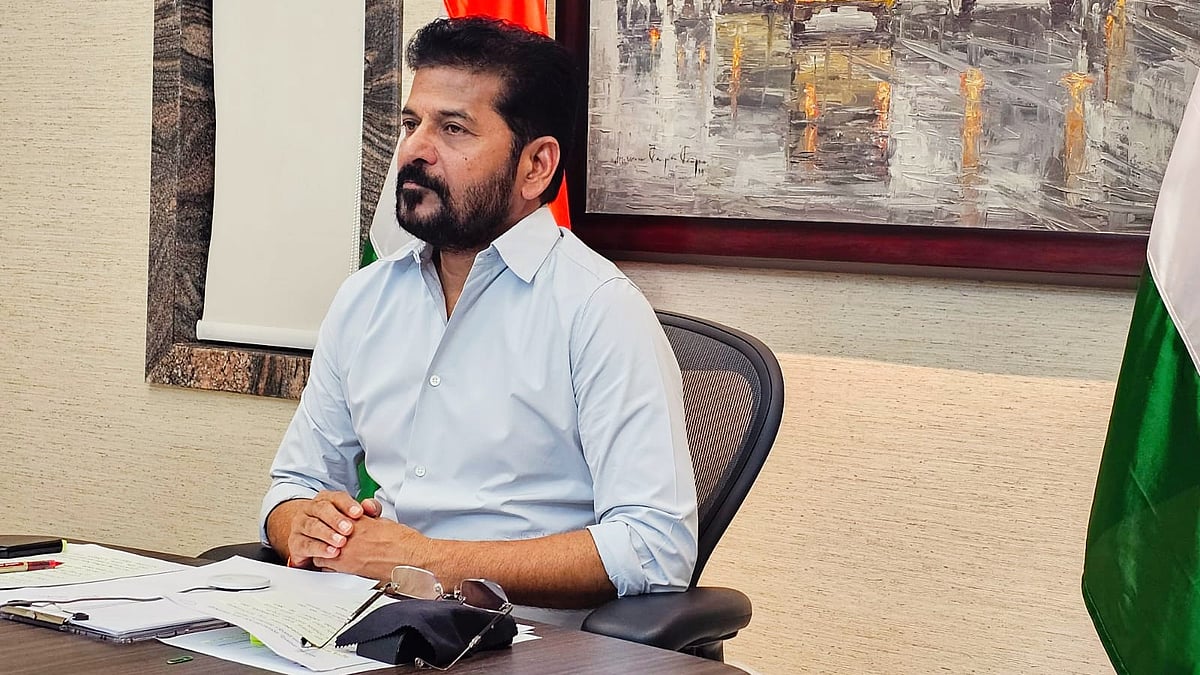
Telangana chief minister A. Revanth Reddy has proposed taxing artificial intelligence companies to compensate workers displaced by automation, arguing that firms benefiting from AI-driven productivity should also shoulder the social costs of job disruption.
Speaking via video link at an artificial intelligence symposium hosted by the Harvard Kennedy School on Friday night, Reddy described AI as a “double-edged sword” whose economic benefits could come with significant labour dislocation if governments fail to intervene early.
"We will also try to bring policies similar to those on pollution, where polluting industries have to pay for carbon credits — we will try to introduce laws so AI firms can be taxed for people credits," Reddy said, suggesting a regulatory framework modelled on environmental compliance mechanisms.
"It is only fair that our companies with trillions of dollars of valuation compensate people and society whose jobs are lost," he added.
Reddy’s remarks place Telangana among the first Indian states to publicly consider a formal fiscal mechanism aimed at redistributing gains from AI-led productivity, amid growing global concern that automation could hollow out entry-level employment across sectors ranging from legal services to media production.
Drawing comparisons with earlier waves of technological disruption, the chief minister argued that innovation has historically transformed rather than eliminated work.
"AI will change the scope of work for doctors, lawyers, architects, film makers, writers, poets, policy makers – instead of replacing them," he said, suggesting that the technology is likely to alter professional roles rather than render them obsolete.
However, he acknowledged that the transition could disproportionately affect junior roles, and cautioned that entry-level hiring may shrink even as overall productivity increases, potentially creating a structural imbalance in labour markets where fewer workers are needed to generate higher output.
The chief minister also used the platform to highlight Telangana’s ambition to position itself as a global AI hub.
He said the proposed Bharat Future City, currently under development on the outskirts of Hyderabad, will include a dedicated district focused on artificial intelligence and related technologies.
According to Reddy, the planned AI City is intended to serve as a single-window ecosystem for Global Capability Centres (GCCs) specialising in AI development and deployment, reinforcing Hyderabad’s position as a major technology and innovation cluster.
The proposal reflects a broader policy debate emerging worldwide over whether governments should require technology companies to offset the social costs of automation, particularly as advances in generative AI accelerate changes across knowledge-based professions.
With PTI inputs
Join our official telegram channel (@nationalherald) and stay updated with the latest headlines