Nation
The State has no role in faith
In this open letter, A.J. Philip addresses the CM of Maharashtra, which joined the 'Freedom of Religion' bandwagon on 28 August
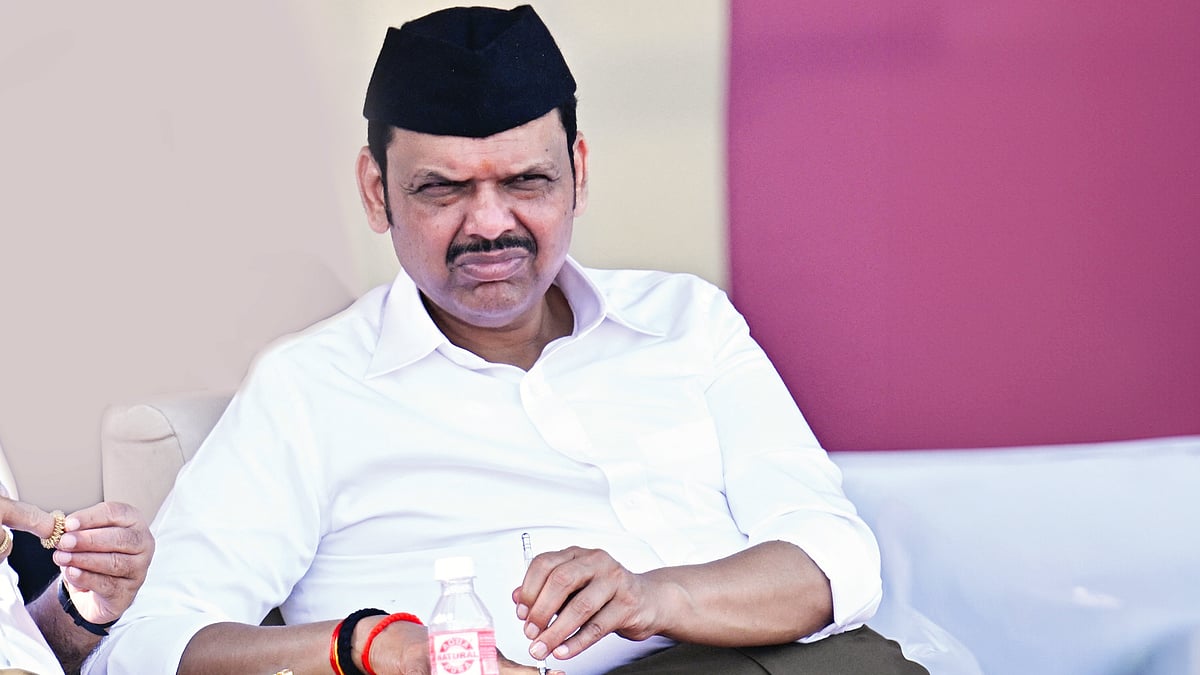
Dear Shri Devendra Fadnavis Ji,
You may be happy that the Freedom of Religion Bill has come into force in Maharashtra. But there is an irony you may have missed.
In Pune, your police were so eager to implement the law that they did not even wait for President Droupadi Murmu’s assent before invoking it in two cases. They withdrew the provisions after the home department made it clear that the law would come into force only on 28 August.
Everyone knows who the principal target of your legislation is even though the law does not name any religion. Christians constitute a tiny fraction of the population of Maharashtra. The community that apparently frightens your government so much is hardly a threat to public order. Why this anxiety about a tiny, largely law-abiding, highly literate community?
The way these laws are being applied across the country should concern every citizen, not just Christians. In Madhya Pradesh, seven Christians — six of them pastors — were sentenced in June this year to five years’ imprisonment under the state’s anti-conversion law and related provisions. They were accused of attempting to induce conversion while attending a child’s birthday party. The Jabalpur High Court has since granted bail to all seven, pending appeal.
You may say the courts will separate truth from falsehood. But why should an innocent citizen first have to spend time in prison, arrange money for bail and endure the stigma of being branded a conversion offender?
The law creates a structure in which the private spiritual decision of an adult becomes an object of government scrutiny. Imagine that tomorrow you wish to become a Christian. I know it’s unlikely but suppose you did. Under this law, requiring prior notification to the authorities, you’d have to disclose this deeply personal decision to the state before acting upon it.
Think about the absurdity of the situation. You are the Chief Minister. You announce that you have changed your faith. You would become a political pariah; your political career would be over. If this can happen to a powerful chief minister, imagine the vulnerability of a poor labourer, an uneducated villager, a tribal, a Dalit who decides to change his faith.
****
Under Article 25, the Constitution protects freedom of conscience and the right to profess, practise and propagate religion. The framers did not say that a citizen must first obtain the State’s permission to decide what to believe.
The Constituent Assembly debates are instructive. Rev. J.J.M. Nichols-Roy, himself a member of the Assembly, strongly defended the freedom of conscience and the right to propagate religion. At the same time, he clearly opposed conversion through fraud, coercion or undue influence. That is the distinction your law risks destroying. Coercion and fraud are crimes; conviction of conscience is not.
You may also recall the example of Dr B.R. Ambedkar, one of the principal architects of the Constitution and a son of Maharashtra. On 14 October 1956, he embraced Buddhism at Nagpur’s Deekshabhoomi along with a vast gathering of followers.
What if a law like yours had been applied to Ambedkar’s decision? Would you have wanted the State to question him before allowing him to change his religion? Surely not.
There is another serious problem with this law: it reverses the burden of proof. Instead of the accuser having to establish coercion, fraud or unlawful inducement, the law places an extraordinary burden upon the accused to establish that the conversion was voluntary. Presumption of innocence is a basic principle of criminal jurisprudence.
The provisions relating to marriage are equally troubling. By looking at interfaith marriages through the prism of conversion, the law will reinforce the poisonous narrative of ‘love jihad’. Two consenting adults should not have to prove to vigilantes, police officers or bureaucrats that their relationship is genuine just because they belong to different faiths.
Nor should prayer meetings become occasions for surveillance. Reports emerging from Maharashtra even before the law came into force have shown the anxiety it has created. Some small churches have started collecting declarations from worshippers stating that they attend prayer meetings voluntarily, apparently as a precaution against allegations of unlawful conversion.
I once visited a church in Uttar Pradesh as the chief guest at its annual day. Ninety-nine per cent of the congregation consisted of people who had once lived as beggars. Many had been alcoholics. Some had been involved in petty crimes. Almost all were illiterate. Their children begged on the streets. That congregation went through a dramatic transformation.
The men had found work and were supporting their families. The children were going to school. The families were properly dressed. Women once illiterate could read passages from the Bible without any hesitation. Would you rather they remained beggars, alcoholics and petty criminals so that nobody could accuse the Church of ‘conversion’?
There is also a misconception about what Christians mean when they speak about service. The Church does not regard its work among the poor as ‘social work’. A Christian believes that serving a hungry person, clothing someone who has nothing to wear or caring for someone abandoned by society is an act of service to God. Jesus commanded his followers to love their neighbours. He did not add the word ‘Christian’ before ‘neighbours’.
That is why Christians run schools, hospitals, orphanages and other institutions, often in remote and difficult parts of the country. It is also why missionaries and Christian organisations have worked for generations among tribal and marginalised communities. Go to a remote tribal area and you will often find a Christian tribal family whose children are better educated, whose members are better dressed and who have moved from bare survival to a more dignified existence.
That is not necessarily the result of someone handing them money. Sometimes it is the result of education. Sometimes it follows from healthcare, or recovering from alcoholism or simply discovering that they too have dignity.
****
If somebody chooses Christianity because he believes it offers him spiritual truth, that is his constitutional right. The same principle applies to a Buddhist, a Muslim or a Hindu. The State has no business choosing among these possibilities. Your law is, therefore, not merely about conversion. It is about the relationship between the citizen and the State. Imagine a law saying that a citizen who is a Communist today, a Congress supporter tomorrow and a BJP supporter the day after must inform the district collector before changing political affiliation. You would rightly call it ridiculous.
But religious belief is even more intimate than political preference. A political party is an organisation. Faith is a matter of conscience. If the State cannot tell me whom to vote for, why should it tell me whom to pray to?
The Constitution gives you the freedom to remain a Hindu. It also gives you the freedom, if your conscience ever takes you elsewhere, to become something else. Please extend the same freedom to the poorest citizen of Maharashtra.
I wish you good health and hope that you will have the courage to protect the rights of those with whom you may profoundly disagree.
Yours etc.
A.J. Philip
A longer version of this open letter first appeared in Indian Currents
Read more by this author
Join our official telegram channel (@nationalherald) and stay updated with the latest headlines