Nation
Tiger and cheetah spotted together in rare sighting at Ranthambore
Experts term simultaneous presence of three apex predators ‘scientifically intriguing’
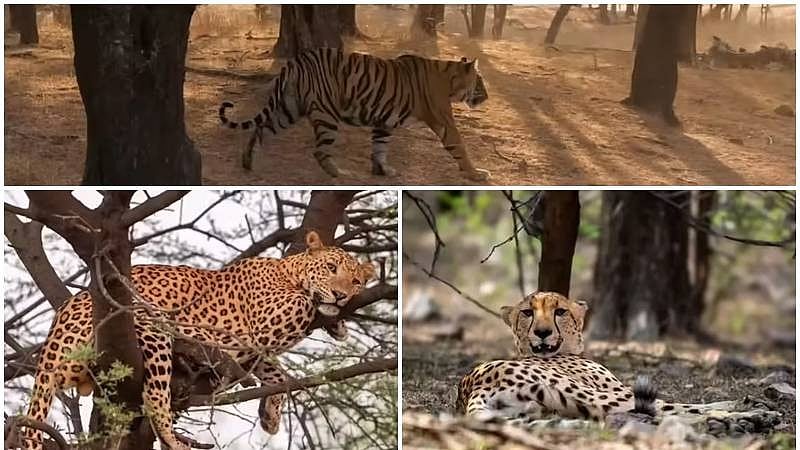
A tiger, a leopard and a cheetah were sighted within the same landscape and time window at the Ranthambore Tiger Reserve in Rajasthan, in what officials and experts described as an “extremely rare” occurrence.
The sighting took place on 20 April in Zone 9 of the reserve along the Chakal river, with the three predators observed within an estimated range of one to two kilometres, officials said.
Ranthambore’s Deputy Conservator of Forest and Deputy Field Director Manas Singh said the unusual convergence drew attention from conservationists and tourists alike.
“Moments like these are rare, unscripted, and impossible to plan. They remind us what our forests are truly capable of,” the forest department said in a social media post.
Cheetah tracked from Kuno
Officials said the cheetah, identified as KP-2, had strayed from Kuno National Park in Madhya Pradesh and entered Rajasthan last week.
Following the sighting, the animal moved towards another zone of the reserve. A joint team from Ranthambore and Kuno has set up a monitoring camp, using tracking equipment to follow the cheetah’s movement.
Ecological rarity and expert view
Wildlife expert Rajkumar Chauhan said the sighting was significant as each of the three species occupies a distinct ecological niche despite being apex predators.
“Such proximity among three large carnivores with distinct territorial and hunting strategies is extremely rare,” he said.
Tigers typically dominate large territories and tend to suppress the presence of other predators in core areas. Leopards, while adaptable, usually avoid direct encounters with tigers by shifting habitat or activity patterns.
Cheetahs, on the other hand, are diurnal hunters that prefer open grasslands, making their presence in forested, tiger-dominated landscapes uncommon.
Chauhan said the overlap likely reflects temporary ecological factors such as prey movement, dispersal behaviour or landscape connectivity rather than sustained coexistence.
Ranthambore Tiger Reserve spans around 1,800 square kilometres across Sawai Madhopur, Dholpur and Karauli districts in Rajasthan and is home to an estimated 70 tigers.
The reserve supports rich biodiversity, including dozens of mammal species, hundreds of bird species, reptiles and a wide variety of plant life.
Experts note that such rare sightings highlight the complexity of predator behaviour and the importance of maintaining connected habitats for wildlife movement.
Join our official telegram channel (@nationalherald) and stay updated with the latest headlines