Opinion
America’s phony war on drug trafficking
Operation Southern Spear brings to mind old alarming patterns in the hemisphere, writes Ashok Swain
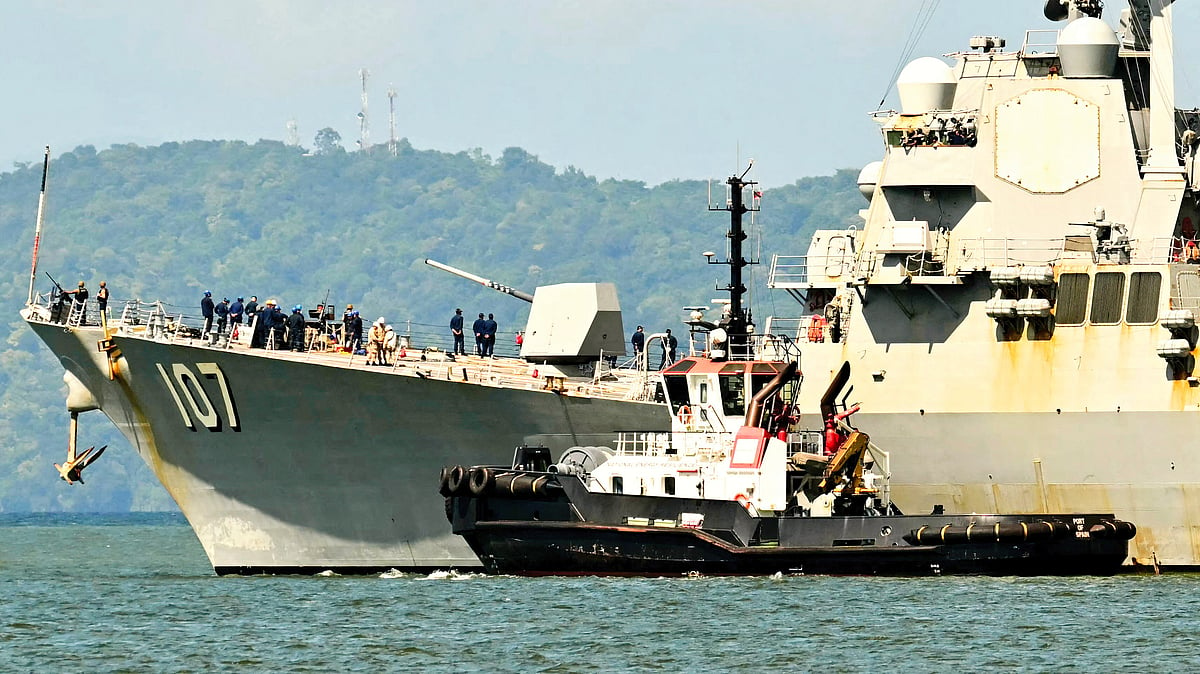
The United States maintains that it is conducting a war on drugs in the Caribbean, yet the scale and posture of Operation Southern Spear suggest a larger ambition.
Warships, aircraft and thousands of troops have been positioned near Venezuela in a show of force that far exceeds what the stated objective might require. US President Donald Trump has escalated the confrontation in part to demonstrate that he can accomplish in Venezuela what previous US presidents could not — using threat of force to make a breakthrough.
The US military operation has sunk small boats and killed alleged traffickers, but there has been no public evidence linking these vessels to drug shipments and experts have assessed that these boats lacked the stability, fuel capacity and seaworthiness to reach US shores.
At the same time, Washington has designated the Venezuelan government a foreign terrorist organisation, offered a $50 million bounty for information leading to the arrest of Venezuelan President Nicolás Maduro, and expanded covert CIA operations.
Trump had recently spoken with Maduro and says he is open to meeting him even while insisting that the Venezuelan leader presides over a criminal network. The administration has also gathered senior advisors to discuss possible next steps and maintains that both diplomatic and military options are active. Trump has also threatened that he will soon strike targets inside Venezuela.
These mixed signals suggest a strategy to keep all options open, from an agreement that reshapes Venezuelan politics to a more coercive approach if negotiations stall.
Latin America has seen this pattern before. The US has framed forceful actions as necessary responses to external threats throughout the past century — from the Cold War to the war on terror and now the war on drugs. The rhetoric shifts but the underlying dynamic remains the same.
Pressure campaigns blur into military interventions. These covert or overt operations accompany public demands for regime change. Diplomatic overtures are made in tandem with sanctions and military mobilisation. The region carries the memory of these cycles, and that memory shapes today’s apprehensions.
The Venezuelan opposition is divided. The Nobel Peace Prize for Maria Corina Machado energised many who hope for a transition, and her dedication of the prize to Trump reflects a belief among some factions that external pressure can break the current stalemate. Yet these visions of a rapid political shift following a foreign intervention overlook the reality on the ground.
The Venezuelan state remains heavily securitised, backed by hundreds of militia units and irregular groups that will resist any intrusion. Even if a strike were swift, the aftermath would be unstable, with rival groups competing for control in a fragmented political landscape.
For ordinary Venezuelans, the uncertainty is exhausting. Years of economic collapse and political contestation have left people drained and wary of further upheaval. Many want change but fear that the US military action would make things worse. Each day unfolds in a haze of conflicting rumours and terse statements from abroad, heightening the sense that the future is being shaped elsewhere. Even a limited clash could unleash another massive wave of migration, far beyond what the region can absorb.
This uncertainty has also strengthened the Maduro government’s internal narrative. Maduro loyalists emphasise national defence and warn of foreign aggression to mobilise support across the country. State media highlights militia training exercises and presents the buildup as proof of an external threat to Venezuelan sovereignty.
As in past moments of standoff between Washington and governments in the region, foreign pressure consolidates domestic support rather than eroding it. Hardliners inside Caracas now point to the risk of intervention as justification for tighter controls and greater surveillance.
Regional governments are responding with caution. Colombia’s president has voiced concern that a strike on Venezuela could spill across the border and undermine peace accords in his country. Other Latin American governments acknowledge flaws in Venezuela’s recent election, yet they fear that armed conflict would destabilise the hemisphere and fuel more humanitarian crises. A military confrontation would almost certainly deepen divisions across the region and invite the involvement of outside powers with strategic interests of their own.
The shifting approach in Washington, combining threats with the possibility of talks and negotiations, increases the risk of miscalculation. It can embolden actors inside Venezuela to take risks or misinterpret the intentions of the other side, potentially setting off a chain of events that neither side wants.
The deeper worry is that the hemisphere may once again be drifting into a familiar pattern of action justified by specious urgent claims. Guatemala’s descent into civil war following the 1954 coup, the long shadow over Chile after 1973, the human toll of the Contra war in Nicaragua and the enduring trauma of the Panama invasion all serve as reminders that even short operations can set off long-term instability.
Each produced devastating consequences that reshaped regional politics and scarred societies for generations.
Venezuelans have every right to a political future shaped by their own institutions rather than by external force. A path still exists for renewed diplomacy, credible elections and humanitarian relief.
But that path narrows when a foreign military buildup overshadows negotiations. Operation Southern Spear may be framed as a counter-narcotics mission, but its scale gives away a much larger design.
Ashok Swain is a professor of peace and conflict research at Uppsala University, Sweden. More of his writing may be read here
Join our official telegram channel (@nationalherald) and stay updated with the latest headlines