Opinion
Is the Indian diaspora finally waking up?
The surge in protests by Indians in major global cities matters more than their size suggests, writes Ashok Swain
It’s fairly common knowledge that Narendra Modi’s frequent trips abroad are less about diplomacy and more about staging diaspora jamborees to convince his followers that he is a leader of great stature, admired across the world. For years, these stage-managed gatherings gave his supporters and crony-controlled media the spectacle they wanted. They cheered a leader they imagined gave them bragging rights.
Crowds at embassy-arranged events chanting ‘Modi, Modi’ and media amplification of this theatre of endorsement by well-heeled Indians abroad fed into his image at home as well. Not everyone was similarly enamoured perhaps, but his critics kept a lower profile than his supporters.
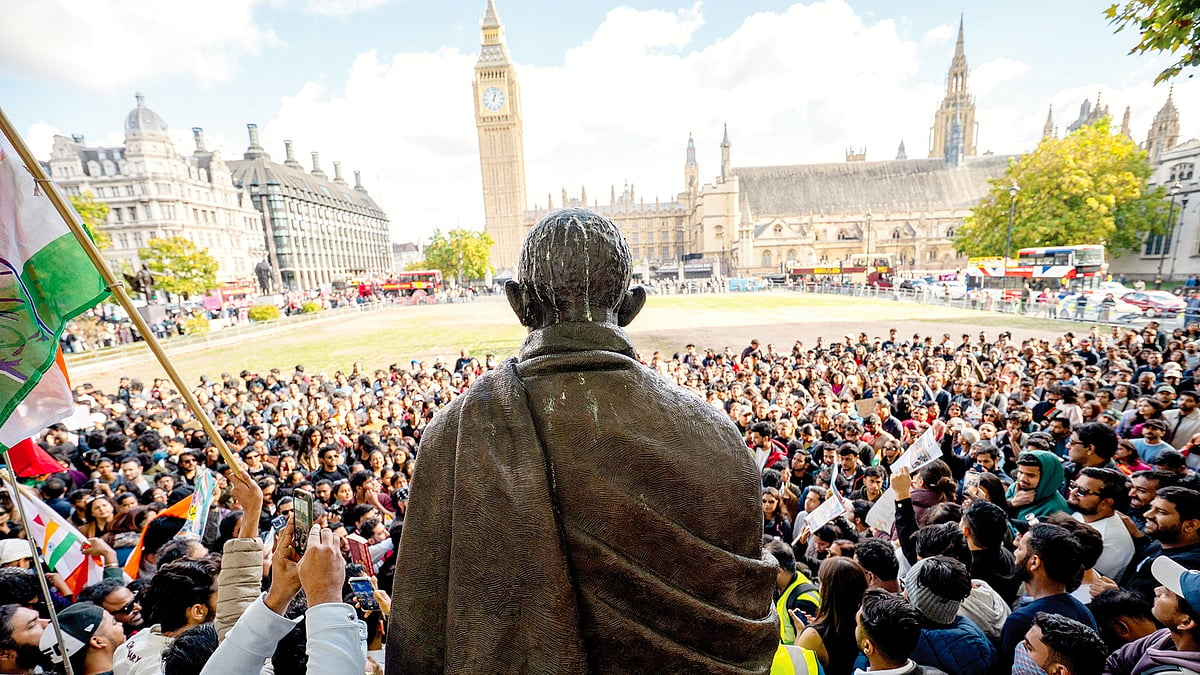
That picture seems to have suddenly changed, with city streets in Europe, North America and Australia erupting simultaneously in solidarity protests running under the banner ‘Jantar Mantar Is Everywhere’. They are echoing the demands of their friends, kin and fellow countrymen, demanding accountability, fair elections and the freedom to dissent.
Protest gatherings in London, New York, Toronto, Sydney, Berlin, Dublin, Stockholm, Copenhagen, The Hague and other cities have brought students, professionals and activists together against the reported massive electoral irregularities and the brutal oppression of protesters in India. This surge of diaspora protests matters more than their size may suggest. Even fifty people coming together can break the silence, ease fears of retaliation, build connections and make the next protest easier to organise.
It’s still too early, though, to declare that the diaspora has given up on Modi. Indians abroad remain divided by religion, caste, class, generation and political experience.
Carnegie’s 2024 Indian American Attitudes Survey found that 47 per cent still approve of Modi’s performance. The disenchantment is growing but the spread is uneven. Also, a US survey cannot represent the views of Indian communities everywhere else. What these protests show is that space for serious opposition does exist within the wider diaspora community, and people are beginning to occupy it.
That knowledge also challenges a political understanding Modi has pushed for twelve years — that the status of Indians abroad draws on his standing in the world. Applauding him, then, becomes proof of their nationalism and criticising him an insult to the motherland.
Even as they benefit from the pluralist default of their adoptive countries, or demand protection against discrimination where they live, too many Indians abroad still support majoritarianism back home. They are not troubled by the targeting of minorities in Modi’s India. But a diaspora movement that is now loudly demanding equal citizenship for all Indians is confronting this hypocrisy.
Resistance from the diaspora did not begin this October. Sikh organisations played a prominent role in supporting the farmers’ movement in 2021. Anti-caste groups, Muslim organisations, secular associations and student networks have challenged Hindu fundamentalism for years. Their work deserves recognition.
The current protests are also resonating with students who worry about recruitment examinations when they return home. Also, many who thought they were ‘apolitical’ or hitherto stayed away from political discussions are getting vocal about the goings-on at home. They are angry about the brutal police action against peaceful protesters. Many may once have admired Modi and are now coming to terms with their own gullibility. But this change of heart is still a work in progress.
Fear is still a deterrent, and it takes a slightly different form for the diaspora. It is also the reason why the numbers of protesters do not swell easily. People living thousands of kilometres away may still worry about their immediate or extended family or their friends, about problems visiting home and their ties with India.
The recent action against actor Imran Khan, an OCI cardholder, makes those fears all too real. After his alleged participation in a Mumbai protest, authorities ordered him to leave India and later questioned his OCI status. He has challenged the action in court, but whichever way the case ultimately goes, his harassment will convey a message to others: that dissent can threaten your ties with home.
The obverse is also true: by joining a public demonstration people often learn that others share concerns they have kept private. A student may meet a lawyer, a professional may find an organiser, a lone ranger may see the value of community and common cause. Reading the Indian Constitution together gives them a common purpose stronger than personal anger against an autocrat.
These newly constructed connections and ties can outlast the current protests. But that requires continuous effort to mobilise, even after the photographs have disappeared from social media.
Protests also spread through example. The demonstrations in France, Italy and Albania have different immediate provocations and should not be treated as one big international uprising. Yet images of young people challenging unresponsive institutions can encourage others to act. They show that frustration does not have to remain a private emotion, that opposing an unresponsive government is not an anti-national act.
An important lesson the diaspora seems to have learnt is the power that flows from organising and protesting peacefully. Violence can endanger protesters, drive away supporters and give governments an excuse to ignore the demands that brought people onto the streets.
The Modi government’s sensitivity to overseas criticism gives diaspora demonstrations political weight. The way it reacted to international support for the farmers’ agitation is proof how thin-skinned it is about global opinion.
The effects of the diaspora protests will be most visible in Western universities, student associations, civil society and the media. Overseas Indians can help unpack the electoral malpractices of the Election Commission of India, share testimonies and challenge the claim that criticising Modi means opposing India. They can introduce international journalists to voices beyond embassy briefings. They can also help others understand why electoral independence, minority rights and freedom of expression matter.
Western governments are a different kettle of fish. These demonstrations will not make governments change course or influence state policies, driven as these are by a more cynical calculus pivoting on arms sales, trade and financial interests and perceived threats from China. Western governments can pay lip service to democracy and express concerns about the erosion of India’s institutions but they will not let it get in the way of business with Modi’s India.
Public pressure can prompt questions in Parliament but governments will always prioritise their strategic interests. The diaspora’s task is to focus attention on India, support democratic mobilisation and energetically debunk the claim that the Modi government is India.
Views are personal
Ashok Swain is a professor of peace and conflict research at Uppsala University, Sweden. More by the author here
Join our official telegram channel (@nationalherald) and stay updated with the latest headlines