


Let Jantar Mantar speak!
Democracy depends on the freedom to protest openly—where power and people meet and where dissent is not just tolerated but embraced , writes A.J. Philip


More than six decades ago, when I was a schoolboy at Pathanamthitta in Kerala, an elderly man had made protest a part of his daily routine. Every working day, he would set up a small, foldable tent near the gate of the taluk office and sit there, pursuing a cause he believed was worth fighting for. He was a naturopath, and his demand was that the government should ban all non-vegetarian food.
He continued his agitation for hundreds of days. Eventually he died, and his protest came to an end. I saw him almost every day while going to school. Even as a boy, I could not understand the logic of his demand. It seemed unreasonable, if not downright impractical. Yet nobody questioned his right to peaceful protest.
That childhood memory came back to me when I visited London. One of the first places I wanted to see was Hyde Park, particularly Speakers’ Corner, where people have traditionally gathered to express their opinions on practically every subject under the sun.
I remembered that George Bernard Shaw had used the park’s public-speaking tradition to propagate his ideas and challenge conventional thinking. Speakers’ Corner has long attracted people with strong convictions, unusual theories and sometimes eccentric beliefs. One need not agree with what they say to appreciate their right to say it.
I have since visited places associated with public demonstra-tions in Washington DC, Berlin and Paris. In each city, protest has a visible presence in public life. From environmental campaigners and vegan enthusiasts to gay-rights activists and political opponents, people take to public spaces to articulate their demands. Some protest against governments, others against social practices, economic policies or international developments.
What struck me was that these protest sites were not tucked away in obscure corners. They were often situated in prominent locations, sometimes within sight of the institutions they sought to influence. In Washington, Lafayette Square is just across Pennsylvania Avenue from the White House. Such places have also become part of the tourist circuit. Visitors come to see not merely monuments and buildings but the spaces where citizens have asserted their rights.
Delhi, however, has had a more complicated relationship with protest. For years, the lawns around the Boat Club near India Gate were the preferred venue for demonstrations and public meetings. The location was ideal. It was central, easily accessible and close to the institutions of government. A large gathering there could not be ignored by either the authorities or the public.
The massive farmers’ mobilisation led by Mahendra Singh Tikait in 1988 changed that equation. Tens of thousands of farmers descended on the Boat Club area, bringing the capital to a standstill and compelling the government to reconsider whether such large demonstrations should be permitted in the heart of the city.
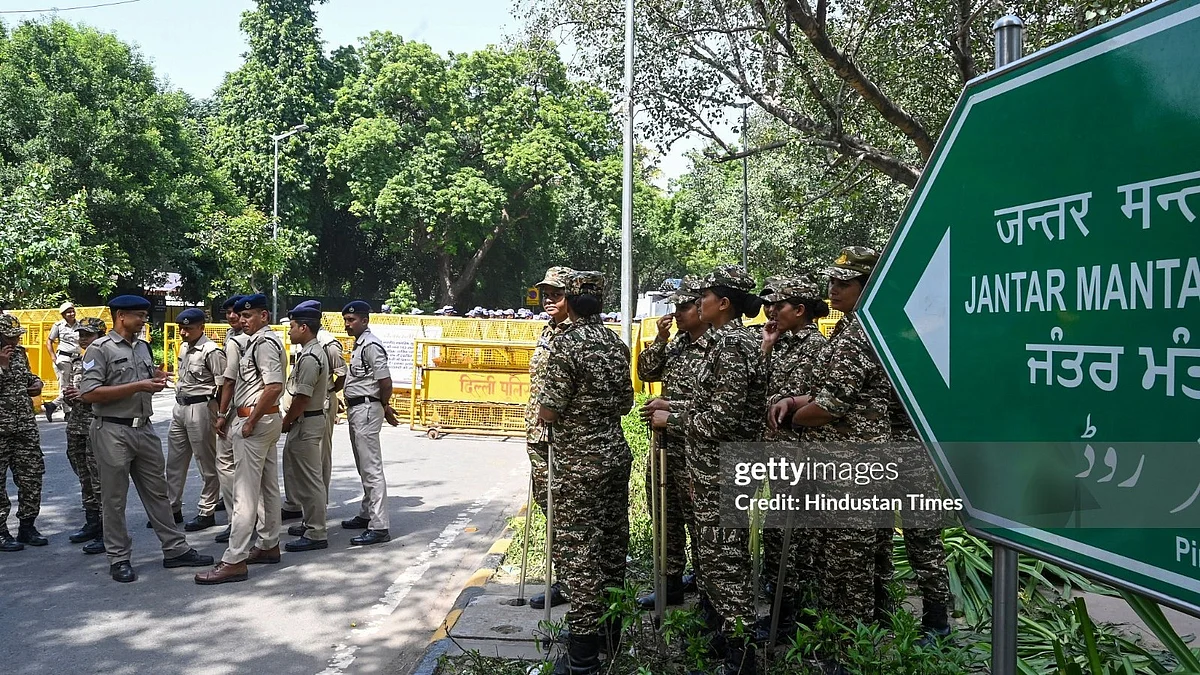
The government eventually settled on Jantar Mantar as the designated protest site. By the early 1990s, it had emerged as the place where citizens could assemble to voice their grievances. The arrangement had an obvious administrative advantage. The police could regulate the movement of demonstrators through a limited number of entry points, making crowd management easier.
For more than three decades, this arrangement broadly served both sides. Protesters could gather within reasonable proximity of Parliament, government offices and the residences of ministers and senior officials. Those in power, meanwhile, could monitor demonstrations and keep them within manageable limits. The protesters had the psychological satisfaction of being close to the people they wished to confront, while the authorities could tell themselves that dissent was being accommodated without allowing it to spread across the capital.
Jantar Mantar gradually became more than a piece of Delhi’s real estate. It acquired a place in the democratic imagination of the country. Farmers, students, workers, government employees, social activists and representatives of marginalised communities assembled there to demand justice. Some campaigns attracted only a handful of people; others drew large crowds and national attention. The site became a familiar backdrop to the continuing argument between citizens and the State.
But the authorities seem to have forgotten the purpose of providing such a space. A protest site is not meant to make demonstrations convenient for the police. It is meant to allow people to communicate their grievances to those who govern them.
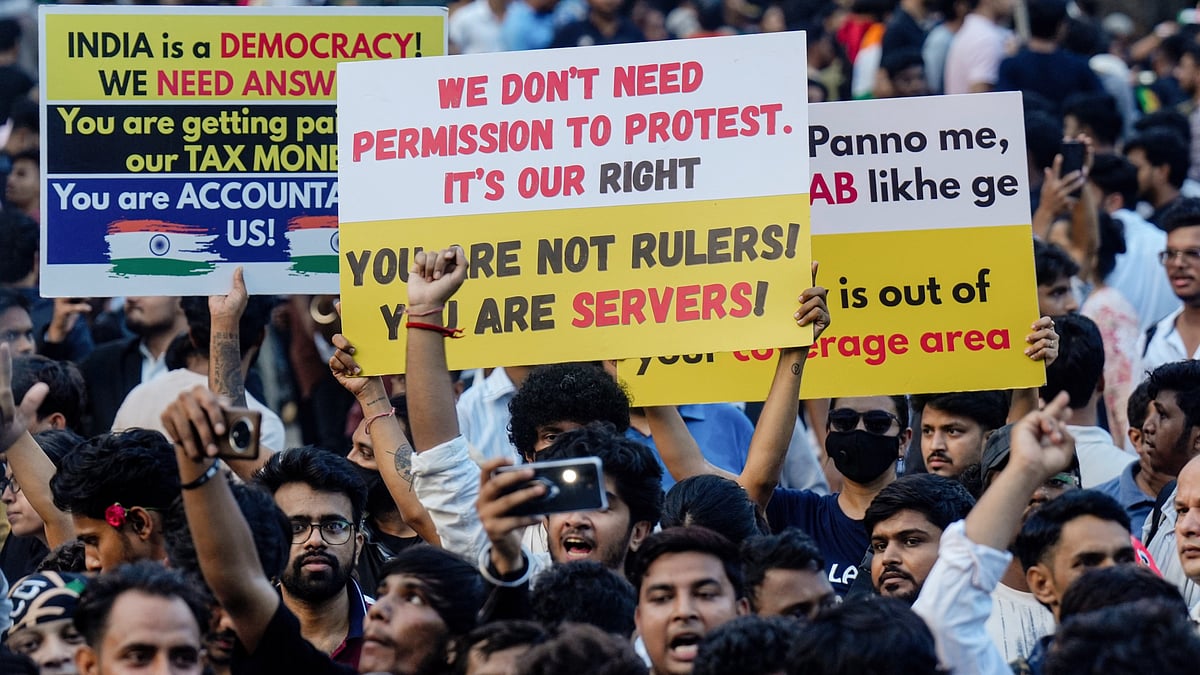
The recent protest mobilisation in Delhi appears to have tested the government’s tolerance of public dissent. What it ought to have understood was that the size of the crowds reflected the intensity of the grievances, or at least the strength of feeling among those who had assembled.
Instead of recognising the message conveyed by the crowds, the authorities have chosen what appears to be an administrative solution: de-notifying Jantar Mantar as a designated protest site and identifying alternative venues—Ramlila Maidan, Burari Ground and CBD Ground. Ramlila Maidan is already associated with big public gatherings and religious celebrations, while the other proposed venues are considerably farther from the centre of power.
The practical consequence is obvious. A demonstration at a distant ground may be easy to police, but it is also easier for the government to ignore. If a million people assemble far from the offices of ministers and constitutional authorities, their physical presence need not cause those in power much inconvenience. They can continue with their official business while the protesters remain out of sight.
That, however, defeats the very purpose of protest. A demonstration is not a gathering of people who want to spend time together. It is a public declaration of disagreement, intended to attract attention and compel those responsible to respond. Location is therefore not a trivial administrative matter; it is part of the message.
The irony is that the government itself had helped create the arrangement it now wishes to dismantle. Having moved demonstrations away from the Boat Club and channelled them into Jantar Mantar, the authorities are now proposing to push protesters farther away from the capital’s nerve centre. An arrangement that was once considered manageable has apparently become inconvenient because people are using it to express anger on a scale the government did not anticipate.
The elderly naturopath I saw more than sixty years ago may have had an impossible demand. He may have spent hundreds of days pursuing a cause that could never have been accepted. Yet his little tent occupied a space in public life, and passers-by could see him and understand that he was dissatisfied with something.
That is the essence of democracy. The right to protest does not belong only to people whose demands are sensible, whose arguments are persuasive or whose causes enjoy popular support. It belongs equally to those whose views we dislike, whose reasoning we reject and whose campaigns we consider futile. That is why Jantar Mantar must remain a place where dissent is heard, not where it is silenced.