


Jantar Mantar too 'central' for agitations? Take a look around the world!
Across the world, centrally located public spaces have long served as venues for political rallies, public speeches and movements demanding change
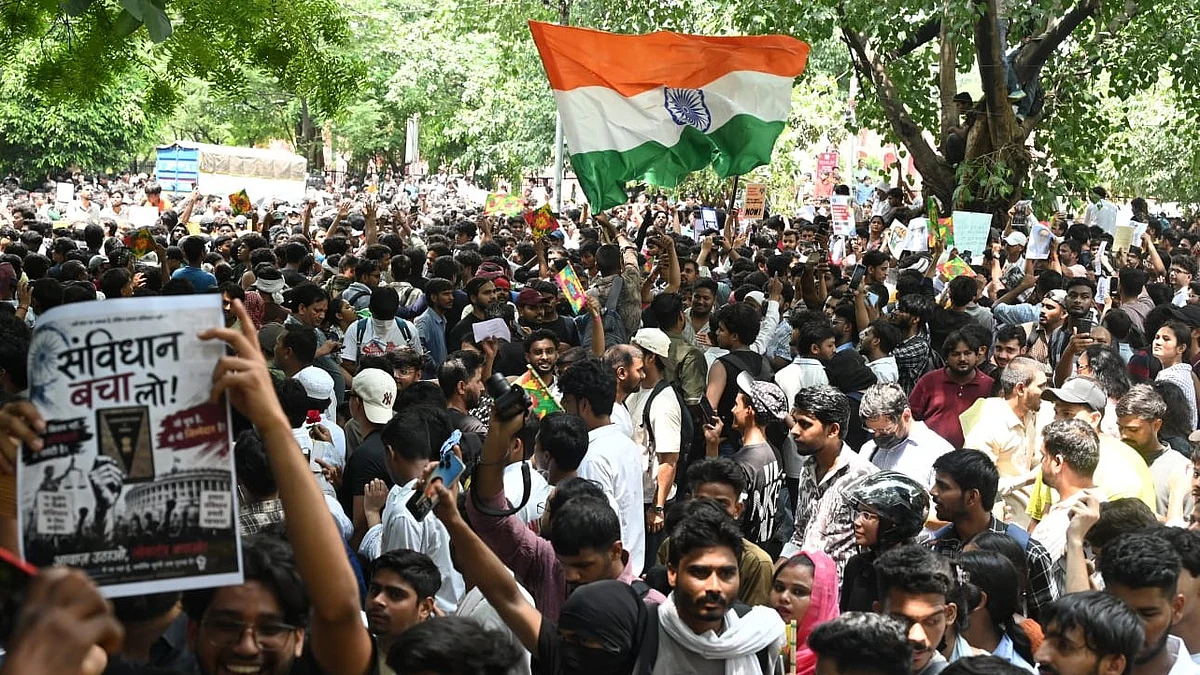


Jantar Mantar’s de-notification revives debate over protests in central urban spaces
From London’s Hyde Park to New York’s Union Square, cities worldwide have prominent public gathering sites
Delhi’s Boat Club once served as a major protest venue before Jantar Mantar became synonymous with dissent
The de-notification of Jantar Mantar as a designated protest site in Delhi has revived a debate over whether demonstrations should be permitted in the heart of a city. Across the world, however, several centrally located public spaces have long served as venues for political rallies, public speeches and movements demanding change.
From Speakers’ Corner in London’s Hyde Park to Union Square in New York, these spaces have become associated with free speech and public dissent. Others, including Tahrir Square in Cairo and Maidan Nezalezhnosti in Kyiv, have gained international recognition for hosting major political upheavals.
In Delhi, the Boat Club near India Gate was once an iconic protest venue before it was de-notified. Jantar Mantar subsequently became synonymous with demonstrations, while Ramlila Maidan continues to serve as an officially designated protest site, although it is less centrally located than the other two venues.
Here are some prominent protest sites across the world.
Hyde Park, London
Speakers’ Corner, in the north-eastern corner of Hyde Park, has been a traditional venue for public speeches and debates since the mid-19th century. An Act of Parliament in 1872 formally set aside the area for public speaking.
Figures including Karl Marx and Vladimir Lenin, as well as writer George Orwell, have been associated with the tradition of public debate there. Even today, people gather on Sundays to listen to speakers address subjects ranging from politics to religion, provided their speeches comply with the law.
Trafalgar Square and Parliament Square, London
Surrounded by museums, galleries and historic buildings, Trafalgar Square frequently hosts political rallies and demonstrations on weekends. The square remains an important public gathering space in the British capital.
Parliament Square, near the Houses of Parliament, government offices and Westminster Abbey, is another prominent venue for public assembly. Its proximity to the seat of government makes it a focal point for demonstrations directed at political leaders and institutions.
Union Square, New York
Union Square Park in Manhattan has served as a centre for political demonstrations, labour movements and public speeches since the 19th century. Designated a National Historic Landmark, it remains one of New York City’s best-known spaces for public gatherings and civic activism.
Lafayette Square and the National Mall, Washington
Lafayette Square, immediately north of the White House, has hosted vigils, civil rights demonstrations and political protests for more than a century. Its location makes it a prominent site for demonstrations directed at the US administration.
The National Mall and the grounds around the US Capitol have also witnessed major gatherings, including the 1963 March on Washington for Jobs and Freedom and the first Earth Day events in 1970.
Taksim Square, Istanbul
Located in central Istanbul, Taksim Square has long been associated with labour rallies, political demonstrations and public gatherings. Although heavily guarded at times, it remains an important symbol of public assembly and political expression in Türkiye.
Hong Lim Park, Singapore
Hong Lim Park is home to Speakers’ Corner, Singapore’s designated outdoor venue for certain public speeches and demonstrations. The space was established to provide Singaporeans with a place to express views on public affairs, subject to applicable rules and restrictions.
Place de la Bastille, Paris
Associated with the French Revolution, Place de la Bastille remains a prominent gathering point for political demonstrations, marches and public celebrations in the French capital. Its historical symbolism has made it an enduring venue for expressions of public discontent.
Tahrir Square, Cairo
Formerly known as Ismailia Square, Tahrir Square has been a major site of political demonstrations in Egypt for decades. It witnessed the 1977 Egyptian Bread Riots and became internationally recognised during the 2011 Egyptian revolution, when mass protests contributed to the fall of President Hosni Mubarak.
Plaza de Mayo, Buenos Aires
One of Buenos Aires’ oldest public squares, Plaza de Mayo has been the site of major political events and demonstrations throughout Argentina’s history. It is also associated with the Mothers of the Plaza de Mayo, who campaigned for information about relatives who disappeared during the country’s military dictatorship.
Uhuru Park, Nairobi
Located in Nairobi’s central business district, Uhuru Park has hosted political rallies, public demonstrations and civil society movements. It was also a gathering point during the Gen Z-led protests against proposed tax increases in Kenya in 2024.
Maidan Nezalezhnosti, Kyiv
Also known as Independence Square, Maidan Nezalezhnosti has played a central role in Ukraine’s civic and political life. It was a focal point of the 2004 Orange Revolution and the 2013-14 Euromaidan protests, which helped reshape the country’s political trajectory.
Zócalo, Mexico City
Officially known as Plaza de la Constitución, the Zócalo is Mexico City’s principal public square. Flanked by the presidential palace and the Metropolitan Cathedral, it regularly hosts political rallies, civic gatherings and national celebrations.
Plaza Italia, Santiago
Officially named Plaza Baquedano and also known as Plaza de la Dignidad among protesters, the square is a major landmark in Chile’s capital. It became a focal point of the mass protests that began in 2019 and has long hosted political demonstrations and public celebrations.
These sites differ in their legal frameworks, permitted activities and restrictions. But their prominence illustrates how public spaces near political and administrative centres can become important platforms for citizens seeking to make their demands heard.