Opinion
A famous protest and the search for a moral centre
The romance of resistance is indeed heady, but the need of the hour is to interrogate the moral imperative of a movement
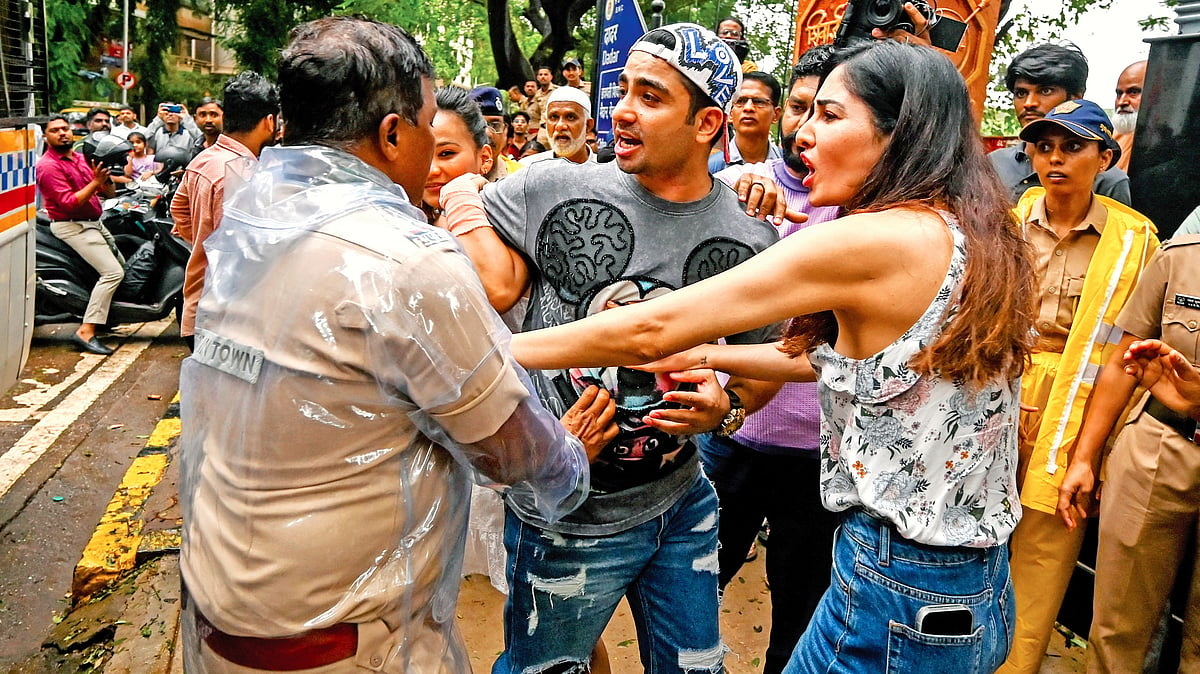
On 20 July, Raisina Hill — the sleeping Goliath — was awakened by thousands of ‘cockroaches’ thumping the monster’s chest, demanding a hearing. This extraordinary upsurge of civil protest in Delhi has a lineage of Gen Z uprisings in Hong Kong (2019), Sri Lanka (2022), Kenya and Bangladesh (2024), Nepal, Madagascar and Morocco (2025).
A mix of rage at failing economies, joblessness, institutional betrayal, administrative corruption, the helplessness of being mute spectators of a live-streamed genocide and much more is feeding into the disillusionment of the youth. Social/digital media is mobilising them at a speed unprecedented in human history. Witnessing their outpouring makes one want to uphold their resistance as proof of human resilience.
While some commentators see the CJP, which initiated the protests at Jantar Mantar, as a ragtag bunch of political newbies without an ideological core, as amateurs still figuring their way and some others find their early moves self-serving, the sheer energy of the mobilisation on the day was jaw-dropping.
The demographic could hardly be more diverse: college and school students, professionals, the unemployed, the low employed, parents, teachers, artists, activists, social media influencers, celebrities, political leaders — they were all there. Many turned up to simply express solidarity with the young protestors who had dared to take on an arrogant establishment.
This motley crowd had people from the Left and Right and all stripes of the political Centre, it had disillusioned BJP votaries and Islamophobes, a fair mix of Ambedkarites, liberals and students who are either members of or align closely with the left student unions AISA, SFI, AISF.
Irrespective of their belief systems, party affiliations, political ideologies or the lack of it, they share a common life experience and psychological make-up. They are what the British labour economist Guy Standing calls the ‘precariat’ — a noun made up of the words ‘precarious’ and ‘proletariat’.
They are a new social class that leads, or at least imagines that it does, a precarious life filled with chronic uncertainty in terms of employment, social stability, affording their lifestyle and future well-being. Although the material conditions of their life should make them lean towards leftist ideas (of social equity, redistribution, collective responsibility etc.), they don’t always.
Their alienating life experience can also make the precariat vulnerable to right-wing ideology and to populist demagogues who offer psychological opiates such as the promise of a secure future, a sense of control over their life, a sense of belonging and the promise of social mobility. So, the precariat can lean both ways, which possibly explains the ideological agnosticism of this movement.
There are several historical precedents for large and successful student movements that did not have an ideological core holding them together. One such instance was the student upsurge of 1968 that cut across Europe and North America.
It started in France where a group of students began protesting for education reforms at the Nanterre campus of University of Paris. It soon spread to Sorbonne University and from there spilled out on the streets.
The police response was quintessential — clubbing protestors, teargassing them and arrests. Hereon, the student movement engulfed the entire country. The workers joined the protests in droves — striking work, pouring out into the streets and seizing factories. The protests paralysed the government and forced it to negotiate. The changes were slow and incremental but substantial.
The Parisian student protests inspired and became part of a larger transatlantic mobilisation in Berlin, Prague, Warsaw, New York and Mexico City. Television was the media tool that rapidly broadcast the information and galvanised the protests. Seeing people of a similar demographic protest in another part of the world emboldened and energised the students globally. It enabled a serendipitous exchange of political tactics, ideas and language.
What is worth noting is that all the 1968 student movements ‘lacked’ a unified ideological core. They rejected both post-industrial capitalism and Soviet-style communism. These movements demonstrated that protests didn’t have to be led by trade unions or formal political parties with a clear ideological stance. These protests could be described as pop-up mass movements of the precariat, which in the absence of access to the levers of power, tended to erupt on the streets.
The Arab Spring (2010) and Occupy Wall Street protest (2011) are also examples of horizontal social mobilisation, a decentralised network without top-down leadership and one built through digital networking. They had a consensus-based political agenda instead of one that was ideologically driven. In all the instances there was a demand for accountability — from institutions, from the people in power and from the gerontocracy.
However, while these movements had very powerful groundswell, they were short-lived. They made significant gains but lost their momentum along the way.
This movement too is prone to the same risk. So, what will ensure that it sustains its momentum? The ground has already begun shifting in terms of supporters. The people who joined the protest are stretching the CJP’s initial demands in the direction of an anti-Modi wave. Seeing this, even more people are joining the protests across India.
To sustain the momentum, it needs to ask some hard questions. Is seeking solutions to isolated problems (preventing question paper leaks) and fixing them individually (demanding resignations) enough? Will educational reforms enable epistemic justice and ensure equitable access for minorities?
Defeating Goliath is certainly important but will it erase the inequity of a caste-ridden society and the excesses of majoritarianism? The romance of resistance is indeed heady, but the need of the hour is to interrogate the moral imperative of the movement.
Aparna Vaidik is a historian, author and educator
Join our official telegram channel (@nationalherald) and stay updated with the latest headlines