Opinion
Tarique Rahman’s test at the edge of the Ganga
Renegotiation of the Ganga treaty with India the defining foreign policy test of Tarique Rahman’s early premiership
With the Bangladesh Nationalist Party (BNP) winning a decisive two-thirds majority and Tarique Rahman sworn in as prime minister, the country has, for the first time in almost 35 years, a male head of government. The electoral outcome marks a rupture with a political order dominated for more than 15 years by Sheikh Hasina and the Awami League.
Expectations are high and the pressures on the new prime minister are immense. Internally, Rahman faces the urgent task of restoring law and order after years of politicised policing, rebuilding public trust in state institutions and stabilising a battered economy.
He must also reform the Constitution, but his party MPs declined to take a second pledge to serve as members of the proposed Constitution Reform Council, leading to protests by the Opposition Jamaat-e-Islami and the National Citizen Party (NCP). The newly elected BNP legislators argued that the Council has not been incorporated into the existing Constitution and that any such body or reforms must first be legally adopted through parliamentary processes.
Externally, however, the most daunting challenges lie in managing relations with India, Bangladesh’s most important and powerful neighbour, where unresolved political and structural issues threaten to define the early years of his premiership.
The most immediate bilateral complication concerns Sheikh Hasina’s presence in India. Following her political downfall and subsequent convictions in Bangladesh, including death sentences, her asylum in India is both a symbolic and practical sticking point.
Demanding Hasina’s extradition will be popular at home but diplomatically futile. India is unlikely to hand her over, not least because of historical constraints. A more realistic scenario, one that both sides may quietly accept, is that Hasina continues to reside in India with restrictions on her political activities. But even if this sensitive issue is managed through tacit understandings rather than formal agreements, it will continue to linger as a source of mistrust.
****
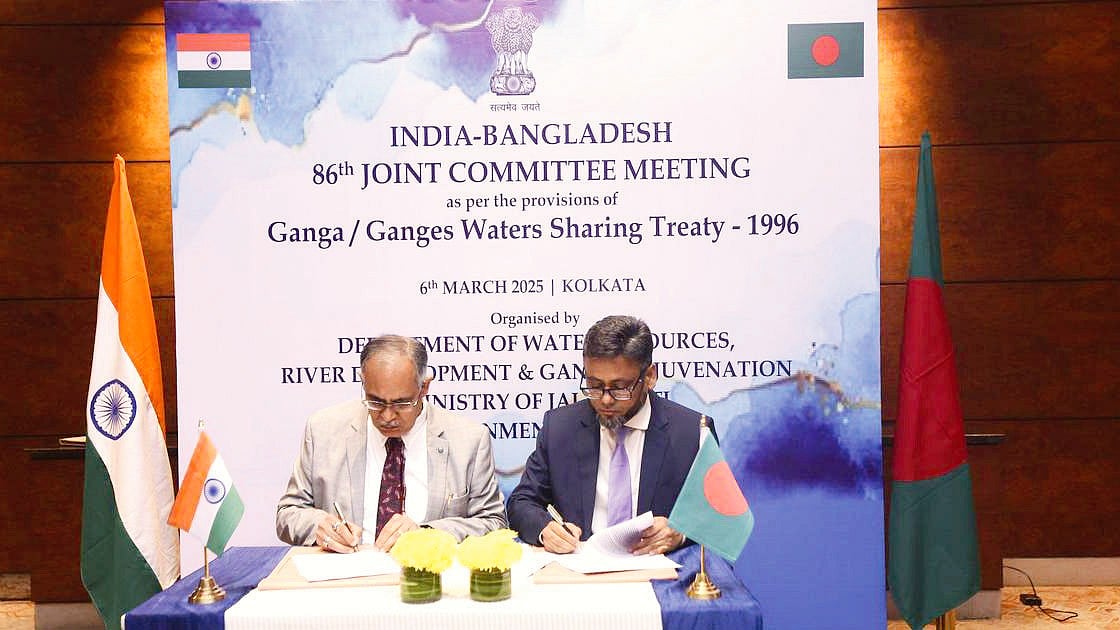
The more consequential test of Bangladesh–India ties, however, lies elsewhere. The Ganga Waters Sharing Treaty, signed in 1996 for 30 years, will expire in December 2026. The treaty governs dry-season (January–May) water sharing at the Farakka barrage in West Bengal. If the agreement lapses, it will cause acute water stress in Bangladesh at a vulnerable time of the year. Negotiations cannot be postponed, therefore, until the treaty’s formal end; an understanding must be reached well in advance to avert a crisis.
For Bangladesh, the stakes couldn’t be higher. The Ganga is a lifeline that sustains agriculture, fisheries, navigation, ecosystems and livelihoods across large parts of the country’s southwest. Reduced dry-season flows since the construction and operation of the Farakka barrage in 1975 have already contributed to declining crop yields, loss of biodiversity and socio-economic stress. These impacts are cumulative and structural, not episodic. A further reduction in water availability or prolonged uncertainty over its availability will deepen anxieties in Bangladesh and pressure a fragile rural economy.
For India, particularly the Modi government, the politics of renegotiation are complex. While water sharing with Bangladesh is officially a bilateral matter, in practice it is deeply entangled with India’s federal politics.
West Bengal, where the Farakka barrage is located, holds significant leverage over any agreement that affects upstream withdrawals. Securing the consent of the West Bengal government for a water-sharing arrangement that Bangladesh would consider fair and sustainable has historically been difficult, and under the current political conditions, when the state election is just a few months away, it may be even more so.
The Modi government has a track of prioritising short-term political benefits at home over regional water cooperation, especially if it reckons that denying concessions to neighbouring countries can yield electoral gains in key states.
****
The changing hydrological signature of the Ganga will make the upcoming negotiations even more difficult. Population growth and development on both sides of the border have sharply increased water demand, while climate change has introduced new uncertainties about the reliability of the Ganga’s flow. Changing monsoon patterns, increased variability in precipitation, glacial retreat in the Himalayas and more frequent extreme events are all reshaping the river’s hydrology.
The Ganga Waters Sharing Treaty of 1996 divided water between India and Bangladesh based on historical average flows from 1949 to 1988. Since then, water flow in the Ganga has reduced considerably. A recent study by researchers at IIT-Gandhinagar indicates that since 1980, the annual water flow in the Indus Basin has increased by eight per cent, while the Ganga Basin has experienced a decline of 17 per cent. The assumption of stable and predictable dry-season flows that underpinned earlier negotiations, and the 1996 treaty, is no longer tenable.
From Bangladesh’s perspective, this reinforces a long-standing concern. The 1996 treaty was celebrated as a diplomatic breakthrough, but it was a compromise shaped by political consideration. While locking the two countries into an allocation formula tied to historical flow data, the treaty did not establish an adaptive basin-wide framework capable of responding to climate change. As climate pressures intensify, the rigid sharing formula will become a liability, exposing downstream Bangladesh to risks it did little to create.
While navigating this terrain, Tarique Rahman will need strategic clarity, political courage and diplomatic finesse. Unlike Sheikh Hasina, he cannot rely on personal rapport with New Delhi or ideological alignment to smooth over structural disagreements.
His government will need to articulate Bangladesh’s water security concerns in a manner that is firm yet constructive, avoiding nationalist escalation while refusing to accept arrangements that perpetuate vulnerability. Politically, it will be suicidal for Rahman to accept an agreement less favourable to Bangladesh than the treaty negotiated by Sheikh Hasina in 1996.
Long-term water security in the Ganga basin depends on data sharing, joint monitoring, flexible allocation mechanisms and a cooperative approach to water management. Whether the Modi government, which often appears more committed to short-term political gains at home than to long-term regional stability and national interest, is willing to move in this direction remains an open question.
Threats to review or weaponise existing water agreements have become part of India’s broader regional signalling. In an environment where the Indus Water Treaty has been kept in abeyance, persuading New Delhi to adopt a more cooperative and adaptive framework for the Ganga will be exceptionally challenging. Yet failure to do so will carry costs. A breakdown in negotiations will not only damage Bangladesh-India ties but also undermine the regional stability of South Asia.
The renegotiation of the Ganga treaty will be the defining foreign policy test of Tarique Rahman’s early premiership. More than trade or symbolic gestures of goodwill, it will show whether he can protect Bangladesh’s interests while maintaining a workable relationship with India. It will also test India’s willingness to act as a responsible regional power rather than an uncompromising upstream hegemon.
Ashok Swain is a professor of peace and conflict research at Uppsala University, Sweden. More by the author here.
Join our official telegram channel (@nationalherald) and stay updated with the latest headlines