Opinion
The ‘right to walk’ and the ‘right to belong’
The Supreme Court judgement cannot be interpreted only through the reality of the able-bodied pedestrian, argues Puneet Singh Singhal
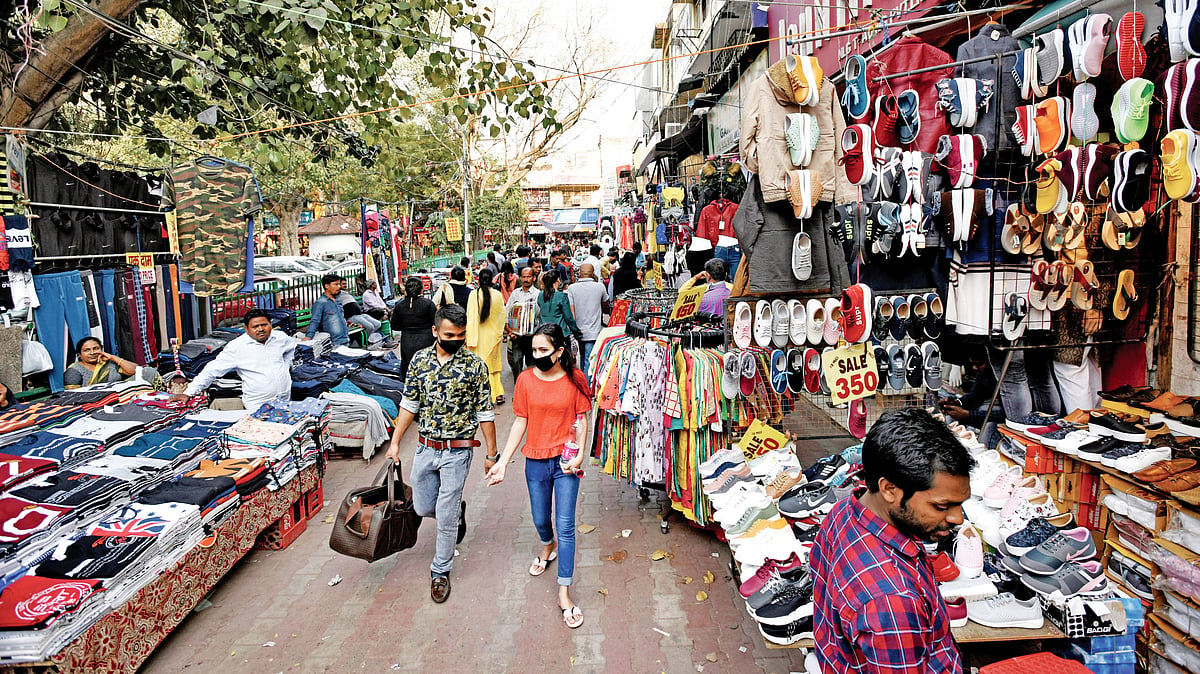
The Supreme Court’s recognition of the right to walk on safe, demarcated footpaths as a fundamental right is a landmark ruling on the safety of pedestrians. It is also an invitation to rethink the Indian street itself: who it is built for, who it excludes, and what kind of citizenship begins at the edge of the road.
On 19 June, the court held that the right to walk is protected under Articles 19 and 21 of the Constitution and that pedestrian movement must have priority over motorised vehicles. The judgment arose from a tragic motor accident case in which a five-year-old child was killed while being taken to school, reportedly because there was no safe pedestrian space. The court also noted that authorities have a duty to demarcate, construct, maintain and safeguard footpaths.
But if this right is interpreted only through the figure of the able-bodied pedestrian, India will miss a historic opportunity.
For persons with disabilities, older persons, neurodivergent people, caregivers, chronically ill citizens, children, pregnant people and anyone using mobility aids, the issue is not only the right to walk. It is the right to move through the city with safety, predictability, dignity and autonomy.
A wheelchair user may not ‘walk’ in the conventional sense, but they have an equal claim to the footpath. A blind person using a cane is not asking for sympathy when they need tactile paving and obstruction-free routes. A person with dyspraxia may find uneven surfaces, sudden level changes and chaotic crossings deeply unsafe. A caregiver pushing a child or supporting an older parent is negotiating a city that rarely treats care as part of mobility.
The court has opened the constitutional door. The question now is whether India can walk through it inclusively.
In most Indian cities, footpaths exist only in theory. They are frequently broken, or may have potholes, open drains, construction debris, exposed wires, uneven slabs and often suddenly disappear. Sometimes they are too high. Sometimes they are too narrow. They are built, dug up, rebuilt and forgotten.
What most see as poor maintenance can be, for disabled citizens, a daily mechanism of exclusion. A footpath can be the line between access and isolation. An inaccessible footpath can influence whether someone reaches school, office, a clinic, a bus stop, a polling booth... It can determine whether a person participates in the city and the community or remains confined at home. It can turn a short journey into a risk assessment.
This is why the ‘right to walk’ must be read alongside India’s disability rights framework. The Rights of Persons with Disabilities Act, 2016 places legal duties on governments to ensure accessibility, non-discrimination and full participation for persons with disabilities. India also has Harmonised Guidelines and Standards for Universal Accessibility to make built environments, transport, information and public services more accessible.
****
A common response to accessibility demands is that Indian cities are too complex, too crowded, too informal, too resource-constrained. There is some truth in that. But complexity cannot be an excuse to not address an issue.
The way forward is not an all-or-nothing approach, but a time-bound accessibility roadmap.
Phase 1: Low-cost safety fixes
Municipal bodies can start by clearing dangerous obstructions, repairing broken slabs, covering open drains, removing construction debris, preventing two-wheelers from using footpaths, and stopping illegal parking on pedestrian space. These are not expensive design interventions. They are basic governance duties.
Phase 2: Priority accessible corridors
Cities should first make routes around hospitals, schools, colleges, bus stops, metro stations, courts, government offices, markets, parks, public toilets, disability service centres and shelters fully accessible. These corridors must include curb cuts, ramps, tactile paths, safe crossings, adequate lighting, resting points, shade and continuous surfaces.
Phase 3: Universal design of all future roadworks
No new road, flyover, metro station, smart city project, market redevelopment or streetscaping plan should be approved unless accessibility is embedded in design, tendering, budgeting and maintenance contracts.
Phase 4: Accountability
Every ward should have public footpath audits, disability-led accessibility inspections, grievance redressal mechanisms, timelines for repair and penalties for non-compliance. If the right is fundamental, its violation must carry consequences.
The question is not whether inclusion is difficult. The question is whether we are willing to plan it seriously and budget for it.
****
There is another nuance India must confront. Footpaths are often occupied by vendors, informal workers, parked vehicles, religious structures, shops, utilities and state infrastructure. Enforcement of the right to walk cannot become a selective weapon against the poor.
Street vendors are also rights-bearing citizens. The Street Vendors Act, 2014 was enacted to protect vendors’ livelihoods while regulating vending through surveys, certificates, vending zones and town vending committees.
A rights-based footpath policy must therefore avoid false binaries: pedestrian versus vendor, disabled person versus informal worker, accessibility versus livelihood. The answer is not indiscriminate eviction. The answer is planned vending zones, clear walking widths, accessible circulation paths, transparent licensing and participatory local governance.
Pedestrian justice cannot mean evicting the poor while allowing the powerful to occupy public spaces without consequence.
****
Through my ongoing work with Green Disability, I have learned that accessible mobility is inseparable from climate resilience. In a warming city, a footpath is climate infrastructure.
During heatwaves, disabled and chronically ill people often need shaded, predictable, low-effort routes to reach clinics, transport, water points, cooling spaces and community support. A footpath without shade can become unusable. A broken pavement after flooding can become dangerous. Poor drainage can trap wheelchair users and older pedestrians. Air pollution, noise, traffic stress and heat exposure compound existing health conditions.
The World Health Organization estimates that 1.3 billion people, ~16 per cent of the global population, experience significant disability. In India’s cities, this reality intersects with ageing, poverty, informal work, caregiving, chronic illness and climate vulnerability.
So, when we discuss the right to walk, we must also discuss the right to reach safety during climate stress. Footpaths connect people not only to markets and offices, but also to hospitals, public transport, water, shade, toilets, shelters and schools.
Urban planning cannot treat accessibility and climate resilience as separate issues. A usable footpath must be continuous, barrier-free, shaded wherever possible, well-drained and safe during extreme weather.
Beyond its legal significance, the SC ruling highlights a larger issue of implementation. The right to walk has little meaning if public streets remain unsafe or unusable for large sections of the population.
When footpaths are inaccessible, disabled people are wordlessly told that the city does not expect them to be outdoors. The right to walk is part of a broader right to accessible mobility. This means footpaths and crossings must also be usable by people who need wheelchairs, canes, walkers, crutches, prosthetics, or require assistance from another person.
If implemented narrowly, the judgment may become another well-intentioned ruling trapped in files, tenders and municipal excuses. But if implemented with accessibility at its heart, it can become a turning point in how India imagines citizenship.
Puneet Singh Singhal is a disability inclusion and climate justice advocate; founder/curator of Green Disability and Dilli Dehat Project
Join our official telegram channel (@nationalherald) and stay updated with the latest headlines