


Bangladesh floods kill 44, displace over 2.5 lakh families; Dhaka deluged
Army, navy and air force deployed for relief operations as rivers breach danger levels and heavy rain paralyses capital
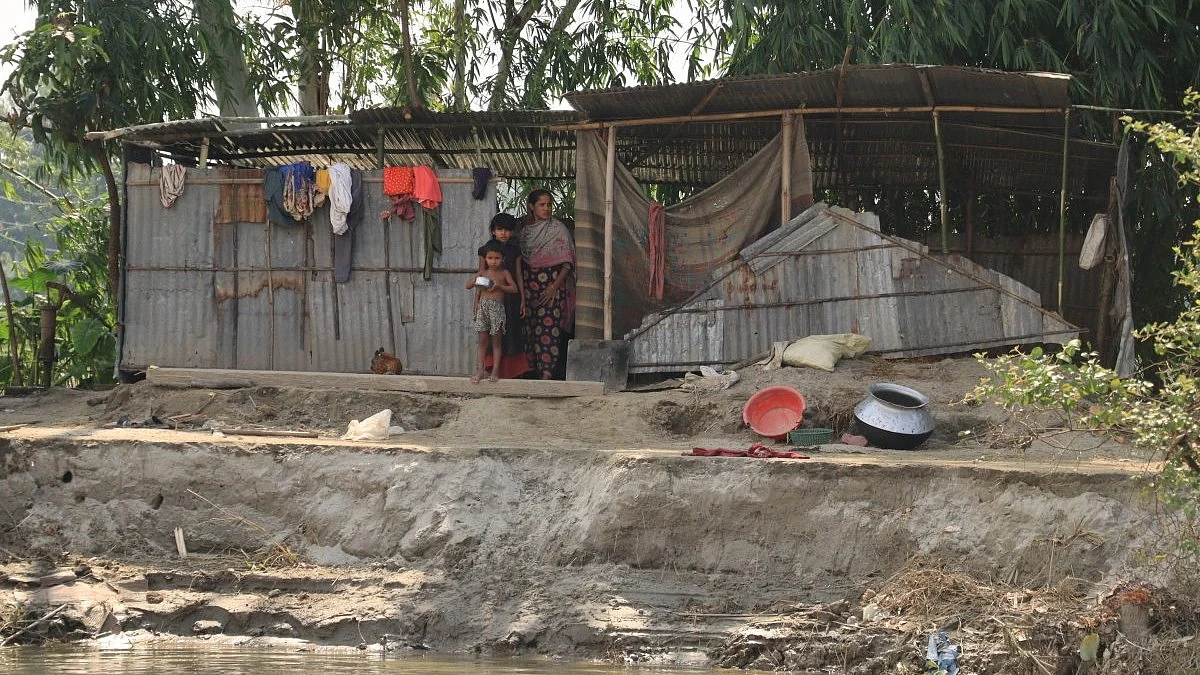


At least 44 people have died in floods and landslides over the past week in Bangladesh, while more than 2.5 lakh families have been affected as swollen rivers and torrential monsoon rain inundated large parts of the country, officials said on Sunday.
Overnight rainfall of 76 mm between midnight and 6 am flooded several areas of capital Dhaka and paralysed normal life. The government has deployed army, navy and air force personnel for relief operations in seven of the worst-hit districts alongside local humanitarian organisations.
“Since July 5, officially 44 flood related deaths were recorded until Saturday evening. We estimate that some 2,67,000 families have been affected so far,” a Disaster Management Ministry spokesperson said.
Several victims were killed in landslides, while others drowned or were swept away by floodwaters and overflowing rivers.
Nearly 44,457 displaced people have taken refuge in more than 1,100 makeshift flood shelters, primarily in the country's northeastern and southeastern regions.
“The deluge marooned members of an estimated 2,67,918 families in the affected areas,” the official said.
Bangladesh, a lower riparian deltaic country criss-crossed by 1,415 rivers, is divided into four major river basins. Heavy monsoon rain and the onrush of upstream waters have swollen rivers in the northeastern Meghna Basin and the southeastern Hill Basin.
The state-run FFWC (Flood Forecasting and Warning Centre) warned on Sunday that large parts of several northern and northwestern districts in the Brahmaputra Basin could face flooding, while conditions in other affected regions may deteriorate further.
Seven of the 45 river monitoring stations operated by the FFWC in the greater Meghna and southeastern hill basins reported water levels above danger marks on Sunday.
Officials warned that more rivers could breach danger levels, inundating additional low-lying areas.
“During the next 24 to 48 hours, heavy to very heavy rainfall is forecast over the (north-eastern) Sylhet, (north-western) Rangpur and (northern) Mymensingh divisions of Bangladesh and the adjoining Indian states of Meghalaya, Assam, and West Bengal,” the FFWC said in its 9 am bulletin.
Rohingya children among landslide victims
Seven Rohingya children and one of their teachers were killed on 8 July in a landslide at the world's largest refugee camp in southeastern Cox's Bazar.
The incident was the deadliest single landslide reported in the country this year.
Since Friday, the government has deployed the armed forces to assist relief operations in seven of the worst-affected districts. Local NGOs (Non-Governmental Organisations) have also joined relief efforts as displaced families struggle to cook or access essential services in inundated areas.
“Many people took refuge on rooftops of their inundated homesteads or living on roads with plastic sheets sheltering them amid rains... several health complexes are inundated making it nearly impossible to render medical care,” a health official in flood-hit Moulvibazar said.
Torrential rain brings Dhaka to a standstill
Incessant rainfall since Saturday evening has paralysed life in large parts of Dhaka and the southeastern port city of Chattogram.
Major roads and residential areas were inundated, leaving vehicles stranded and forcing many residents to remain indoors.
The Bangladesh Meteorological Department recorded 76 mm of rainfall in Dhaka between midnight and 6 am on Sunday, according to The Daily Star.
The intense downpour overwhelmed the capital's drainage infrastructure, triggering severe urban flooding.
“The overnight rain inundated my house compound and roads in the neighbourhood,” Nasrin Ahmed, a resident of Dhaka's Mirpur area, said.
Flooding between July and September is a regular occurrence in Bangladesh as peak monsoon rainfall combines with the onrush of upstream water, turbulent seas and high tides in the Bay of Bengal, which can slow the recession of river waters.
Join our official telegram channel (@nationalherald) and stay updated with the latest headlines