POLITICS
12 years of headlines, not results: Congress on Modi govt 3.0
Party contrasts BJP's promises with unemployment, inflation, exam paper leaks and economic slowdown
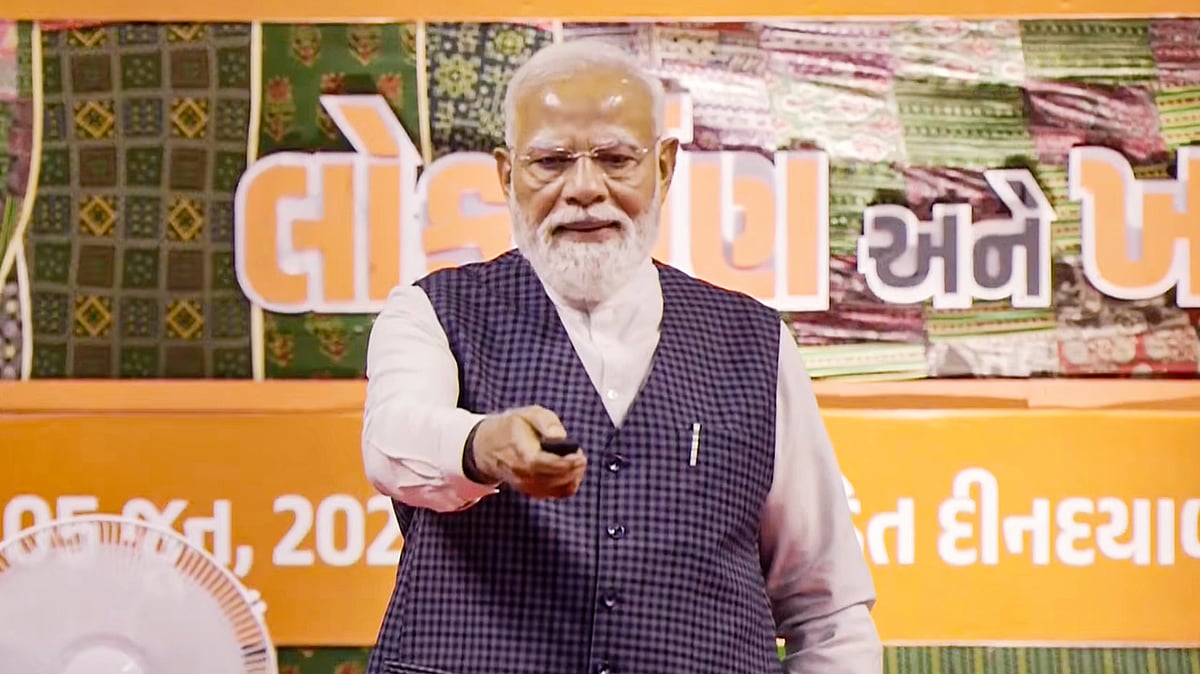
As the Narendra Modi government completed two years of its third term on Tuesday, 9 June, the Congress launched a sweeping attack on the BJP-led administration, releasing a 'promise versus reality' report that accused the Centre of prioritising publicity over performance and failing to deliver on many of its flagship commitments over the past 12 years.
The 75-page document, prepared by the All India Congress Committee research department, seeks to challenge what the Congress described as the government's "prachar" or propaganda on issues ranging from employment and economic growth to education, agriculture, infrastructure, democracy and foreign policy.
Releasing the report in New Delhi, AICC research department chairman Rajeev Gowda and party leader Amitabh Dubey argued that the gap between the Modi government's promises and outcomes had steadily widened since 2014.
"Over the last 12 years, promises have been accompanied by big announcements, grand statements and headlines," Gowda said. "But the reality is that none of those headlines have translated into anything that is meaningfully transforming the lives of ordinary people."
The Congress leaders sought to portray the Modi government's anniversary celebrations as an exercise in image management at a time when many Indians, they claimed, were grappling with unemployment, rising prices and growing economic insecurity.
Gowda pointed to changes in the Pradhan Mantri Ujjwala Yojana as an example of what he described as shrinking welfare support. He alleged that the government had reduced the number of subsidised LPG cylinders available to beneficiaries, despite earlier promises to provide sustained relief to women dependent on traditional cooking fuels.
"Ten years ago, Indian women were promised freedom from dangerous and unhealthy cooking methods. Today, that promise is being steadily diluted," he said.
A major focus of the Congress critique was employment. The party argued that despite repeated assurances of making India a global hub for job creation, millions of educated young people continue to struggle to find work.
According to Gowda, four out of every 10 graduates remain unemployed, while urban youth unemployment remains elevated. He also claimed that only a small proportion of unemployed graduates secure permanent salaried jobs within a year.
The Congress further accused the government of failing to create opportunities for women. Citing India's position in global gender rankings, Gowda argued that women's participation in the workforce remains far below potential despite repeated promises of inclusive growth.
The party also targeted the government's economic record, claiming that small businesses continue to suffer the after-effects of demonetisation and other policy decisions. "MSMEs are the backbone of India's economy and its biggest job creators, yet tens of thousands of them have shut down," Gowda said, arguing that the sector has never fully recovered from the shocks of recent years.
The Congress also sought to raise concerns about the health of India's democratic institutions. Gowda alleged that millions of voters had been removed from electoral rolls and claimed that public trust in democratic processes was being undermined.
Dubey, meanwhile, focused on inflation and the rising cost of living, arguing that everyday essentials have become significantly more expensive during the Modi era. He cited increases in the prices of cooking gas, fuel, milk and pulses, saying the government's promise of relief from inflation had not materialised for ordinary households.
The Congress leader also challenged the government's narrative of India's growing global influence, arguing that the country's economic and strategic vulnerabilities had become increasingly apparent amid ongoing international crises.
On the economy, Dubey accused the government of repeatedly missing its own targets despite ambitious projections. He noted that Modi had pledged to make India a USD 5 trillion economy by 2024 and one of the world's three largest economies, goals that remain unmet.
The party further argued that falling private investment, capital outflows and a weakening rupee reflected deeper structural problems in the economy. "The impact of the Modi government's policies is visible in the fact that foreign investors are leaving and even Indian industrialists are choosing to invest abroad," Dubey said.
Congress also attacked the government's record on infrastructure and public services. While acknowledging large-scale spending announcements, Dubey argued that many flagship projects have failed to deliver tangible improvements in daily life.
He cited overcrowded trains, recurring concerns over railway safety and delays in implementing safety technologies such as Kavach as examples of what he described as the gap between official claims and on-ground realities.
The party reserved some of its strongest criticism for the education sector, where it accused the government of presiding over a growing crisis of examination leaks, administrative failures and technological glitches.
Referring to recent controversies involving CBSE and other competitive examinations, Dubey alleged that repeated paper leaks and irregularities had jeopardised the futures of millions of students. "The education system was supposed to be modernised. Instead, students are facing paper leaks, technical failures and uncertainty," he said.
The Congress leader claimed that dozens of examination leaks and multiple re-examinations had taken place in recent years, undermining confidence in the system.
Holding Union education minister Dharmendra Pradhan directly responsible for the situation, the party renewed its demand for his resignation. "Our demand is clear: education minister Dharmendra Pradhan should immediately resign," Dubey said.
With PTI inputs
Join our official telegram channel (@nationalherald) and stay updated with the latest headlines