POLITICS
Bengal: From ‘no political interference’ to 247 BJP-headed college bodies
The government says the appointments will help 'troubled' colleges. Critics see the return of political control the BJP promised to end
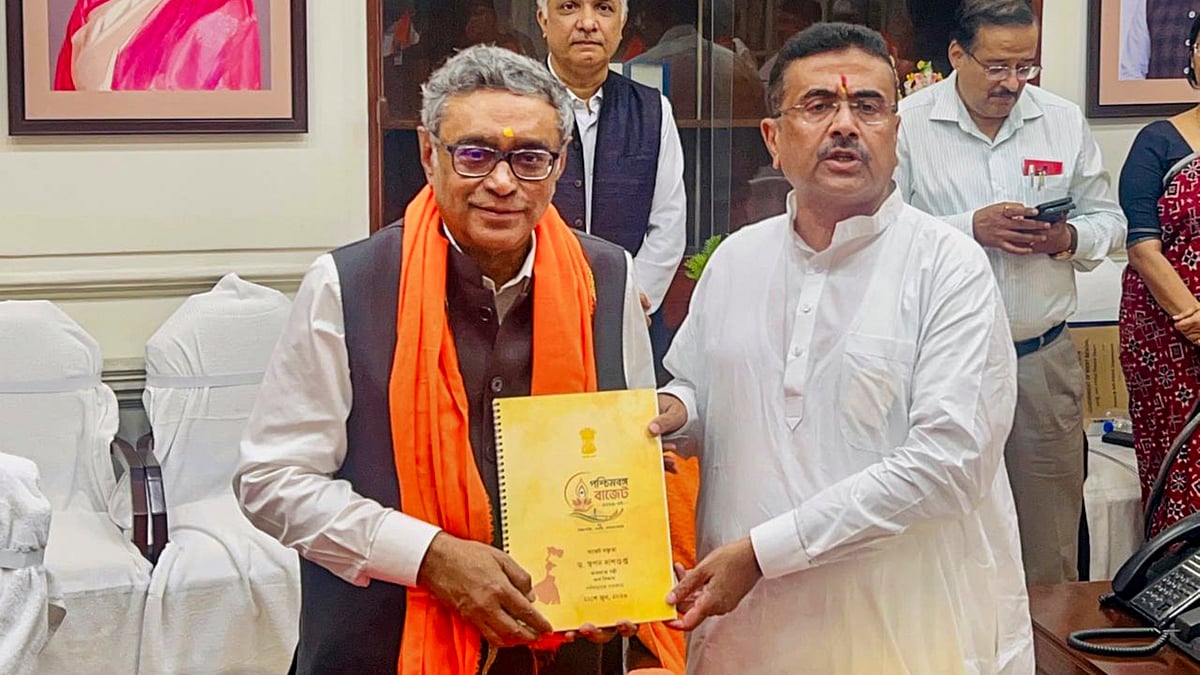
The BJP government in West Bengal had barely finished promising to keep politics out of education when its own ministers, MPs and MLAs began taking charge of college governing bodies. Three months after announcing that political appointments to educational institutions would be scrapped, the government has appointed ruling-party representatives as presidents of the governing bodies of 247 state-aided colleges.
The move has triggered accusations that the BJP is doing exactly what it had promised to stop: turning educational institutions into arenas of political influence.
When chief minister Suvendu Adhikari’s government took office, it pledged to keep academic institutions free from political interference. Within days, it announced that political appointments in schools, colleges and universities would be cancelled. The higher education department has now issued a list placing BJP ministers, MPs and MLAs at the helm of colleges across Bengal, with some given charge of more than one institution.
The department has defended the appointments, saying elected representatives were primarily chosen for colleges facing administrative problems, complaints or allegations of financial irregularities, and could help bring them back on track. Officials said appointees were required to have at least a bachelor’s degree, while educationists and social workers would be considered in the next phase.
But the sheer scale of the appointments has fuelled the controversy.
Union minister of state for education Sukanta Majumdar has been appointed president of the governing bodies of Balurghat College and Gangarampur College, while Union minister Shantanu Thakur has been given responsibility for Habra Sri Chaitanya College and Gobardanga Hindu College.
In Kolkata, finance minister Swapan Dasgupta has been entrusted with Ashutosh College, Jogamaya Devi College and Syamaprasad College. Industries minister Tapas Roy has been placed in charge of the three sections of Vidyasagar College. Sajal Ghosh, the Baranagar MLA, has been appointed to Bangabasi morning, day and evening colleges.
Former professor and Information technology minister Kalyan Chakraborty has been given responsibility for City College and Anandamohan College. Ashok Dinda, MLA from Moyna and minister of state for micro and small-scale enterprises, has been appointed to Seth Anandram Jaipuria College. Ritesh Tiwari has been assigned Maharaja Manindra Chandra, Maharaja Sris Chandra and Maharani Kashishwari colleges, while Tarunjyoti Tiwari has been given charge of Gurudas College. Barrackpore MLA Kaustav Bagchi has been appointed to Surendranath Law College.
In Birbhum, higher education minister Jagannath Chattopadhyay himself has taken charge of Bolpur, Suri and Shambhunath colleges. Municipal affairs and urban development minister Agnimitra Paul has been appointed to Banwarilal Bhalotia College. Health minister Sharadwat Mukhopadhyay will head the governing bodies of Satyapriya Roy College of Education and East Calcutta Girls’ College.
The opposition has accused the government of turning educational institutions into extensions of the ruling party.
Kolkata SFI president Md Hasib Hossain said the appointments showed that the government was more interested in political control than democratic administration. “This proves that the BJP government has no intention of holding elections. They do not favour running institutions in a democratic environment. They are seeking to transform these managing committees into extensions of their own party to establish absolute control,” he said.
He also questioned the continuing uncertainty over student union elections, arguing that governing body appointments could become another means of consolidating political influence on campuses.
Congress leader Adhir Ranjan Chowdhury was equally blunt. “Trinamool and BJP are one and the same. Political encroachment existed then, and it exists now. The change is merely in name — it is old wine in a new bottle,” he said.
AIDSO West Bengal secretary Biswajit Roy also condemned the appointments. “An educational institution cannot be turned into a branch office of a political party,” he said, arguing that governing bodies should instead comprise “wise educationists, patrons of education, and eminent personalities”. He warned that the appointments could encourage the “hegemony of Hindutva politics” and weaken traditions of free thought and secularism in higher education.
RSS student wing ABVP has taken a more cautious position. Kolkata district secretary Swadhin Haldar said the organisation would give the government time to demonstrate that the appointments could work. “This is entirely a government decision. As an independent student organisation, the ABVP wishes to allow the government a few months,” he said. He added that if academic standards were not maintained, “we will launch a movement”.
BJP leader Dilip Ghosh, meanwhile, defended the government’s authority to make the appointments. “The government that the people voted into power will decide who serves on the general body,” he said. “Sit quietly at home and watch what we do; if we make a mistake, you can certainly point it out.”
The BJP had promised to keep politics out of education. With 247 college governing bodies now headed by its elected representatives, critics are asking whether that promise has already been abandoned.
Join our official telegram channel (@nationalherald) and stay updated with the latest headlines